
Aftermarket Car Radio Supplier Evaluation: A How-To Scorecard for Capability and Delivery Assurance
An aftermarket car radio supplier can look identical to a qualified one for the first three emails. The difference appears at the evidence stage: which models the supplier actually builds, whether two SKUs come from the same platform generation, which certificates exist as documents rather than logo files, what the warranty says in writing, and how a quoted lead time reconciles with stated production capacity. This guide turns those five questions into a scored supplier evaluation, with the document request attached to each block.
This article sets out a five-block evaluation scorecard for aftermarket car radio sourcing. It is written for buyers in the research stage — distributors, installers, fleet buyers and private-label brand owners — who need a repeatable way to compare suppliers on capability and delivery assurance instead of unit price alone. Each block is illustrated with published product data from TOPNAVI, the brand of Shenzhen Top Navi Electronic Tech Co., Limited, a manufacturer of car multimedia players, motorcycle navigation units and CarPlay boxes based in Shenzhen, China, and established in 2014.

Supplier capability starts on the factory floor. Production footprint, staffing and stated annual output are the first entries in a delivery-assurance scorecard.
Why aftermarket car radio supplier evaluation breaks down
Most buyer-side evaluation failures in this category follow the same five patterns, and none of them look like a problem at the time they happen. They become problems when the container arrives.
- Breadth is asserted, not demonstrated. A supplier says it covers double din car radio, single din car radio, android car radio and screen car radio ranges, but cannot name the operating system, chipset or screen class behind each SKU.
- Specifications mix platform generations. Two listings from the same supplier use different Android versions and different CPUs, which means separate firmware tracks, separate spare-part pools and separate installer training.
- Certifications appear as logos. E-mark, CE and FCC marks are printed into a brochure without an issuing body, a scope, a covered model list or a validity date.
- Warranty is verbal. The length is agreed in conversation; the definition of a covered failure, the claim route and spare-part availability never reach the contract.
- Lead time is quoted without capacity arithmetic. A delivery date is offered without any reference to annual output, monthly run-rate or how many SKUs the line is asked to produce in the same window.
A scorecard changes the nature of the question. Instead of asking whether a supplier has a product, the buyer asks which document proves it, and records the answer against a fixed field. That record is what makes two quotations comparable — and what makes a cheap car radio quotation visibly incomplete rather than attractively low.
What the category context tells you — and what it does not
Category-level data is useful for framing a sourcing decision, but it says nothing about any individual supplier. Three figures are worth keeping in view.
- The global car audio market was valued at USD 12.24 billion in 2025, covering speakers, amplifiers and head units (Mordor Intelligence).
- Double DIN head units accounted for 44% of car stereo market revenue in 2025, measured by form factor (Grand View Research).
- Radio-broadcast receivers combined with recording or reproducing apparatus are classified under HS code 8527.21, which is the classification reference an importer needs when preparing documentation.
The Double DIN share matters for configuration, not for supplier selection. It aligns with the direction of most aftermarket catalogs, where large touch screen car radio units have become the standard replacement format. TOPNAVI's own product guide categorises aftermarket car radios into single-DIN, double-DIN, Android and Linux product types and discusses OEM/ODM solutions, which is a useful reminder that a "car radio replacement" can mean four structurally different products.
What the market data cannot do is rank suppliers. It cannot tell you whether a given factory can document a -30°C to 75°C operating range, whether its certificate covers the model you are buying, or whether its monthly run-rate can absorb your peak order. Those answers have to come from the supplier, and they have to be scored.
The five-block scorecard
The scorecard below allocates 100 points across the five areas that determine whether an aftermarket car radio supplier can be supported after the first order. The weightings are a suggested starting structure; buyers should recalibrate them to their own channel, because a fleet operator and a private-label brand owner carry different risks.
| Block | What it measures | Weight | Primary evidence requested |
|---|---|---|---|
| 1. Product breadth and platform consistency | Whether the catalog is a set of related platforms or unrelated listings | 20 | Model list with OS, chipset, screen class per SKU |
| 2. Specification documentation quality | Whether each SKU answers the same fixed set of fields | 20 | Model-level specification sheet |
| 3. Certification and compliance evidence | Whether compliance is documented or merely claimed | 20 | Certificate copies with scope, body, validity |
| 4. Warranty and after-sales terms | Whether the commercial commitment is written and operable | 15 | Warranty terms, claim route, spare-part list |
| 5. Delivery assurance | Whether capacity and lead time reconcile | 25 | Capacity statement, SKU-level lead time, packaging spec |
Block 1 — Product breadth and platform consistency (20 points)
Score the catalog by whether it forms a set of related platforms or a set of unrelated listings. A supplier that documents several screen classes, each with a named operating system and chipset, is easier to support than one that lists dozens of models without platform detail. TOPNAVI's published data illustrates both the strength and the complication: the TS105 is a 9-inch IPS unit running Android 14 on a UIS7865 octa-core platform; the TN-X80 is a 10.1-inch OLED unit on Android 13 with a UIS8581A 8-core CPU; the TN-3036 is a 16.8-inch 2560×1440 IPS unit on Android 13 with an 8-core CPU, 4GB RAM and 64GB ROM. Three screen classes and two Android generations in one catalog mean three firmware tracks, and the buyer should ask which SKU shares a platform with which.
Breadth beyond head units is a second data point. TOPNAVI also documents a CarPlay box (TN-AI47, Android 11, quad-core, 2GB RAM, 16GB ROM, HDMI output, CE/FCC/RoHS) and two Linux-based motorcycle navigation units (TN-M9 and TN-M11, both IP67). Breadth only counts toward the score when each model is documented, not when it is merely listed.
Block 2 — Specification documentation quality (20 points)
Apply the same field set to every SKU and score the percentage that comes back complete: screen size and type, resolution, operating system and version, chipset, RAM and ROM, connectivity, audio output, operating temperature range, installation standard, materials, certifications and warranty. The purpose is comparability, not volume.
Two examples show how the fields behave in practice. The TN-3036 documents a -30°C to 75°C operating range, a 4×50W audio output, DC 12V input, 2DIN universal installation and a construction of ABS engineering plastic, aluminium alloy, tempered glass and PCB. The TN-AI47 documents -10°C to 60°C, which is consistent with an in-cabin box rather than a dashboard unit. Reading thermal ranges as design intent is more informative than reading them as marketing. A field that is missing from the specification is a field you will negotiate later, under time pressure, with a container already booked.
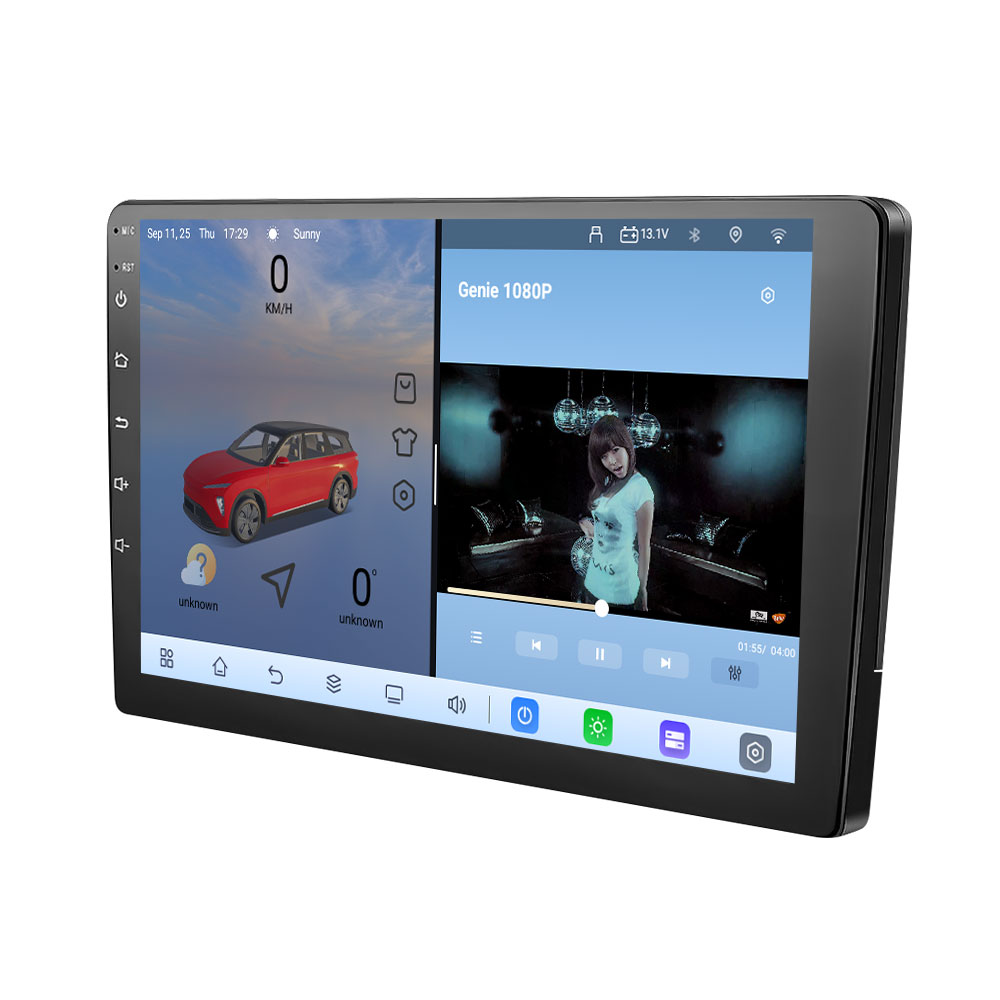
TOPNAVI TS105: 9-inch IPS capacitive display at 1024×600, Android 14 on a UIS7865 octa-core platform, built-in wireless CarPlay and Android Auto, listed with E-mark, CE and FCC.
Block 3 — Certification and compliance evidence (20 points)
Separate what is listed from what is evidenced. Product-level certification appears on several TOPNAVI listings: E-mark, CE and FCC on the TS105; CE, FCC and RoHS on the TN-AI47; CE and FCC on the TN-3036. At company level, the published profile states ISO 9001 certification for the factory and CE, FCC, RoHS, E-Mark and EMC across its product range.
These are published statements, and a scorecard should treat them accordingly. A claim awarded on the strength of a logo earns nothing; the same claim earns full marks when the buyer holds a certificate copy that names the issuing body, the certificate scope, the covered model list and the validity date. For an importer, the distinction is not academic — it is the difference between a smoothly cleared shipment and a compliance file with a gap in it.
Block 4 — Warranty and after-sales terms (15 points)
A one-year warranty is documented on several TOPNAVI models, including the TS105, TN-M9, TN-X23, TN-X80 and TN-UK1105. Length alone is not a quality signal. Score instead the definition of a covered failure, the claim submission route and expected turnaround, spare-part availability for the specific SKU, and the firmware and software update commitment — the TN-AI47, for example, is listed with OTA update support. A 12-month warranty that excludes the display or water ingress is a different commercial offer from one that includes them, even though both read as "1 year" in a quotation.
Block 5 — Delivery assurance (25 points)
Delivery assurance is the block most often skipped and the most expensive when it fails. The starting facts are the supplier's own published statements: a 20,000 m² facility, 100+ staff, annual output of 360,000 units, a 50-engineer R&D team and an export share equal to 95% of total sales. None of these is a commitment — each is a baseline against which a commitment can be tested.
Convert them into arithmetic. Divide stated annual output by twelve to obtain a monthly run-rate, then compare that figure with your peak monthly requirement and with the number of SKUs you are asking the line to run in the same period. Six screen sizes plus a CarPlay box plus two motorcycle units is a different production question from a single hero model, and a supplier that answers the volume question without addressing the SKU-mix question has not answered it.
Step-by-step: running the evaluation
Step 1 — Fix the SKU basket before any supplier sees it
Ask: define the basket by configuration, not by price: how many double din car radio units, how many larger touch screen car radio units, whether a single din car radio is required for older dashboards, and whether a Bluetooth car radio with minimal screen is part of the range. Evidence: a one-page requirement sheet. Score: a supplier that replies with a basket matching your definitions is easier to score than one that replies with its own catalog.
Step 2 — Request a model-level fact sheet
Ask: one sheet per SKU using the fixed field set from Block 2. Evidence: completed sheets with no blank fields. Score: count completed fields as a percentage; treat "to be confirmed" as incomplete, because that is what it is.
Step 3 — Check platform consistency across the basket
Ask: for each SKU, the operating system version and the chipset. Evidence: a matrix of SKU against platform. Score: fewer distinct platforms across the same basket scores higher, because fewer platforms mean fewer firmware branches and simpler spare-part stocking. The documented spread from Android 14 on the TS105 to Android 13 on the TN-X80 and TN-3036 shows what that matrix will look like in practice.
Step 4 — Convert every specification into an acceptance criterion
Ask: turn the marketing field into a test. "Android 14 with wireless CarPlay and Android Auto" becomes a boot-and-pair test on the TS105. "IP67" becomes a sealing and connector inspection on the TN-M11. "HDMI output" becomes a display handshake test on the TN-AI47. Evidence: a written acceptance list per SKU. Score: a supplier that can confirm each criterion in writing scores higher than one that restates the brochure.
Step 5 — Score certification claims at zero until documents arrive
Ask: certificate copies with issuing body, scope, covered models and validity. Evidence: the documents themselves, not links to a certificate gallery. Score: award points per document received and verified, and record which models each certificate covers — a certificate that does not name your SKU is a starting point for a conversation, not a completed line item.
Step 6 — Turn warranty wording into a cost reserve
Ask: what counts as a covered failure, how a claim is submitted, what the turnaround is and which spare parts are held. Evidence: written terms plus a spare-part list. Score: convert the exclusions into a per-unit reserve and add it to the landed cost before comparing quotations. This is the step where a cheap car radio usually stops being cheap.
Step 7 — Reconcile lead time with capacity and SKU mix
Ask: SKU-level lead time, monthly allocation for your account, packaging and carton marking specification, and the inspection point. Evidence: a written delivery schedule tied to your order pattern. Score: compare quoted lead time with the capacity arithmetic from Block 5 and with the number of SKUs in your basket. A lead time offered without an allocation statement is a forecast, not a commitment.
Step 8 — Award conditionally and schedule a re-score
Ask: an award subject to sample approval and document completion, with the scorecard attached as an annex. Evidence: signed acceptance criteria. Score: set a re-score point at the second or third repeat order, when the delivered quality, spare-part response and lead-time performance can be scored against the original claims rather than against the sales conversation.

TOPNAVI TN-AI47 CarPlay box: Android 11, quad-core CPU, 2GB RAM, 16GB ROM, HDMI output, CE/FCC/RoHS. A different platform track from the head-unit range and a separate support question.
Use cases: how the scorecard changes the decision
Distributor building a universal double din range
A distributor assembling a universal range around 9-inch, 10.1-inch and 12.3-inch units should weight Block 2 and Block 3 most heavily, because the range will be sold through installers who will call about firmware, pairing and fitment. The documented TS105, TN-X80 and TN-X23 specifications give the distributor a starting matrix; the scorecard's job is to find out which of those platforms will still be supported in two years and which certificates cover the exact SKUs in the range.
Installer or fleet buyer with a mixed vehicle park
A fleet buyer fitting a mixed park of cars and light commercial vehicles is less interested in screen size than in installation standard, voltage range and thermal tolerance. The TN-RD1001 portable unit, documented for DC 12-24V operation and a -20°C to 70°C range with a 1080P AHD reverse camera and a 4K front camera, addresses a different installation profile from the TN-3036, which is documented as a 2DIN universal dashboard unit. Here Block 2 and Block 4 dominate: the buyer needs the acceptance criteria and the warranty route in writing before the first van is booked into the workshop.
Buyer adding a two-wheel or retrofit line
A buyer extending into motorcycle navigation or CarPlay retrofits is testing supplier breadth rather than head-unit depth. The TN-M9 and TN-M11 are both Linux-based with IP67 protection, and the TN-AI47 is an Android 11 box for cars with wired CarPlay. Each of these products carries its own support burden: sealing and handlebar mounting for the motorcycle units, HDMI and power supply behaviour for the box. Block 1 is where this decision is won or lost, and a supplier that documents each platform separately outperforms one that presents a single undifferentiated catalog.

TOPNAVI TN-M11: 6.25-inch IPS display at 1560×720, Linux platform, IP67 protection, 12V–30V input range, handlebar placement.
Documented specification comparison across four product families
The table below compares only fields that appear in published product data. It is a capability illustration, not a ranking: each model serves a different installation profile, and the correct choice depends on the vehicle, the channel and the buyer's support capacity.
| Model | Form factor / placement | Display | OS and platform | Connectivity | Protection and thermal | Certifications listed |
|---|---|---|---|---|---|---|
| TS105 | 9-inch universal, dashboard mount | 9-inch IPS capacitive, 1024×600 | Android 14, UIS7865 octa-core | USB, built-in WiFi, wireless, Bluetooth, 3G/4G SIM; built-in wireless CarPlay and Android Auto | Thermal range not listed in published spec | E-mark, CE, FCC |
| TN-3036 | 16.8-inch, 2DIN universal | 16.8-inch IPS touch, 2560×1440 | Android 13, 8-core, 4GB RAM, 64GB ROM | Bluetooth 5.0, built-in GPS, FM/AM RDS, wireless and wired CarPlay and Android Auto | -30°C to 75°C; DC 12V | CE, FCC |
| TN-AI47 | CarPlay box, in-cabin, no screen | None; 1920×1080 output | Android 11, quad-core, 2GB RAM, 16GB ROM | WiFi, Bluetooth 5.0, HDMI output, wireless CarPlay and Android Auto | -10°C to 60°C; DC 5V 2A | CE, FCC, RoHS |
| TN-M11 | Motorcycle, handlebar | 6.25-inch IPS capacitive, 1560×720, 300 cd/m² | Linux, V853 / V533 | Built-in WiFi, dual Bluetooth 4.2/5.0, FM; CarPlay, Android Auto, wireless mirror link | IP67; -10°C to +60°C; 12V–30V | Not listed in published spec |
| TN-M9 | Motorcycle, dashboard mount | 5-inch, 854×480 | Linux, V853 ARM Cortex-A7 1.0GHz | USB, built-in WiFi, Bluetooth; wireless CarPlay and Android Auto | IP67 | Not listed in published spec |
Entries marked "not listed in published spec" reflect the specification data used for this article and should be confirmed with the supplier rather than assumed absent. Certification entries record what is published on the product listing; during evaluation they should be verified against certificate documents, as described in Block 3.
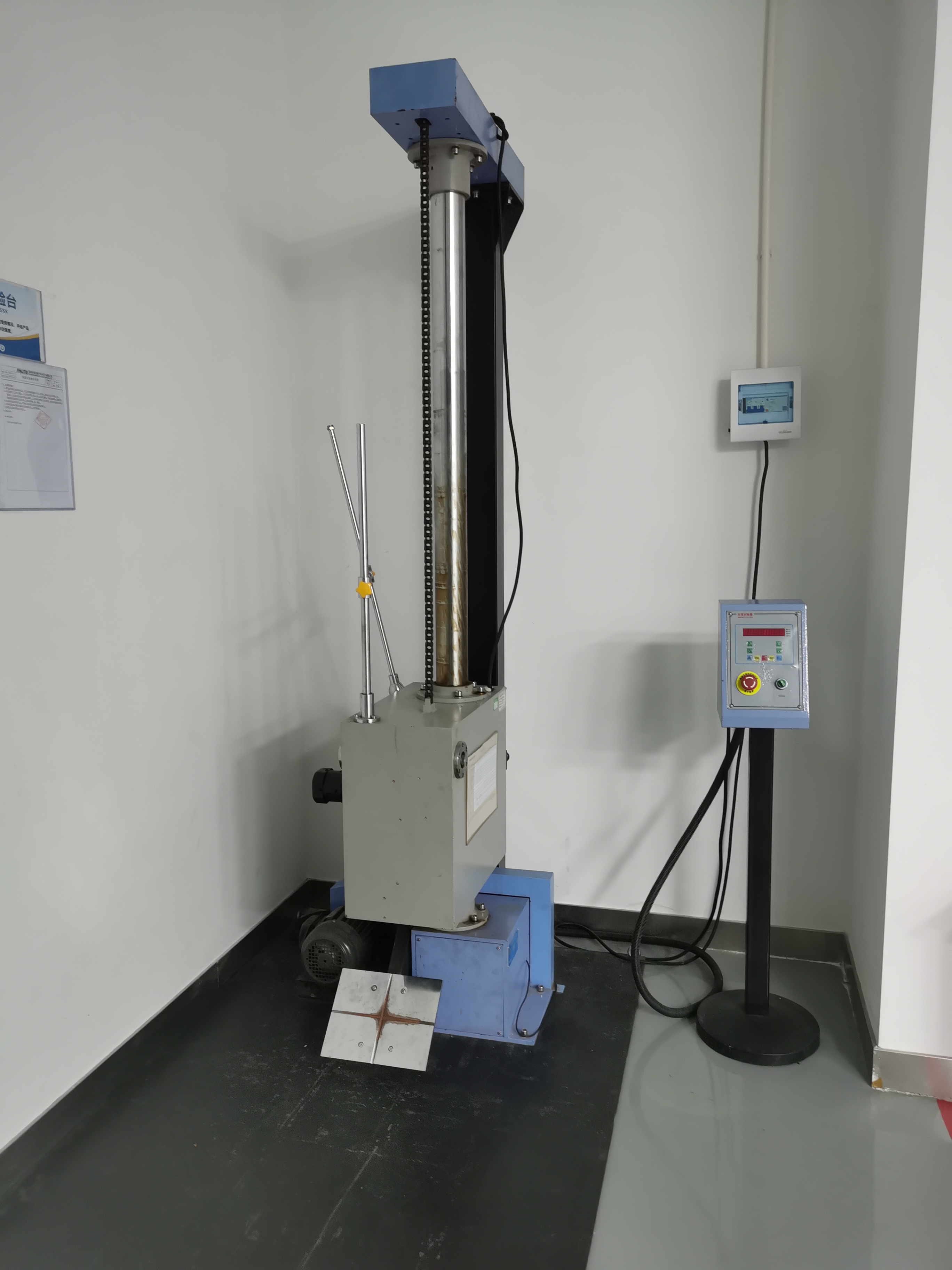
Drop test equipment in the manufacturing facility. A scorecard asks which test reports accompany which model, not whether a testing room exists.
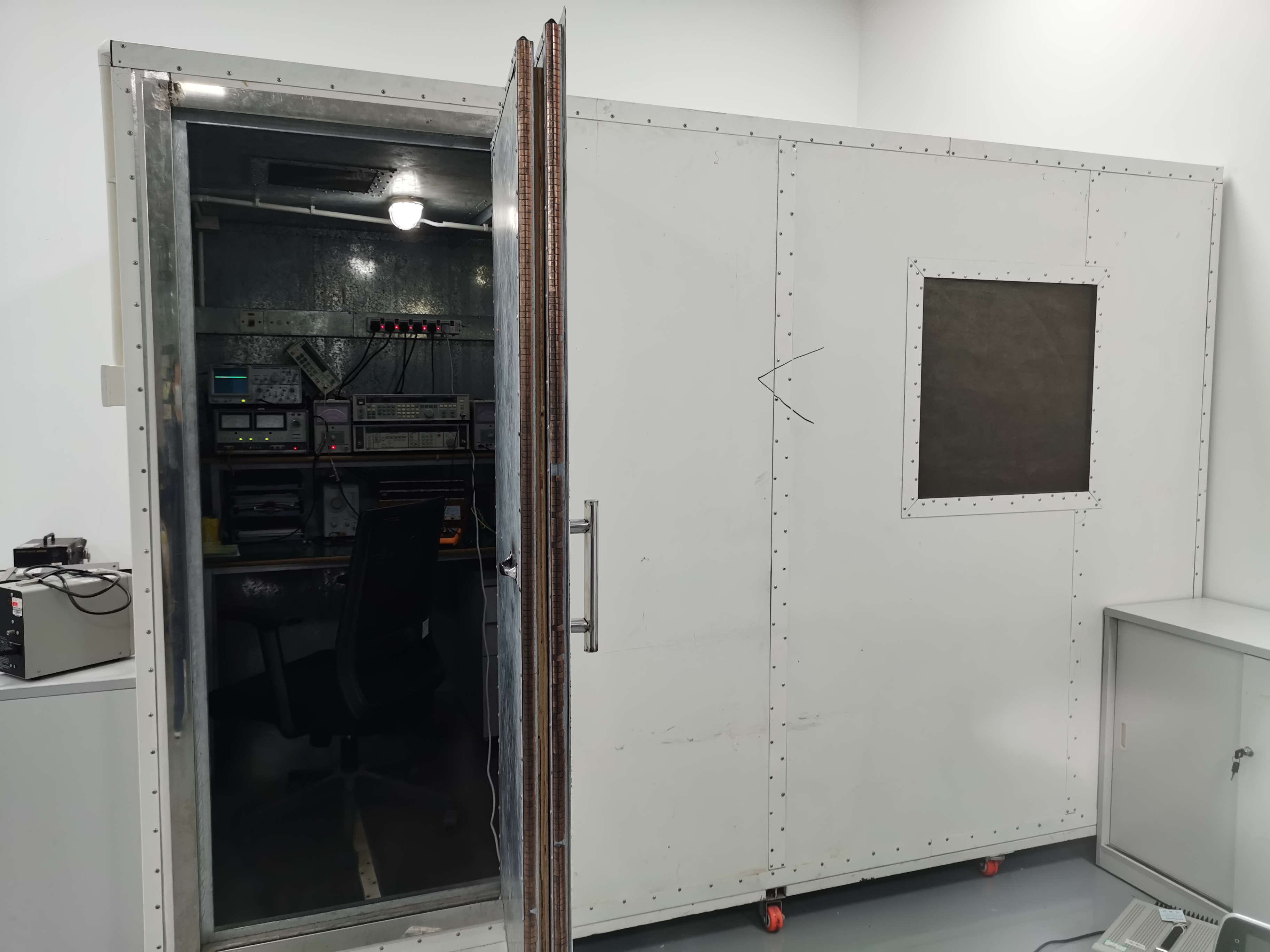
Signal shielding room used in the production and testing workflow. Compliance claims should be matched to a report, a scope and a covered model list.
Frequently asked questions
Which certifications should an aftermarket car radio supplier be able to evidence?
At product level, expect E-mark, CE and FCC, plus RoHS where electronics are sold into the European Union. Published TOPNAVI product data lists E-mark, CE and FCC for the TS105 9-inch universal car multimedia player, CE and FCC for the TN-3036 16.8-inch multimedia player, and CE, FCC and RoHS for the TN-AI47 CarPlay box. At factory level, the company's published profile states ISO 9001 certification. Score each of these only when the certificate document, issuing body, certificate scope, covered model list and validity date have been supplied.
How can a buyer verify supplier capability instead of trusting the catalog?
Ask for model-level documentation and check that the catalog spans more than one platform type. The published TOPNAVI profile states a 20,000 m² facility, 100+ staff, annual output of 360,000 units and a 50-engineer R&D team, alongside product lines that include Android car radios, Linux-based motorcycle navigation units (TN-M9, TN-M11) and a CarPlay box (TN-AI47). A capability score should rise only when those statements can be matched to specific models, specific specifications and supporting documents.
How should budget be handled inside the scorecard?
Score budget on quotation completeness rather than on the lowest unit price. A cheap car radio quotation that omits the wiring harness, retail packaging, warranty reserve or spare-part commitment is not comparable with one that includes them. Request a line-item quotation per model covering MOQ, Incoterms, packaging format, included accessories, warranty terms and spare-part availability — the TN-X23 package, for example, is listed with an installation cable and a retail box — then compare total landed cost, not the headline figure. Saving on a car radio wiring harness at quotation stage is usually repaid at installation stage.
What should sample validation cover before an order is placed?
Validate the exact SKU, not the product family. Check the documented fields against the physical unit: on a TS105 sample, the 9-inch IPS capacitive screen at 1024×600, Android 14 on the UIS7865 platform and built-in wireless CarPlay and Android Auto; on a TN-M11 sample, the IP67 protection level, the Linux platform and the 12V–30V input range. Add a power-on and thermal check, confirm the label and certification markings against the documents collected in Block 3, and record the results in the same fields used in the scorecard so that the sample result and the supplier score are directly comparable.
What delivery commitments should be written into the agreement?
Convert delivery assurance into written commitments: SKU-level lead time, monthly capacity allocation for your account, packaging and carton marking specification, inspection point and the documentation set supplied with each shipment. A stated annual output — 360,000 units in TOPNAVI's case — is the starting point for that conversation rather than the answer: divide it by twelve to get a monthly run-rate, then compare that figure with your peak monthly requirement and with the number of SKUs you are asking the line to run in the same window. Buyers who want to run this scorecard against real data can request a model-level quotation and the product catalog by emailing sales@topnaviauto.com, or download the company brochure from the link below.
Conclusion
Supplier evaluation in the aftermarket car radio category is a document exercise before it is a commercial one. The five blocks — product breadth and platform consistency, specification documentation, certification evidence, warranty terms and delivery assurance — convert a sales conversation into 100 points that two suppliers can be compared against on the same basis. The published TOPNAVI data used throughout this article, from the Android 14 TS105 to the IP67 TN-M11 and the 360,000-unit annual output, shows what a scorable answer looks like; the scorecard's job is to establish which parts of that answer arrive as documents, which arrive as claims, and which never arrive at all.
Buyers who prefer to start with the company rather than the scorecard can review the product range at TOPNAVI and match the models above against their own requirement sheet.
Next step: request the catalog and a model-level quotation
Run the scorecard against real specification sheets. Request the TOPNAVI product catalog, per-model fact sheets for the TS105, TN-3036, TN-AI47, TN-M9 and TN-M11, and a quotation with MOQ, packaging and warranty terms included. Email sales@topnaviauto.com or call +86 150-7094-1278.
Download the company brochure (PDF): TOPNAVI product brochure
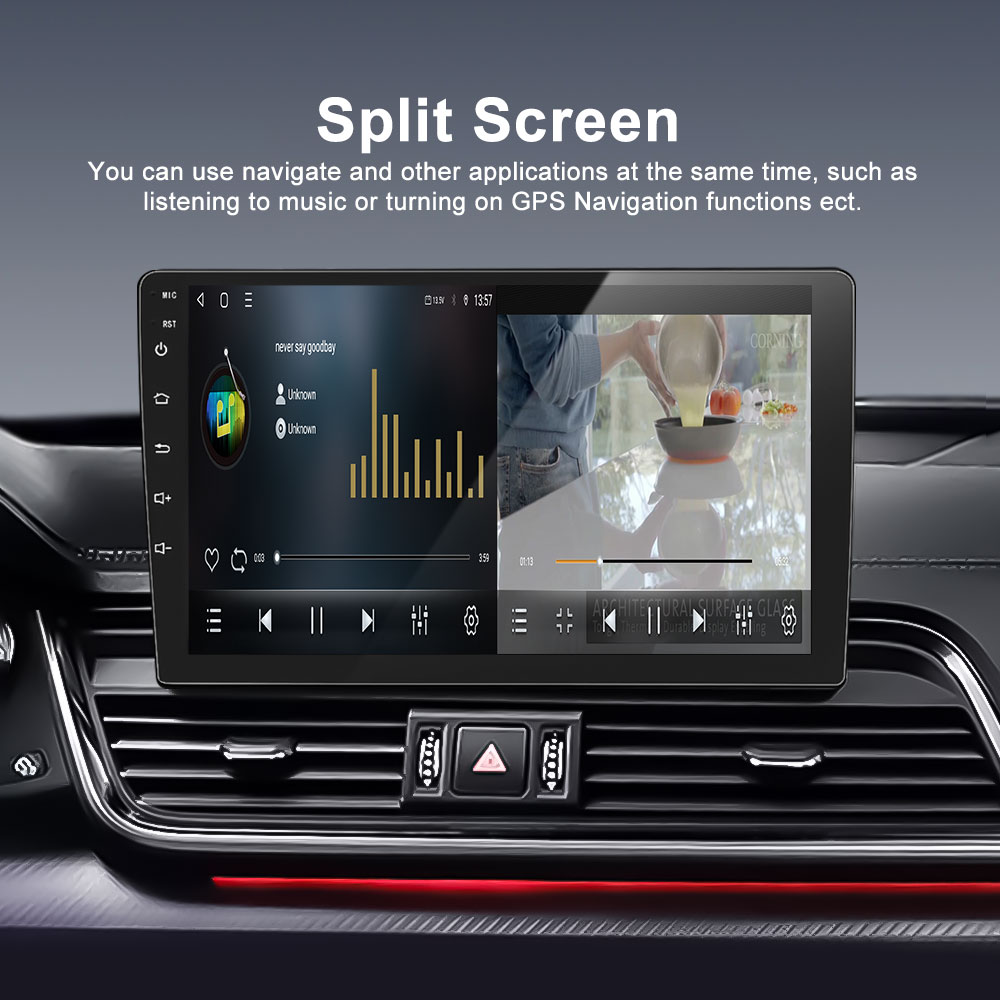
TS10 Universal Car Multimedia Player: Android 12, Unisoc UIS7862S 8-core platform, operating range -30°C to 75°C — an example of the specification depth a buyer should expect per SKU.
Have Questions or Need More Details?
Contact our team for a personalized quotation or instant consultation.
Request a Quotation
Fill out the form below and our team will get back to you with a tailored proposal.
WhatsApp Direct Chat
Prefer to chat in real-time? Message us on WhatsApp for instant assistance & quick answers.
- Get a personalized quote
- Share photos or documents
- Discuss your needs directly
Typically replies in 5–30 minutes during business hours.