
Decoding Car Radio Specs: IPS Displays, CPU Performance, and OS Demystified
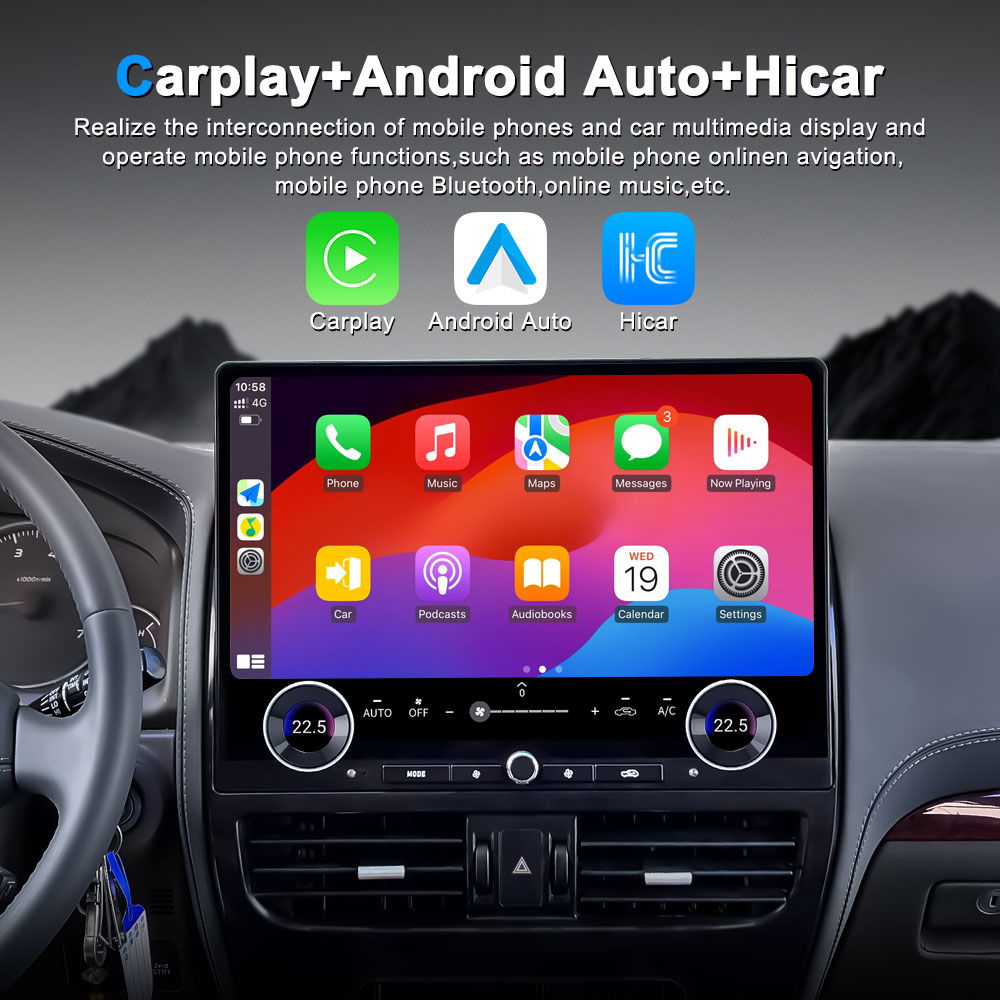
Display panel, processor, and operating system are the three specification groups that decide how a car radio behaves long after installation. The TN-3036 shown here pairs a 16.8-inch 2560×1440 IPS touch screen with an 8-core Android 13 platform.
A car radio specification sheet is a compressed technical contract. A supplier writes 'IPS, octa-core, Android 13' and expects the buyer to understand what that combination actually delivers: whether the screen stays readable from the passenger side, whether wireless CarPlay survives a simultaneous navigation session, and whether the platform can still be updated years after the container clears customs. Judged by headline numbers alone, three specification groups cause the most sourcing errors, and they are the display panel, the processor, and the operating system.
This guide decodes those three groups for buyers working at the research and evaluation stage. It uses production models as reference points rather than abstract theory: the 16.8-inch 2560×1440 IPS screen on the TN-3036, the UIS7865 octa-core platform inside the TS105, and the Linux operating system used across the TN-M9 and TN-M11 motorcycle navigators. The objective is not to turn buyers into hardware engineers, but to make each line of a specification sheet negotiable, testable, and comparable across suppliers. TOPNAVI, the brand operated by Shenzhen Top Navi Electronic Tech Co., Limited in Shenzhen, China since 2014, publishes these specifications across its Android car radio, motorcycle navigation, and CarPlay accessory lines, which makes its catalogue a useful worked example for the decoding process.
Problem Definition: Why Car Radio Spec Sheets Mislead Buyers
The recurring failure in car radio procurement is not a missing specification. It is a specification without a reference point. Three patterns account for most of the gap between what a buyer reads on a product page and what an installer discovers on the bench.
- Numbers without viewing context. The same resolution figure carries very different meaning on a 7-inch panel and on a 16.8-inch panel, because the eye judges pixel density relative to viewing distance, not the raw pixel count.
- Core counts without architecture. A quad-core platform and an octa-core platform can operate at similar clock speeds and behave completely differently, because the division between high-performance and efficiency cores shapes how the chip handles concurrent workloads.
- Operating system names without workload context. Android and Linux are not quality tiers. They are different answers to the question of what the unit must do, how frequently it must be updated, and how much memory it needs to do it well.
The practical consequence is that projects often over-specify where headroom is cheap and under-specify where it is expensive to be wrong. A project that genuinely depends on a large application ecosystem needs RAM and storage headroom from the start, because neither can be expanded after the PCB is finalized. A project that only needs CarPlay projection, navigation, radio, and media playback can frequently run a far lighter platform and gain predictability instead.
There is a second, quieter problem. Because specification sheets are written for comparison rather than for operation, they rarely state the conditions under which a number was measured. A working temperature range, a brightness figure in cd/m², or a radio IC part number tells a buyer far more about field behaviour than a marketing phrase, yet these are exactly the fields that get dropped when a distributor reformats a datasheet for its own catalogue.
Industry Background: A Mature Market Where Specification Literacy Separates Suppliers
The global in-car infotainment market was valued at USD 22.5 billion in 2024, according to Grand View Research, with China dominating the regional market. Market Research Future estimates the car audio head unit segment alone at USD 15.44 billion in 2024 and identifies Double DIN as the largest segment within it. Fortune Business Insights reports that Asia Pacific held a 54.21% revenue share of the car audio market in 2025, reaching USD 6.01 billion in that region.
Those figures describe a market that is not short of suppliers. What separates them is increasingly narrow and increasingly technical: panel quality, platform stability, and whether a firmware roadmap survives the buyer's own product cycle. It is worth noting that estimates for the broader automotive infotainment market range from roughly USD 15 billion to USD 33.5 billion depending on whether telematics and factory-fitted systems are bundled into the definition, which is a reminder that market headline figures should always be read together with their scope statement.
Independent of market size, three specifications have become the practical shorthand buyers use when shortlisting car radio suppliers. The display panel determines whether the product feels modern or dated on a showroom wall. The processor determines whether the unit still responds quickly in year three. The operating system determines what the unit can be taught to do, who can maintain it, and how it will be updated. Suppliers that can speak clearly about all three tend to be the ones that also survive a technical audit.
Detailed Solution: Reading the Three Specification Groups Correctly
1. Display Technology: IPS vs TN, and What Resolution Actually Means
The panel is the single component a customer evaluates with their eyes before they evaluate anything else. Two panel architectures dominate the aftermarket car radio category, and they behave differently in a vehicle cabin.
TN (twisted nematic) panels switch liquid crystal molecules in a way that produces fast response times and low manufacturing cost. The trade-off is angular performance: colours shift and contrast drops as the viewing angle opens up. In a car, the head unit sits in the centre console, so the driver and the front passenger are already viewing it from two different angles, and rear-seat passengers from a third.
IPS (in-plane switching) panels rotate the molecules within the plane of the panel, which produces wider viewing angles and more consistent colour across the screen. For a double din car radio or a touch screen car radio mounted in a dashboard, that consistency is what keeps navigation maps, reversing camera feeds, and album artwork readable for everyone in the cabin rather than only for the person sitting directly in front of the unit.
Concrete examples make the difference tangible. The TN-3036 uses a 16.8-inch IPS touch screen at 2560×1440, with 4GB of RAM and 64GB of storage on an Android 13 platform. The TS105 uses a 9-inch IPS capacitive touch screen at 1024×600, running Android 14 on a UIS7865 octa-core processor. The TN-M11 motorcycle navigation unit uses a 6.25-inch IPS capacitive touch screen at 1560×720 with a rated display brightness of 300 cd/m², which is the more informative way to state a brightness claim.
Panel technology is not the only variable. Some models in the same catalogue use different approaches: the TN-UK1105 uses an 11.5-inch 2K OLED capacitive touch screen at 2000×1200, the TN-X80 uses a 10.1-inch OLED panel at 2000×1200, and the TS10 supports IPS or QLED panels with a capacitive multi-touch layer, with resolution options spanning 1024×600, 1280×480, 1280×720, and 1920×1080.
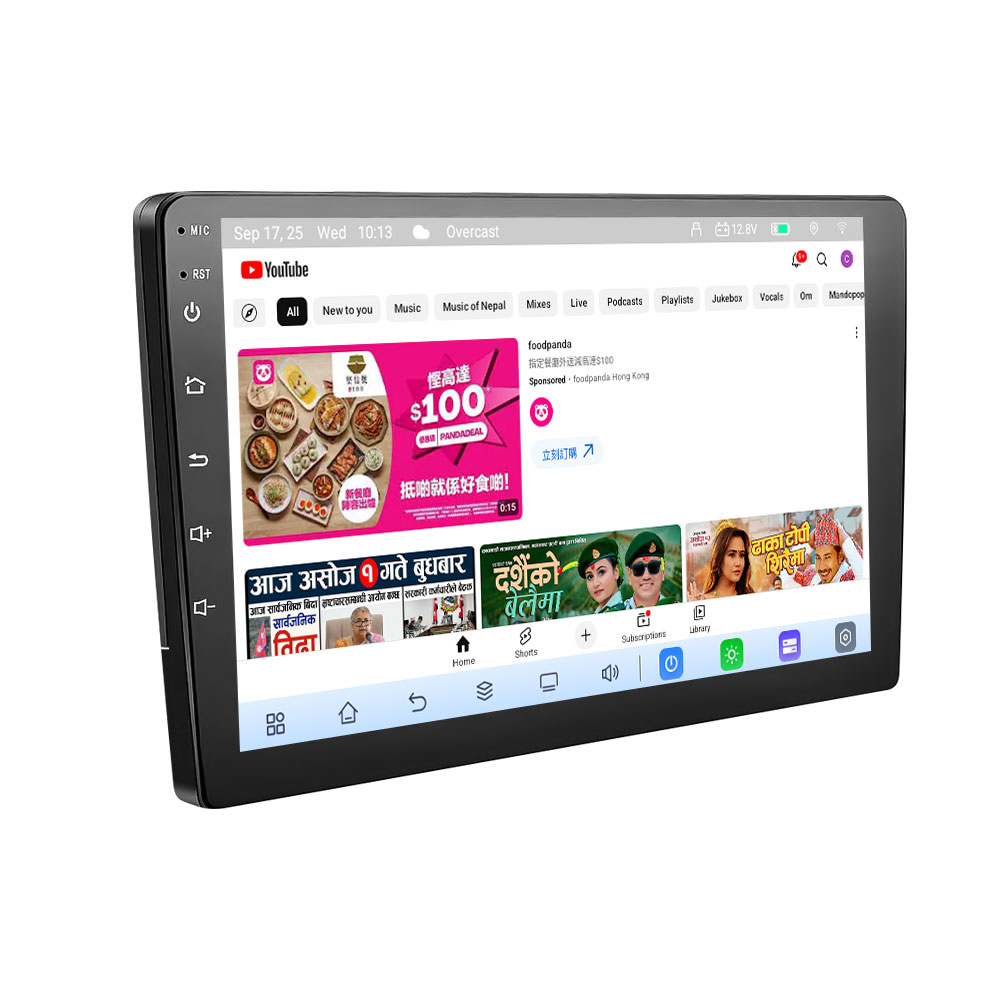
The TS105 pairs a 9-inch IPS capacitive touch screen at 1024×600 with an Android 14 operating system and a UIS7865 octa-core processor, illustrating how display, platform, and OS specifications are selected together rather than independently.
Buyer rule for displays: read size, resolution, panel type, and brightness as a set. A resolution figure without a size is incomplete. A panel type without a brightness figure is incomplete for any market where the unit will be used in direct sunlight.
2. Processing Power: Octa-Core vs Quad-Core, Architecture, and Memory
Processor specifications are where buyers most often substitute a number for an understanding. Core count is the visible figure, but three other attributes shape real performance: core architecture, clock frequency, and the memory and storage attached to the chip.
Core count and architecture. Modern car radio SoCs typically divide their cores into performance-oriented and efficiency-oriented groups. The TS10 uses a Unisoc UIS7862S configured as eight cores in a 2×A75 + 6×A55 arrangement running at up to 2.0GHz on a 12nm process, paired with a Mali-G523EE GPU at 614.4MHz. That structure matters more than the raw count: the high-performance cores handle demanding foreground work such as map rendering, while the efficiency cores absorb background tasks. The TS105 uses a UIS7865 octa-core processor, the TN-X80 and TN-X23 use a UIS8581A 8-core at 1.6GHz, and the TN-UK1105 uses a TS18L 8-core Cortex-A55 at 1.6GHz.
Where quad-core still fits. Not every product needs eight cores. The TN-AI47 CarPlay box uses a quad-core processor with 2GB of RAM and 16GB of storage on Android 11, which is proportionate to its job: projecting wireless CarPlay and Android Auto onto an existing OEM screen, plus running streaming applications over HDMI output. A lighter, fixed workload does not benefit from an oversized processor, and pairing a heavy SoC with a small memory budget produces worse behaviour than a balanced configuration.
Memory and storage. RAM determines how many things the unit can do at once; storage determines how much can be installed and cached. The TN-3036 and TN-X23 both ship with 4GB RAM and 64GB ROM. The TS10 supports LPDDR4X memory in 4GB, 6GB, and 8GB configurations with eMMC storage of 64GB, 128GB, or 256GB. For a buyer evaluating an android car radio for a fleet or retail project, the memory tier is often the single most predictive indicator of how the unit will feel after two years of firmware growth.
Audio processing as a separate axis. Processing power also shows up in audio. The TS10 carries a ROHM BU32107EFV DSP with 48-band EQ and a TDA7851 amplifier rated at 4×48W maximum with a signal-to-noise ratio above 90dB, and a TDA7703 radio chip covering FM 87.5–108.0MHz and AM 522–1710KHz with RDS. The TN-3036, TN-X23, TN-9359, and TN-M9 all list a 4×50W audio output stage, and the TN-X23 uses a 4755 radio IC. These are the components that determine whether a cheap car radio sounds thin or full, and they are worth requesting explicitly rather than assuming from the price band.
3. Operating System: Android vs Linux and the Workload Each One Serves
The operating system decides what the product can become. Android and Linux represent two different design philosophies rather than two quality levels.
Android is the choice when the unit must run third-party applications, support an app store, receive over-the-air feature updates, and present a customizable user interface. The current TOPNAVI catalogue spans several Android generations: Android 11 on the TN-AI47 CarPlay box, Android 12 on the TS10, Android 13 on the TN-3036, TN-UK1105, TN-X80, and TN-X23, and Android 14 on the TS105. Newer Android versions generally bring updated security patches and revised application compatibility, which matters for projects where the unit will remain in the field for several years. The cost of Android is resource consumption: it needs meaningful RAM and storage, and it benefits from a processor with a modern architecture.
Linux is the choice when the workload is bounded and stability is the priority. The TN-M9 motorcycle navigation unit runs Linux on a V853 ARM Cortex-A7 at 1.0GHz, and the TN-M11 runs Linux on a V853 or V533 processor. The TN-9359 is a 2 DIN car radio running a Linux OS with GPS navigation, Bluetooth, WiFi, FM radio, USB and TF card playback, steering wheel control, and AUX input, on a 7-inch screen at either 1024×600 or 1280×720. The TN-RD1001 portable unit also runs a Linux system while handling wireless Apple CarPlay, wired Android Auto, ADAS, loop recording, and a 4K UHD front camera at 3840×2160P.
Linux systems typically start predictably, consume fewer resources, and generate less heat, which is why they appear frequently in motorcycle and portable form factors where power and thermal budgets are tight. The trade-off is flexibility: a Linux unit does what it was built to do, and adding new third-party applications is not part of the design intent.
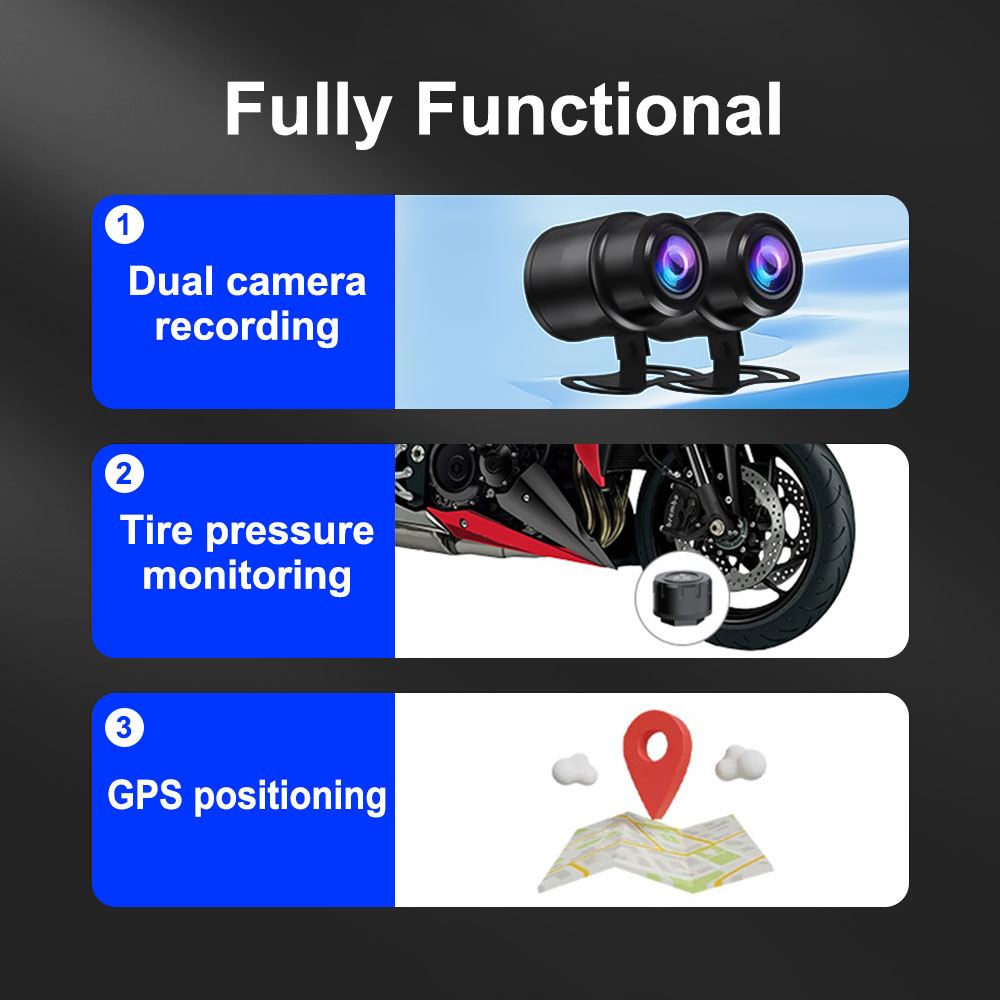
The TN-M11 runs a Linux operating system on a V853/V533 processor with a 6.25-inch IPS capacitive screen at 1560×720 and a rated brightness of 300 cd/m², showing how OS choice follows the workload rather than the price point.
Buyer rule for operating systems: choose Android when the product roadmap includes new applications, custom UI themes, and OTA feature delivery. Choose Linux when the specification is fixed, the environment is demanding, and the priority is predictable behaviour over expandability.
4. The Specifications That Do Not Appear on the Marketing Page
Environmental and electrical specifications rarely appear in a distributor's listing, yet they decide field failure rates. In-vehicle conditions include operation across a wide temperature range, high vibration, dust exposure, electromagnetic interference, a 12V DC vehicle power supply, and frequent cold starts. Category requirements for this kind of application include EMC anti-electromagnetic interference compliance, wide temperature resistance, anti-vibration design, CAN bus protocol adaptation across 99% of car models, steering wheel control compatibility, and multi-language localization support.
Comparable units show how much this varies. The TN-3036 is rated from -30°C to 75°C. The TS10 is rated from -30°C to +75°C in operation with storage from -40°C to +85°C. The TN-RD1001 operates from -20°C to 70°C and accepts 12–24V DC, covering both cars and trucks. The TN-M11 accepts 12V–30V and operates from -10°C to +60°C with IP67 waterproofing, and the TN-M9 is also rated IP67. At the narrower end, the TN-AI47 operates from -10°C to 60°C.
On the regulatory side, automotive electronic devices are expected to comply with ISO 16750 for environmental testing covering temperature, vibration, and humidity resilience. CE marking is mandatory for car radios entering the EU under the RED, EMC, and LVD frameworks, while FCC certification is required for the US market. Certification by model is not uniform: the TN-3036 lists CE and FCC, the TS105 lists E-mark, CE, and FCC, and the TN-AI47 lists CE, FCC, and RoHS. This variation is precisely why certification should be requested per model rather than assumed per supplier.
Step-by-Step Breakdown: A Six-Step Specification Review Framework
The following sequence moves from the constraints that cannot be changed to the components that can be negotiated. Applied in order, it prevents the common mistake of selecting a processor before the installation format is settled.
- Fix the installation format first. Confirm whether the vehicle takes a 2DIN universal unit, a 1DIN unit, a dashboard mount, or a handlebar mount. The TN-3036, TN-X23, TN-X15, and TN-9359 are 2DIN universal; the TN-UK1105 is a 1DIN universal fit; the TS105 and TN-X80 are dashboard mount; the TN-M11 is handlebar mount and the TN-M9 is dashboard mount for motorcycles.
- Set the screen size from the vehicle and the audience. A 16.8-inch panel such as the one on the TN-3036 suits a large SUV console, while a 5-inch display such as the TN-M9 suits a motorcycle dashboard where space and glance time are both limited.
- Choose the panel type and confirm the brightness figure. IPS for wide-angle consistency, OLED or QLED where deeper contrast justifies the cost, and always request a brightness value in cd/m² rather than a descriptive adjective.
- Match the processor to the workload, not to the label. Determine whether the unit will run wireless CarPlay projection only, or navigation plus media plus third-party applications. Then select a platform whose architecture, clock speed, memory, and storage match that workload.
- Select the operating system from the update and customization plan. If the project requires custom boot animation, app pre-installation, UI theming, or OTA feature delivery, Android is the appropriate base. If the specification is fixed and environmental stability dominates, a Linux platform is the better fit.
- Verify environment, power, and certification against the destination market. Check the operating temperature range, the accepted voltage range, and the specific certificates required by the importing country, then confirm that those certificates exist for the exact model being quoted.
Use Cases: How Specification Choices Play Out in Real Projects
Scenario 1: A Modification Chain Serving High-Temperature, High-Vibration Markets
A car modification chain store in Mexico supplied after-sales upgrades for used car dealerships and private car owners, covering 1,000 units over a period of 2.5 years. The configuration used the TN-X80, a dual knob car radio with a 10.1-inch OLED screen at 2000×1200, an Android 13 system, and a UIS8581A 8-core processor at 1.6GHz. The reported outcomes were an improved in-car entertainment experience and a high customer satisfaction rate, with the highlighted factors being dual knob physical control, built-in DSP audio, and steering wheel control compatibility.
The specification lesson here is that physical controls still matter in retrofit markets. A dual knob design gives installers and end users a control path that does not depend on the touch layer, which reduces support calls in vehicles where the console angle is awkward.
Scenario 2: An OEM Pre-Installation Project With Compliance Exposure
An automotive OEM in Germany used 2,000 units over four years for factory pre-installation in new energy vehicle models, based on the TS10 platform. The TS10 combines a Unisoc UIS7862S octa-core processor, Android 12, optional IPS or QLED panels, 4GB to 8GB of LPDDR4X RAM, and 64GB to 256GB of eMMC storage, with wired and wireless CarPlay, steering wheel control, and DVR or reverse camera support. The reported outcome was compliance with EU automotive EMC standards and long-term stable operation, supported by CE, FCC, and E-mark certification and an Android 14 system on related models.
The specification lesson is that OEM projects demand certification and thermal margin together. A four-year supply relationship requires that the platform remain serviceable, which is why memory and storage tiers should be selected with firmware growth in mind rather than for immediate requirements only.
Scenario 3: Motorcycle Navigation Where Power and Water Are the Constraints
Two-wheel applications illustrate why Linux remains relevant. The TN-M11 motorcycle navigation unit runs a Linux system on a V853 or V533 processor with a 6.25-inch IPS capacitive screen at 1560×720, IP67 waterproofing, 12V–30V input, dual Bluetooth 4.2/5.0, and multi-language support covering ten languages including English, Russian, Spanish, French, German, Japanese, Korean, Arabic, Italian, and Portuguese. The TN-M9 pairs a 5-inch 854×480 display with the same Linux base, a V853 ARM Cortex-A7 at 1.0GHz, wireless CarPlay and Android Auto, blind spot detection support, 433-protocol tire pressure detection, and 2K DVR camera support, also at IP67.
The specification lesson is that a lower-power processor paired with a purpose-built operating system can deliver features that a power-hungry platform could not sustain on a motorcycle electrical system.
Scenario 4: Retail Distribution Where Returns Drive the Business Case
An online auto parts retailer in the United States sold 1,500 units over three years into pickup truck and SUV modification enthusiasts, using the TS10. The reported outcomes were fast after-sales response and a low product failure rate, with the highlighted factors being universal 2DIN fitment, wireless Android Auto, and built-in GPS navigation.
The specification lesson for retail channels is that fitment breadth and connection stability reduce return rates more effectively than additional features. A universal 2DIN format and mature wireless projection support address the two most common causes of consumer returns.
Comparison Table: Specification Reference Across Representative Models
The table below compares models from a single production catalogue across the specification groups discussed above. All figures are as published for each model.
| Model | Screen & Panel | Resolution | Operating System | CPU | Memory | Installation | Certification |
|---|---|---|---|---|---|---|---|
| TN-3036 | 16.8-inch IPS touch | 2560×1440 | Android 13 | 8-core | 4GB RAM + 64GB ROM | 2DIN universal | CE, FCC |
| TS105 | 9-inch IPS capacitive | 1024×600 | Android 14 | UIS7865 octa-core | Not published | Dashboard mount | E-mark, CE, FCC |
| TS10 | Capacitive multi-touch, IPS/QLED optional | 1024×600 (options up to 1920×1080) | Android 12 | Unisoc UIS7862S 8-core, 2×A75+6×A55, 2.0GHz, 12nm | 4/6/8GB LPDDR4X + 64/128/256GB eMMC | Universal | Not published |
| TN-UK1105 | 11.5-inch 2K OLED capacitive | 2000×1200 | Android 13 | TS18L 8-core Cortex-A55 1.6GHz | Not published | 1DIN universal | Not published |
| TN-X80 | 10.1-inch OLED | 2000×1200 | Android 13 | UIS8581A 8-core 1.6GHz | Not published | Dashboard mount | Not published |
| TN-X23 | 12.3-inch QLED capacitive | Not published | Android 13 | UIS8581A 8-core 1.6GHz | 4GB RAM + 64GB ROM | 2DIN universal | Not published |
| TN-M11 | 6.25-inch IPS capacitive, 300 cd/m² | 1560×720 | Linux | V853 / V533 | Not published | Motorcycle handlebar | IP67 |
| TN-M9 | 5-inch display | 854×480 | Linux | V853 ARM Cortex-A7 1.0GHz | Not published | Motorcycle dashboard mount | IP67 |
| TN-9359 | 7-inch LCD touch | 1024×600 / 1280×720 | Linux OS | Not published | Not published | 2DIN universal | Not published |
| TN-AI47 | No screen (uses existing car screen) | 1920×1080 output | Android 11 | Quad-core | 2GB RAM + 16GB ROM | Universal for OEM wired CarPlay cars | CE, FCC, RoHS |
The comparison is deliberately not a ranking. It demonstrates that two products from the same manufacturer can legitimately sit on very different specifications, because each one answers a different operating question. A buyer who reads the table by looking for the largest number in every column will select the wrong unit for a motorcycle project and the wrong unit for an OEM pre-installation project simultaneously.
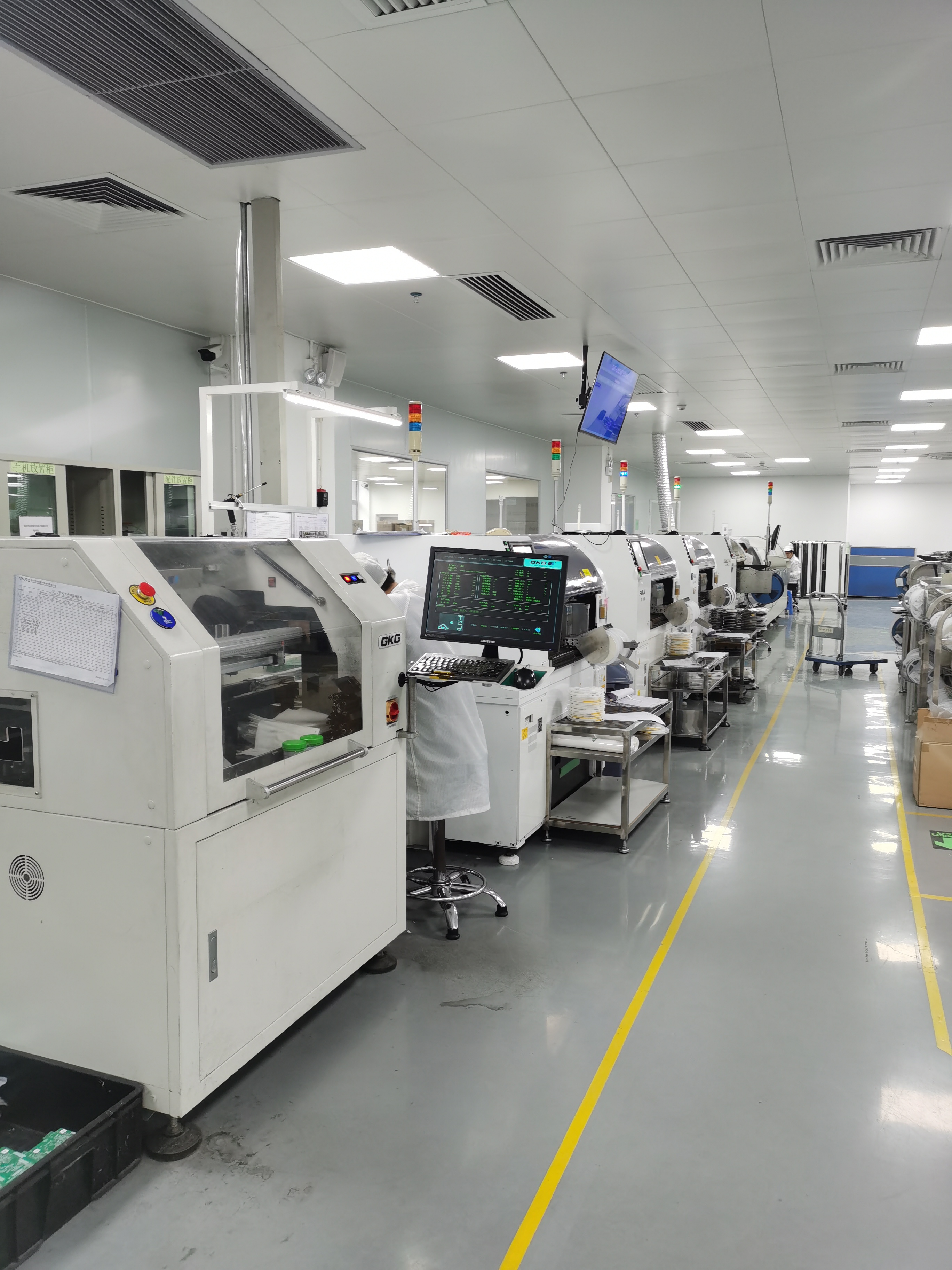
Specification claims depend on manufacturing control. TOPNAVI operates a 20,000 m² facility in Shenzhen with SMT and wave soldering lines, a 50-engineer R&D team, and ISO 9001 certification, with 100% testing applied to production output.
FAQ: Practical Questions Buyers Ask Before Selecting a Car Radio
What certifications does a car radio need for the EU and US markets?
CE marking is mandatory for car radios entering the EU under the RED, EMC, and LVD frameworks, while FCC certification is required for the US market. Automotive electronic devices are also expected to comply with ISO 16750, which defines environmental testing for temperature, vibration, and humidity resilience. Certification is listed per model rather than per supplier: the TN-3036 carries CE and FCC, the TS105 carries E-mark, CE, and FCC, and the TN-AI47 carries CE, FCC, and RoHS. Buyers should request the certificate matching the exact model being quoted.
How do I decide between an octa-core and a quad-core car radio?
The decision should follow the workload rather than the core count. An octa-core platform such as the Unisoc UIS7862S in the TS10, configured as 2×A75 + 6×A55 at up to 2.0GHz on a 12nm process, suits units that run navigation, media playback, and third-party applications concurrently. An octa-core UIS7865 drives the TS105, and a UIS8581A 8-core at 1.6GHz drives the TN-X80 and TN-X23. A quad-core platform such as the one in the TN-AI47 is proportionate for a fixed CarPlay and Android Auto projection workload. Architecture, clock speed, RAM, and storage usually predict real-world responsiveness more accurately than the core count alone.
Which car radio specifications drive cost the most?
Four specification groups account for most of the cost difference between units that look similar on a listing page. The first is the display, where panel type, size, and resolution move together: a 16.8-inch 2560×1440 IPS screen on the TN-3036, a 10.1-inch 2000×1200 OLED on the TN-X80, and a 9-inch 1024×600 IPS screen on the TS105 sit in different cost bands even though all three are touch screen car radios. The second is the processor platform and its memory tier, where the TS10's optional 4GB to 8GB RAM and 64GB to 256GB storage range creates several price points from one model. The third is the operating system, since Android requires more memory and storage than a Linux platform performing a comparable bounded task. The fourth is certification scope, because E-mark, CE, FCC, and RoHS testing adds cost that a unit sold only in a single domestic market does not carry.
Can I evaluate a sample before committing to a volume order?
Yes. Sampling is the standard validation route for car radio projects, and the appropriate configuration is minimum order quantity of 1 unit with a lead time of 7 to 15 days alongside a monthly production capacity of 30,000 units. A sample evaluation should confirm the display under real ambient light, the touch and steering wheel control response, the wireless CarPlay and Android Auto connection stability, and the actual boot and application launch behaviour on the chosen memory tier. Buyers sourcing an aftermarket car radio for a multi-market programme should test on the vehicle models the product will actually be installed into.
What production lead time and customization scope should buyers expect?
The published production parameters are a monthly capacity of 30,000 units, a lead time of 7 to 15 days, and a minimum order quantity of 1 unit, with 100% testing applied to production. Customization covers logo, UI theme, boot animation, application pre-installation, language support in Portuguese, Spanish, English, and French, DSP tuning, button light colour, panel colour, screen size and resolution, RAM and ROM configuration, wired or wireless CarPlay, 4G module, GPS and BeiDou, AHD camera, steering wheel control, CAN protocol, vehicle adaptation, packaging, firmware OTA, and after-sales service. The breadth of that list is the reason specification review should happen before a quotation is requested, not after.
Conclusion: Turning Specifications Into Procurement Decisions
Car radio specifications are only meaningful when each figure is tied to the condition it has to survive. An IPS panel matters because the driver and the passenger view the screen from different angles. An octa-core processor with modern core architecture matters because navigation and wireless projection run at the same time. An operating system matters because it determines whether the unit can be updated after it has left the warehouse.
The three-tier reading framework in this guide reduces the risk of a specification mismatch: fix the installation format, choose the screen for the actual viewing situation, match the processor and memory to the real workload, select the operating system from the update and customization plan, and verify environment and certification against the destination market. Applied consistently, that sequence makes supplier quotations directly comparable, because every supplier is being asked the same question in the same order.
TOPNAVI designs and manufactures across these categories from a 20,000 m² facility in Shenzhen with a 50-engineer R&D team, 100+ production staff, and an annual output of 360,000 units, exporting to more than 70 countries with ISO 9001 certification at the factory level and CE, FCC, RoHS, E-Mark, and EMC certification across its product range.
Next Step: Request a Specification Sheet or Evaluation Sample
Buyers evaluating a car radio for a specific project can request the full specification sheet, certification documents, and an evaluation sample for the model that matches their vehicle and market. The published parameters for the range described in this guide are available in the downloadable catalogue.
Email: sales@topnaviauto.com | WhatsApp: +86 150-7094-1278 | Website: www.topnavi.com.cn
Download the product catalogue: TOPNAVI Product Catalogue (PDF)
Customization covers logo, UI theme, boot animation, application pre-installation, DSP tuning, panel colour, screen size and resolution, RAM and ROM, 4G module, GPS and BeiDou, CAN protocol, and packaging, with a lead time of 7 to 15 days.
Have Questions or Need More Details?
Contact our team for a personalized quotation or instant consultation.
Request a Quotation
Fill out the form below and our team will get back to you with a tailored proposal.
WhatsApp Direct Chat
Prefer to chat in real-time? Message us on WhatsApp for instant assistance & quick answers.
- Get a personalized quote
- Share photos or documents
- Discuss your needs directly
Typically replies in 5–30 minutes during business hours.