
How to Read a Car Radio Spec Sheet: Screen, CPU, RAM, and OS for Aftermarket Buyers
A car radio spec sheet is a written claim, not a test report. Read in a fixed order, it tells an aftermarket buyer two things at once: what the unit is configured to do, and how precisely the supplier is able to describe it. Four lines decide most of that outcome, namely display, chipset, memory and operating system. Connectivity, audio output, working voltage, temperature range and certification are the boundary conditions around them.
This guide decodes those lines using two current TOPNAVI units as factual examples: the TS105, a 9-inch IPS 1024×600 Android 14 universal head unit, and the TN-3036, a 16.8-inch 2560×1440 Android 13 unit. TOPNAVI is the brand of Shenzhen Top Navi Electronic Tech Co., Limited, a Shenzhen-based manufacturer of car multimedia players and GPS navigation systems founded in 2014, whose range covers universal and vehicle-specific Android head units.

A published spec sheet describes a configuration, not a finished promise. The same chassis can carry different screen, memory and connectivity lines depending on the order.
Why two spec sheets for the same category rarely match
Buyers comparing three suppliers usually end up comparing three different documents rather than three products. The mismatch comes from three recurring patterns.
- Fields without units or definitions. "8-core" without a chipset part number, "4×50W" without an amplifier model, "high resolution" without a number. These lines cannot be compared across suppliers because they describe an impression rather than a measurement.
- Optional columns collapsed into one line. A single display entry can contain four panel options and two technology options. When a buyer quotes from that line, the base configuration is being compared with another supplier's top configuration.
- Silence. A sheet may state screen, operating system, CPU, connectivity and certification, and still not state RAM or ROM. The absence is not automatically a defect. It is an open question to place in the RFQ and in the sample test list.
The practical consequence is that a spec sheet should be read as a set of decisions the supplier has already made on your behalf. Your job is to identify which lines are fixed, which are variable, and which are missing.
Industry background: why the sheet became the screening document
Aftermarket car radio sourcing is a cross-border, configuration-heavy purchase. Global car audio revenue reached USD 12.24 billion in 2025, according to Mordor Intelligence's car audio market analysis, and the double DIN form factor accounted for 44% of car stereo market revenue in 2025, according to Grand View Research's in-car infotainment report covering 2025 to 2030. Units with recording or reproducing apparatus typically classify under HS 8527.21 for customs purposes. All three facts point the same way: a buyer in one market is screening a product built in another, and the spec sheet is the shared document that both sides work from before a sample ever ships.
Because the category is configuration-driven, the sheet also functions as a quotation input. A manufacturer that offers OEM and ODM production treats items such as screen size and resolution, RAM and ROM, connectivity modules, panel colour and firmware OTA as selectable lines. That means the same model name can legitimately appear with two different sheets. The reading skill is therefore not memorising specifications, but knowing which fields are structural and which are chosen per order.
Decoding the lines that decide the product
1. Screen: read four values, not one
The display line contains four separate facts, even when it is written as one sentence: the physical diagonal, the native resolution, the panel technology, and the touch layer. The TS105 sheet states 9 inch, 1024×600, IPS and capacitive touch screen. The TN-3036 sheet states 16.8 inch, 2560×1440, IPS touch screen.
Those two examples sit in different installation classes. A 9-inch universal unit with dashboard mounting fits a broad range of vehicles, which is why the TS105 is listed with universal car fitment. A 16.8-inch unit at 2560×1440 replaces a wide dashboard panel, and the TN-3036 is listed with 2DIN universal installation and steering wheel plus touch control. A resolution number without the diagonal is meaningless, and a diagonal without the installation method is only half the fitment answer.
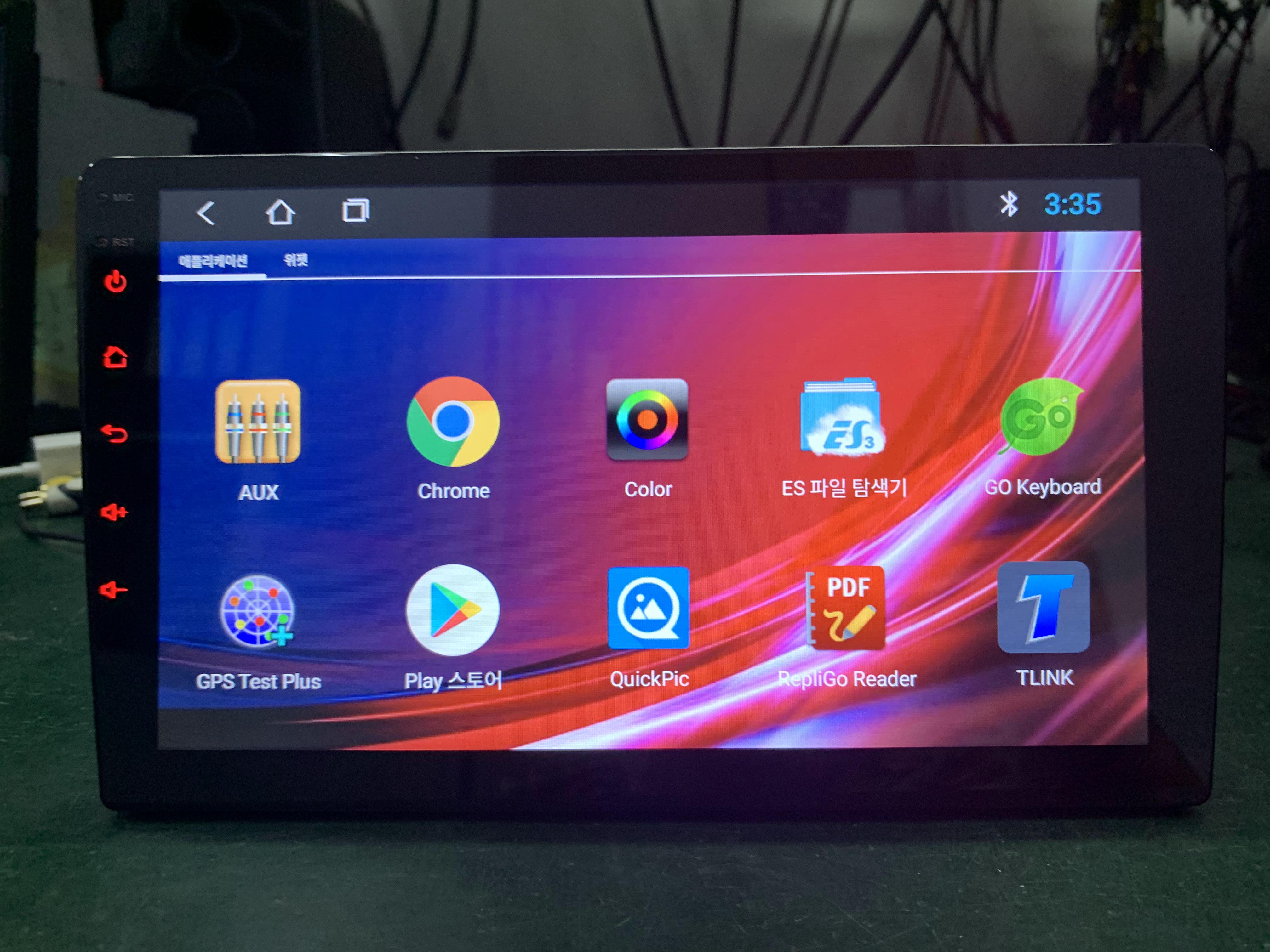
Screen size, native resolution, panel type and touch layer are four separate spec-sheet values. They should be recorded separately before any comparison.
Panel and touch wording also matters. IPS is a panel description; capacitive touch is an input description. When a sheet adds words such as "QLED optional", the buyer is looking at a base configuration plus an upgrade path, not a single product. One comparable TOPNAVI line, the TS10, states 1024×600 with optional 1280×480, 1280×720 or 1920×1080, and IPS or QLED optional. Reading that entry as "1024×600 IPS" would understate the quoted configuration.
2. CPU: a core count is not a class
Core count is the most quoted and least informative field on an Android head unit sheet. The TS105 states UIS7865 octa core. The TN-3036 states 8-core. The TS10 states Unisoc UIS7862S 8-Core with two A75 and six A55 cores at 2.0GHz on a 12nm process, plus a Mali-G523EE GPU at 614.4MHz.
The third example is the most useful format because it names a vendor, a part number, the core mix, the clock and the process node. Two designs can both be described as 8-core while differing in core architecture, clock speed and thermal behaviour. A buyer comparing "8-core" against "octa core" is comparing two adjectives, not two platforms.
The working rule is simple: locate the part number before the word "core". If the sheet does not contain one, that becomes a written question to the supplier, and the answer should arrive as text you can attach to the purchase file.
3. RAM and ROM: a matched pair, with memory type
Memory lines explain how the unit behaves after purchase, not how it performs in a showroom. RAM governs how many tasks the system holds at once, such as navigation running alongside streaming or a camera feed. ROM governs how much offline map data, media and applications can sit on the device permanently.
The TN-3036 states 4GB RAM and 64GB ROM. The TS10 states LPDDR4X memory at 4GB, 6GB or 8GB and eMMC MLC storage at 64GB, 128GB or 256GB. The memory type is worth recording, because LPDDR4X and eMMC MLC are specific technology statements rather than capacity claims. A sheet written as "4+64G" compresses both values and hides both types.
The TS105 sheet lists screen, operating system, CPU, connectivity, certification and fitment, but does not list RAM or ROM. That is a normal gap in a published sheet and a straightforward RFQ item. Buyers who assume a default value from a sister model are guessing, and a guess written into a purchase order becomes a dispute.
4. OS: version, generation and update path
The operating system line is only meaningful next to the chipset line. The TS105 ships with Android 14 and a UIS7865 octa-core CPU; the TN-3036 ships with Android 13 and an 8-core CPU. Neither version is good or bad in isolation. The relevant questions are whether the platform supports the version, and whether firmware updates can be delivered for the units you ordered.
Firmware OTA appears on the manufacturer's list of OEM and ODM customization items, alongside boot animation, app pre-install and language. Buyers should therefore ask a precise question: is OTA enabled for this order, and how is a firmware package released for a customized unit. A non-Android line exists for simpler requirements. The TN-9359, for example, runs a Linux OS on a 7-inch screen with 1024×600 or 1280×720 resolution and covers navigation, Bluetooth, WiFi, FM radio and steering wheel control without an Android application layer.
5. Connectivity: verify protocol by protocol
Connectivity lines are the easiest place to over-read a sheet. The TS105 states USB, built-in WiFi, wireless, Bluetooth and 3G/4G SIM card support, and separately states built-in wireless CarPlay and Android Auto. The TN-3036 states Bluetooth 5.0, built-in GPS, FM/AM RDS, and both wireless and wired CarPlay and wireless and wired Android Auto.
Each of those entries should be converted into a protocol question. Is Bluetooth version 5.0 stated, or only "Bluetooth"? The TS10 line, for reference, states 2.4G plus 5G dual-band WiFi and Bluetooth 5.0, with 3G/4G LTE listed as optional. Is the SIM function a fitted module or an option? Is CarPlay wired, wireless or both? Buyers who record the answer per protocol avoid the common situation where a delivered batch supports the feature but not the variant the retailer advertised.
6. Audio output: watts versus silicon
The TN-3036 states audio output as 4×50W. The TS10 goes further and states a TDA7851 amplifier rated at 4×48W maximum, a ROHM BU32107EFV DSP, a 48-band EQ and a signal-to-noise ratio above 90dB.
The difference in usefulness is significant. A wattage figure describes the amplifier stage as the supplier defines it, and the word "max" is part of that definition. A chip name plus a signal-to-noise figure is a verifiable statement that an installer or technician can check on a sample unit. DSP presence also changes the installation conversation, because it determines what can be tuned after fitting.
7. Electrical and environmental lines
These lines rarely appear in marketing descriptions and are often the reason a unit fails in a specific market. The TN-3036 is listed at DC 12V working voltage with an operating temperature range of -30°C to 75°C. The TS10 is listed at the same -30°C to 75°C working range with a -40°C to 85°C storage range.
Read those numbers against two facts about the destination market: local climate and installation location. A dashboard unit in a hot climate works inside a closed vehicle, and the operating range is the relevant line, not the storage range. Materials belong to the same block, because both the TS105 and the TN-3036 list ABS plastic, aluminium alloy and tempered glass construction.
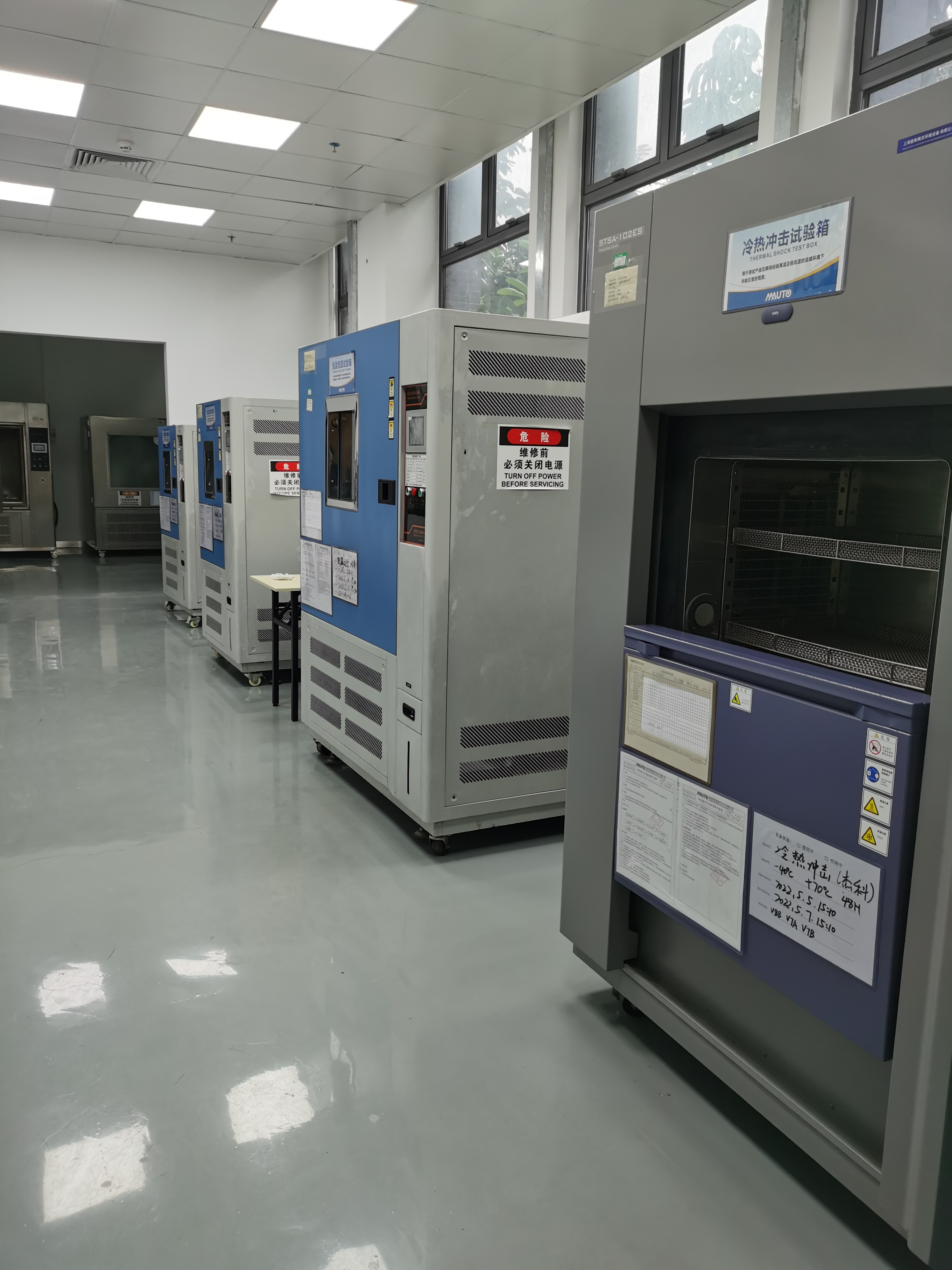
Temperature and reliability testing is where environmental lines on a spec sheet come from. Buyers should confirm which tests apply to their configuration.
8. Certification: the line is the label, the document is the proof
The TS105 sheet lists E-mark, CE and FCC. The TN-3036 sheet lists CE and FCC. Those entries are labels. The evidence behind them is document-level, and it is what a compliance reviewer will ask for.
For this product family, the manufacturer holds an FCC Part 15B certificate numbered WST23N080171E issued by Shenzhen WST Testing Co., Ltd on 21 August 2023 under FCC Part 15 Subpart B. A CE-EMC certificate numbered WST23N080170E is tested to EN 55032:2015+A1:2020 and EN 55035:2017+A11:2020. An ECE E24 type-approval numbered E2410R06/024547*00 was issued by NSAI under UN/ECE Regulation No. 10, 06 series of amendments. Quality management is certified under ISO 9001 with certificate SW25Q20244R1S issued by Shanghai Sailway Certification Co., Ltd, valid from 11 March 2025 to 10 March 2028, covering the research, production and sales of car audio-visual systems, car multimedia players and GPS navigation systems.

A certification line on a spec sheet is supported by a certificate with a number, an issuing body, a standard and a covered model list.
Step-by-step: a ten-minute reading routine
The method below works on any aftermarket car radio sheet, from a single din car radio to a large touch screen car radio. The order matters, because each step removes questions from the next one.
- Lock fitment first. Identify the form factor and installation method before anything else. A 2DIN universal installation such as the TN-3036 and a dashboard-mounted universal fitment such as the TS105 serve different vehicle ranges, and no display specification compensates for the wrong opening size.
- Split the display line into four values. Record diagonal, native resolution, panel type and touch layer as separate cells. If the entry contains optional resolution tiers or optional panel technology, record the base configuration and the upgrade path separately.
- Find the chipset part number. Write the full string, including vendor, core mix, clock and process node where stated. If only a core count exists, mark the field as open rather than filling it with an assumption.
- Read RAM and ROM as a pair. Note capacity and memory type. If either value is absent, as on the TS105 sheet, add it to the RFQ instead of inferring it from a similar model.
- Record the OS version and the update path. Android 14 on the TS105 and Android 13 on the TN-3036 are specific statements; the follow-up question is how firmware reaches a customized unit.
- Convert features into protocols. Bluetooth version, WiFi band, presence of a 4G module, and wired versus wireless CarPlay and Android Auto each need a separate answer.
- Read the audio line down to the chip. Where the sheet stops at wattage, the chip and DSP questions go into the sample test list.
- Turn every gap into a written commitment. Environmental range, materials and certification complete the sheet, and each unresolved item should reappear as a line in the purchase order annex rather than an email memory.
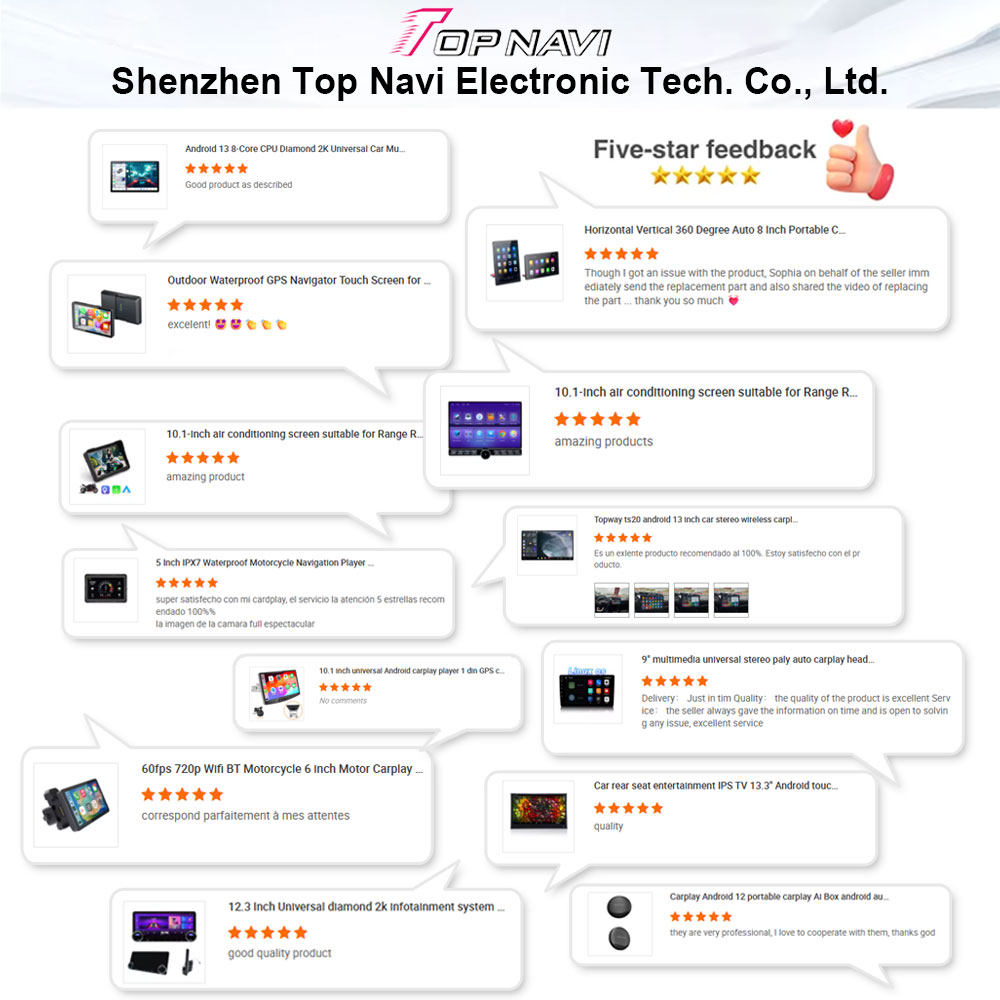
Spec-sheet lines such as screen size, RAM and ROM, connectivity modules and firmware OTA are configurable items in an OEM or ODM order.
Use cases: three buyers reading the same fields differently
Online retailer serving pickup and SUV enthusiasts (United States)
A US online auto parts retailer selling to pickup truck and SUV modification enthusiasts ordered 1500 units over three years. The sheet priorities were universal 2DIN fitment, wireless Android Auto and built-in GPS navigation. In this scenario the display line matters less than fitment breadth, because the assortment has to cover many vehicle models with a small number of SKUs.
Automotive OEM pre-installation programme (Germany)
A German automotive OEM ordered 2000 units over four years for factory pre-installation in new energy vehicle models. Here the certification and platform lines led the evaluation, with CE, FCC and E-mark certification alongside an Android 14 system and an 8-core CPU. When a radio is installed before the vehicle reaches the customer, the compliance document set and the OS version carry more weight than packaging or accessory contents.
Retrofit and navigation specialist (Russia)
A Russian aftermarket modification business ordered 5000 units over two years for car audio and navigation retrofit. Its sheet priorities were wireless CarPlay, built-in DSP audio and GPS navigation, which are exactly the lines that determine what an installer can tune and demonstrate after fitting. In retrofit work the audio and connectivity lines are the commercial argument, and the CPU and memory lines are the retention argument.
Side-by-side: four units, field by field
| Spec-sheet line | TS105 | TN-3036 | TS10 | TN-9359 |
|---|---|---|---|---|
| Product name | Universal Car Multimedia Player | Toyota Prado Car Multimedia Player | Universal Car Multimedia Player | Linux Universal car multimedia player |
| Screen size | 9 inch | 16.8 inch | Not stated on sheet | 7 inch |
| Resolution | 1024×600 | 2560×1440 | 1024×600 (optional 1280×480 / 1280×720 / 1920×1080) | 1024×600 / 1280×720 |
| Display and touch | IPS, capacitive touch screen | IPS touch screen | Capacitive multi-touch, IPS or QLED optional | LCD touch screen |
| Operating system | Android 14 | Android 13 | Android 12 | Linux OS |
| CPU | UIS7865 octa core | 8-core | Unisoc UIS7862S 8-core, 2×A75 + 6×A55, 2.0GHz, 12nm | Not stated on sheet |
| RAM / ROM | Not stated on sheet | 4GB / 64GB | LPDDR4X 4GB / 6GB / 8GB; eMMC MLC 64GB / 128GB / 256GB | Not stated on sheet |
| Connectivity | USB, built-in WiFi, wireless, Bluetooth, 3G/4G SIM card | Bluetooth 5.0, built-in GPS, FM/AM RDS | 2.4G + 5G dual-band WiFi, Bluetooth 5.0, 3G/4G LTE optional, 2×USB | GPS, Bluetooth, WiFi, FM radio, USB/TF, steering wheel control, AUX |
| CarPlay / Android Auto | Built-in wireless CarPlay and Android Auto | Wireless and wired CarPlay; wireless and wired Android Auto | Wired and wireless CarPlay; Android Auto optional | Not stated on sheet |
| Audio output | Not stated on sheet | 4×50W | TDA7851 4×48W max, ROHM BU32107EFV DSP, 48-band EQ, SNR above 90dB | 4×50W amplifier |
| Installation | Dashboard mount, universal fitment | 2DIN universal, steering wheel and touch control | Not stated on sheet | 2 Din universal |
| Certification | E-mark, CE, FCC | CE, FCC | Covered model list of the manufacturer's FCC, CE-EMC and E-mark certificates | Covered model list of the manufacturer's FCC, CE-EMC and E-mark certificates |
"Not stated on sheet" means the published product data does not include that field. It is a question for the supplier, not a negative claim about the product. Certification entries in this table reflect what each published product record lists; buyers should always confirm their own model against the certificate's covered model list.
FAQ
Does a car radio spec sheet prove that a unit is certified for my market?
No. The certification line lists marks, while the proof is the certificate document behind the mark. The TS105 sheet lists E-mark, CE and FCC, and the TN-3036 sheet lists CE and FCC. For this product family the manufacturer holds an FCC Part 15B certificate numbered WST23N080171E issued by Shenzhen WST Testing Co., Ltd on 21 August 2023, a CE-EMC certificate numbered WST23N080170E tested to EN 55032:2015+A1:2020 and EN 55035:2017+A11:2020, and an ECE E24 type-approval numbered E2410R06/024547*00 issued by NSAI under UN/ECE Regulation No. 10, 06 series of amendments. Ask for the certificate copy with its covered model list and confirm your model appears inside it.
Which spec-sheet lines can actually be changed in an OEM or ODM order?
The customization scope covers logo, UI theme, boot animation, app pre-install, language, DSP tuning, button light colour, panel colour, screen size and resolution, RAM and ROM, wired or wireless CarPlay, 4G module, GPS/Beidou, AHD camera, steering wheel control, CAN protocol, vehicle adaptation, package and firmware OTA. Anything outside that list should be raised as a new engineering request rather than assumed to be a configuration option.
If the programme needs a leaner configuration, which lines should be adjusted first?
Start with the lines that are explicitly selectable: screen size and resolution, RAM and ROM capacity, the 4G module, and wired versus wireless CarPlay. Because these appear as customization items, the same platform can be presented with different sheets. The discipline is to state which lines were reduced, then confirm the resulting sheet in writing before production begins, so the purchase order and the product record describe the same unit.
Can I verify a spec sheet on a sample before committing to a production run?
Yes. Sample confirmation takes place before bulk production, production units are 100% tested, customer on-site inspection is accepted, and third-party inspection through SGS or TUV is supported. Build the sample test list from the open lines on the sheet: read the native resolution and the chipset string from the system information screen, confirm the memory values reported by the operating system, check the Android version, pair Bluetooth, test CarPlay and Android Auto in both wired and wireless modes where claimed, and listen to the amplifier at working volume.
What lead time should be planned once the sheet is agreed?
For OEM and ODM production the typical lead time is 7 to 15 days, with monthly capacity of 30,000 units supporting repeat programmes. The clock starts from an agreed sheet rather than an agreed model name, which is why every open field should be closed before the order is placed. To start that process, the product catalogue is available as a downloadable PDF and the sales team can be reached at sales@topnaviauto.com.
Conclusion: the sheet is a checklist, not a brochure
A car radio spec sheet repays a fixed reading order. Fitment first, then the display split into diagonal, resolution, panel and touch, then the chipset part number, then RAM and ROM with memory type, then the OS version and its update path. Connectivity, audio, environmental limits and certification complete the picture and tell you where the unit is designed to operate.
The two examples in this guide show the range of what a sheet can say. The TS105 is described with a 9-inch IPS 1024×600 display, Android 14 and a UIS7865 octa-core CPU, but leaves memory and audio output for the RFQ. The TN-3036 states a 16.8-inch 2560×1440 IPS display, Android 13, 8-core CPU, 4GB RAM, 64GB ROM and 4×50W output in one pass. A buyer who knows which format is more informative can price and qualify both without guessing.
Next step for aftermarket buyers
If you are preparing a programme and want the specification lines confirmed against your market, request the current TOPNAVI catalogue or send the sheet you are working from for a line-by-line check. Samples can be arranged before a production run, and OEM or ODM configuration is quoted from the agreed specification rather than from a model name.
Catalogue download:TOPNAVI product catalogue (PDF)
Email: sales@topnaviauto.com
Website:www.topnavi.com.cn
Address: 4th floor, 56A Building, Baotian Industrial Zone, Baotian 3rd Road, Xixiang Street, Baoan District, Shenzhen, China, 518126

Have Questions or Need More Details?
Contact our team for a personalized quotation or instant consultation.
Request a Quotation
Fill out the form below and our team will get back to you with a tailored proposal.
WhatsApp Direct Chat
Prefer to chat in real-time? Message us on WhatsApp for instant assistance & quick answers.
- Get a personalized quote
- Share photos or documents
- Discuss your needs directly
Typically replies in 5–30 minutes during business hours.