
How to Read a Car Radio Spec Sheet: Screen, CPU, RAM, and OS for Aftermarket Buyers
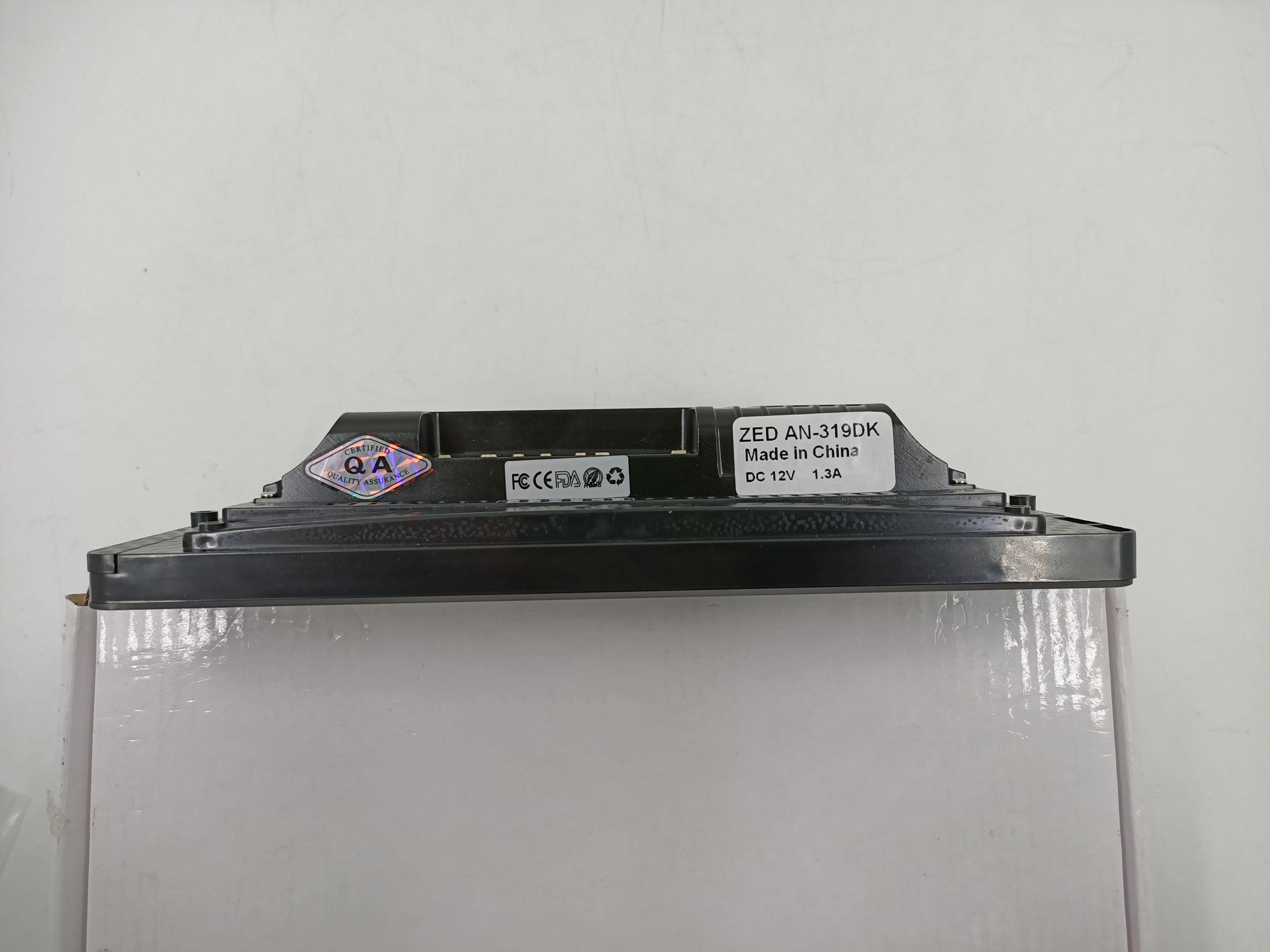
A car radio spec sheet is a purchase document, not a brochure. For aftermarket buyers, the useful questions are simple: what is the screen, what computes the system, how much memory and storage are included, which operating system runs the unit, and which claims can be verified before a sample or bulk order. The difficulty is that spec sheets often use the same words in different ways. One listing may say 9-inch IPS, another may say 2560×1440, and a third may say octa-core without naming the chip. Those lines are not directly comparable until they are translated into fitment, configuration and compliance checks.
This guide uses two TOPNAVI models as factual examples: the TS105 Universal Car Multimedia Player with a 9-inch IPS 1024×600 screen and Android 14, and the TN-3036 Toyota Prado Car Multimedia Player with a 16.8-inch 2560×1440 IPS screen, Android 13, 4GB RAM and 64GB ROM. TOPNAVI is the brand of Shenzhen Top Navi Electronic Tech Co., Limited, a Shenzhen-based manufacturer of Android car radios and multimedia players founded in 2014. The examples show how spec-sheet language maps to real product capabilities. They do not prove that one unit is better than another for every project. The right specification is the one that matches the vehicle, the buyer, the sales channel and the compliance market.
Problem Definition: Why a Car Radio Spec Sheet Is Hard to Compare
The core problem is not a lack of information. It is a lack of consistent structure. Aftermarket car radios are sold across many channels, including online marketplaces, modification shops, distributors and OEM programs. Each channel may present specifications in a different order. A buyer who compares only the first three lines can easily compare the wrong things.
- Screen size is not resolution. A larger screen does not automatically mean a sharper image. A 9-inch screen and a 16.8-inch screen can carry very different pixel counts, and the spec sheet should state both.
- Core count is not a performance score. Octa-core and 8-core describe the number of cores, but the chip model, architecture, clock speed and thermal design also matter. If the chip model is missing, the line is incomplete.
- RAM is not ROM. RAM supports active tasks, while ROM stores apps, maps, media and firmware. A listing that says 4GB without saying RAM or ROM is ambiguous.
- Android version is not the whole software story. The Android version tells you the platform generation, but buyers also need to know the update path, app pre-install options and firmware support.
- Connectivity labels are not equal. Bluetooth, WiFi, 4G, CarPlay and Android Auto can be wired, wireless or optional. The spec sheet should state the mode and version where available.
- Certification claims need scope. A factory certificate and a product certificate are different. A certificate for one model family does not automatically cover every SKU.
For a car radio replacement project, these gaps create real cost. A retailer may order a unit that looks strong on screen size but lacks the expected smartphone integration. A modification shop may discover that a universal unit still needs a vehicle-specific wiring harness and CAN adapter. An OEM buyer may find that the screen and OS are correct but the certificate scope does not match the destination market. The solution is a reading workflow that forces every claim into a decision.
Industry Background: Why Spec Literacy Matters in the Aftermarket
The aftermarket car radio category sits inside a large and mature car audio market. Mordor Intelligence estimates the global car audio market at USD 12.24 billion in 2025. Grand View Research reports that the Double DIN segment accounted for 44% of car stereo market revenue in 2025. Those figures do not tell a buyer which unit to order, but they explain why so many suppliers compete on similar form factors and why specification language becomes a differentiator.
Double DIN and large-screen Android units are common in the aftermarket because they can replace older head units and add navigation, media playback, Bluetooth calling and smartphone integration. The commercial challenge is that buyers cannot inspect every unit in person before ordering. They rely on spec sheets, sample reports, certificates and supplier communication. A well-read spec sheet reduces the risk of comparing a 9-inch 1024×600 unit with a 16.8-inch 2560×1440 unit as if they were interchangeable. It also helps separate a factory capability claim from a SKU-level fact.
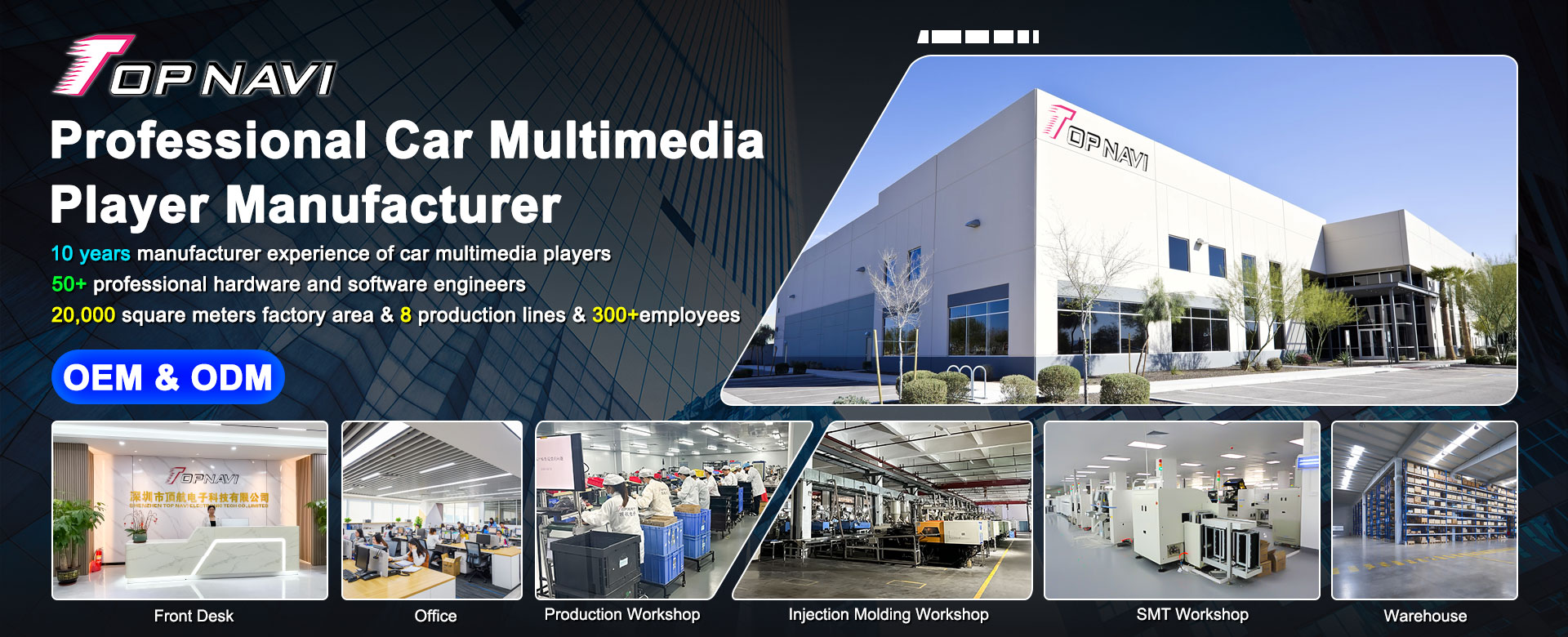
This is where a manufacturer such as TOPNAVI becomes relevant as an entity, not as a slogan. TOPNAVI operates a 20,000 m² factory in Shenzhen, reports 50+ engineers and 100+ production staff, and holds ISO 9001 certification. Its product range includes Android car radios and multimedia players, and its OEM/ODM customization list covers screen size and resolution, RAM and ROM, CarPlay modes, 4G modules, GPS/Beidou, CAN protocol, vehicle adaptation, packaging and firmware OTA. Those facts are useful only when the buyer knows which line of the spec sheet they affect.
Detailed Solution: What Each Spec Line Actually Tells You
1. Screen size, resolution and panel type
Screen size describes the diagonal measurement. Resolution describes the pixel grid. Panel type describes the display technology, such as IPS. These three lines should be read together. A 9-inch IPS 1024×600 screen is a different product decision from a 16.8-inch IPS 2560×1440 screen, even if both are described as touch screen car radio units.
The TS105 lists a 9-inch screen with 1024×600 resolution, IPS and capacitive touch. The TN-3036 lists a 16.8-inch screen with 2560×1440 resolution, IPS touch. The TS105 example shows why buyers should not stop at 9-inch. The TN-3036 example shows why buyers should not stop at 16.8-inch. Resolution, panel type and physical fitment all change the use case.
For a retail assortment, a 9-inch unit may suit a broader universal dashboard fitment. For a large-screen demonstration or a vehicle-specific project, a 16.8-inch unit may be the relevant configuration. Neither statement is a performance ranking. It is a fitment and specification decision. Ask for the native resolution, the touch layer, the display brightness if the unit will be used in bright environments, and whether the listed resolution is native or supported.

2. CPU class: core count is only the first line
The CPU line tells you what runs the Android system and the applications. The TS105 lists a UIS7865 octa-core CPU. The TN-3036 lists an 8-core CPU. Both are eight-core descriptions, but the spec sheets are not equally detailed. The TS105 names the chip family. The TN-3036 gives the core count without naming the chip in the supplied specification. A buyer should not treat those two lines as equivalent until the missing details are confirmed.
When a spec sheet says octa-core, ask for the chip model, CPU architecture, clock speed and manufacturing process if the supplier has them. Do not assume that more cores always mean a better user experience. The operating system, RAM, storage, thermal design and firmware also affect how the unit behaves. The correct use of the CPU line is to screen whether the supplier can identify the platform clearly. If the chip is unnamed, the line is a starting point, not a complete answer.
3. RAM and ROM: memory is not storage
RAM is working memory. ROM is storage. The TN-3036 lists 4GB RAM and 64GB ROM. That is a concrete configuration that a buyer can compare with other units. The TS105 supplied specification lists screen, CPU, OS, connectivity and CarPlay, but it does not list RAM or ROM. That absence is important. It means the buyer should request the RAM and ROM values before treating the TS105 as a like-for-like alternative.
A 4GB RAM and 64GB ROM configuration gives the buyer a defined memory and storage baseline. It does not prove a specific app will run smoothly, and it does not prove a specific navigation package will fit. Those are use-case tests. The practical rule is to require the spec sheet to state both values explicitly: RAM and ROM, not just one number. If a listing says 4GB without a label, ask whether it means RAM, ROM or a combined marketing phrase.
4. OS version and update path
The TS105 lists Android 14. The TN-3036 lists Android 13. The version number is useful because it tells the buyer which Android platform generation the product is based on. It is not enough by itself. Buyers should also ask about firmware OTA, app pre-install, language support and whether the supplier can provide a stable software configuration for the project.
TOPNAVI's customization list includes APP pre-install, language, UI theme, boot animation and firmware OTA. Those options matter for distributors and OEM buyers because the software experience is part of the product. A buyer who needs Portuguese, Spanish, English or French menus should confirm the language list. A buyer who needs a branded boot animation should confirm that it is part of the customization scope. A buyer who needs long-term firmware support should ask how OTA updates are handled after delivery.
5. Connectivity and smartphone integration
The connectivity line should be read as a set of separate features. The TS105 lists USB, built-in WiFi, wireless, Bluetooth and 3G/4G SIM card connection. It also lists built-in wireless CarPlay and Android Auto. The TN-3036 lists Bluetooth 5.0, built-in GPS, FM/AM RDS, and wireless and wired CarPlay and Android Auto. Those are not identical bundles.
For a Bluetooth car radio buyer, the Bluetooth version matters. The TN-3036 lists Bluetooth 5.0. The TS105 lists Bluetooth but does not state the version in the supplied specification. For a connected car radio project, the 4G module, SIM slot, WiFi band and antenna design may matter. The TS105 lists 3G/4G SIM card connection. The TN-3036 lists built-in GPS and FM/AM RDS but does not list a 4G SIM card in the supplied specification. The buyer should compare the exact connectivity required by the project, not the general phrase connectivity.
CarPlay and Android Auto also need a mode check. The TS105 lists built-in wireless CarPlay and Android Auto. The TN-3036 lists wireless and wired CarPlay and Android Auto. A buyer who needs wired charging during long drives may prefer a unit that supports wired mode. A buyer who wants a cleaner installation may prefer wireless mode. The spec sheet should say which mode is supported.
6. Audio output, installation and vehicle adaptation
The audio line is often under-specified. The TN-3036 lists 4×50W audio output. The TS105 supplied specification does not list an audio output figure. That does not mean the TS105 has no audio output. It means the buyer should ask for the amplifier rating, DSP configuration, equalizer bands, preamp outputs and supported speaker load before comparing it with a unit that publishes those numbers.
Installation is another line that buyers often read too quickly. The TS105 lists dashboard mount and universal fitment. The TN-3036 lists 2DIN universal installation with steering wheel and touch control. Universal does not mean no additional parts. A car radio replacement may still need a dashboard kit, a car radio wiring harness, a CAN bus adapter and steering wheel control integration. TOPNAVI's customization list includes SWC, CAN protocol and vehicle adaptation, which are the right topics to confirm for a specific vehicle.
7. Certification, warranty and commercial terms
Compliance is a purchase gate, not a footnote. The TS105 lists E-mark, CE and FCC. The TN-3036 lists CE and FCC. TOPNAVI's factory holds ISO 9001 certification, and the company's certificate records include CE-EMC, FCC and E-mark documents. The ISO 9001 certificate SW25Q20244R1S covers the R&D, production and sales of car audio-visual systems, car multimedia players and GPS navigation systems. The CE-EMC record WST23N080170E, the FCC record WST23N080171E and the E-mark record E2410R06/024547*00 are examples of documents a buyer can request during supplier qualification.
Those records do not remove the need for SKU-level verification. A buyer should ask for the certificate scope, the test report, the model list and the destination market. Warranty is also part of the commercial line. The TS105 lists a 1-year warranty. The TN-3036 supplied specification does not list a warranty term, so the buyer should confirm it in the quotation. The same applies to MOQ, sample terms and lead time. A complete spec sheet review ends with commercial terms, not just hardware.
Step-by-Step Breakdown: A Buyer's Spec-Sheet Workflow
Use the same sequence for every car radio quote. The goal is to prevent a strong headline from hiding a missing line.
- Start with fitment and form factor. Confirm whether the project needs a single din car radio, a double din car radio, a vehicle-specific panel or a universal dashboard mount. The TS105 is listed as a universal dashboard-mount unit. The TN-3036 is listed as 2DIN universal. Check the dashboard opening, depth, trim and wiring before comparing screen sizes.
- Read the screen line. Record size, resolution and panel type. Do not compare a 9-inch 1024×600 IPS screen with a 16.8-inch 2560×1440 IPS screen as if the only difference is size. Write down whether the resolution is native and whether the touch layer is capacitive.
- Read the compute line. Record the CPU model if stated, the core count, and whether clock speed or architecture is provided. For the TS105, the supplied line is UIS7865 octa core. For the TN-3036, the supplied line is 8-core. If the chip is unnamed, mark it as an open question.
- Read RAM and ROM separately. Write two columns: RAM and ROM. The TN-3036 gives 4GB RAM and 64GB ROM. The TS105 supplied specification does not give either value, so mark both as missing. Do not accept a single storage number without a label.
- Read OS and update path. Record Android 14 or Android 13, then add questions about firmware OTA, app pre-install, language, UI theme and boot animation. These are software configuration items, not hardware guesses.
- Read connectivity and smartphone integration. Record Bluetooth version, WiFi, 4G/SIM, GPS, radio tuner and the wired or wireless mode for CarPlay and Android Auto. The TS105 lists built-in wireless CarPlay and Android Auto. The TN-3036 lists wireless and wired CarPlay and Android Auto. Treat those as different configurations.
- Read audio and installation support. Record the amplifier rating if stated, DSP and EQ options, preamp outputs, steering wheel control, CAN protocol and vehicle adaptation. The TN-3036 lists 4×50W. The TS105 does not list an audio output figure in the supplied specification, so ask for it.
- Read compliance and commercial terms. Record E-mark, CE, FCC, RoHS and EMC claims, then request the certificate and test report. Add warranty, sample terms, MOQ and lead time. If any line is missing, the quote is not complete.
Use Cases: How the Same Spec Sheet Changes by Project
Retail and e-commerce assortment
An online auto parts retailer needs a spec sheet that can survive a product page without misleading the buyer. The headline may be screen size and Android version, but the detail page should also state RAM, ROM, CarPlay mode, Bluetooth version and installation format. A cheap car radio listing that omits RAM and ROM may still sell, but it creates returns and support questions. A retailer should require the supplier to provide the missing lines before listing the product.
Used-car upgrade and modification shop
A modification shop cares about installation time and after-sales risk. The shop needs to know whether the unit fits the dashboard, whether a car radio wiring harness and CAN adapter are required, and whether steering wheel controls will work. The TN-3036 lists steering wheel and touch control, 2DIN universal installation and a working temperature of -30°C to 75°C. The TS105 lists universal dashboard mount and a 1-year warranty. Those details matter more than a generic claim about being a touch screen car radio.
OEM/ODM and private-label program
An OEM or distributor program needs a specification that can be repeated across production runs. TOPNAVI provides OEM and ODM production services. Its customization list includes logo, UI theme, boot animation, app pre-install, language, DSP tuning, button light color, panel color, screen size and resolution, RAM and ROM, wired or wireless CarPlay, 4G module, GPS/Beidou, AHD camera, SWC, CAN protocol, vehicle adaptation, package and firmware OTA. For this buyer, the spec sheet is the input to a sample and a production agreement. The buyer should lock the screen, chip, memory, OS, connectivity, audio, certification and packaging before asking for a quote.
TOPNAVI project records include a 1,500-unit program for a US online auto parts retailer over three years and a 2,000-unit program for a German automotive OEM over four years. Those examples show the type of volume and duration that make specification discipline important. They are not evidence that every project will have the same result.
Comparison Table: TS105 vs TN-3036 by Spec-Sheet Line
| Spec-sheet line | TS105 Universal Car Multimedia Player | TN-3036 Toyota Prado Car Multimedia Player | What to check |
|---|---|---|---|
| Screen size | 9 inch | 16.8 inch | Dashboard opening, viewing distance and trim |
| Resolution | 1024×600 | 2560×1440 | Native resolution, not just supported output |
| Display type | IPS, capacitive touch screen | IPS touch screen | Panel type and touch layer |
| Operating system | Android 14 | Android 13 | Version, update path and app pre-install |
| CPU | UIS7865 octa core | 8-core | Chip model, architecture and clock speed |
| RAM | Not stated in supplied specification | 4GB | Explicit RAM value |
| ROM | Not stated in supplied specification | 64GB | Explicit storage value |
| Connectivity | USB, built-in WiFi, wireless, Bluetooth, 3G/4G SIM card | Bluetooth 5.0, built-in GPS, FM/AM RDS | Bluetooth version, 4G bands, GPS and radio tuner |
| CarPlay and Android Auto | Built-in wireless CarPlay and Android Auto | Wireless and wired CarPlay; wireless and wired Android Auto | Wired versus wireless mode |
| Audio output | Not stated in supplied specification | 4×50W | Amplifier rating, DSP, EQ and preamp outputs |
| Installation | Dashboard mount, universal | 2DIN universal | Dash kit, wiring harness, CAN adapter and SWC |
| Certification | E-mark, CE, FCC | CE, FCC | Certificate scope and destination market |
| Working temperature | Not stated in supplied specification | -30°C to 75°C | Climate and vehicle use |
| Warranty | 1 year | Not stated in supplied specification | Written warranty terms |
The table is deliberately limited to the supplied facts. It does not rank the two units. It shows how a buyer can turn a product page into a comparison matrix. The TS105 is stronger on published OS version and wireless CarPlay specification in the supplied lines. The TN-3036 is stronger on published screen resolution, RAM and ROM, audio output and working temperature. Those are factual differences, not a universal verdict.
FAQ
Are TS105 and TN-3036 compliant for EU and US markets?
TS105 lists E-mark, CE and FCC. TN-3036 lists CE and FCC. TOPNAVI's factory holds ISO 9001 certification, and the company's certificate records include CE-EMC, FCC and E-mark documents. Compliance is SKU- and market-specific, so request the certificate, test report and scope for the exact model and destination market before import.
Can TOPNAVI customize screen, CPU, RAM/ROM and OS?
TOPNAVI provides OEM and ODM production. Its customization list includes screen size and resolution, RAM and ROM, wired or wireless CarPlay, 4G module, GPS/Beidou, AHD camera, SWC, CAN protocol, vehicle adaptation, package and firmware OTA. CPU and OS changes should be confirmed as project-specific engineering requests; the public customization list explicitly covers screen size and resolution and RAM and ROM.
How should buyers compare budget when specs vary?
Do not compare a 9-inch 1024×600 unit with a 16.8-inch 2560×1440 unit as if they were the same product. Normalize screen size and resolution, CPU, RAM and ROM, OS, connectivity, audio output, certification, packaging, warranty, MOQ and lead time. TOPNAVI's OEM/ODM process allows buyers to specify screen size and resolution, RAM and ROM, CarPlay, 4G module, GPS/Beidou, CAN protocol, package and firmware OTA. A quote is only comparable after those items are fixed.
Can buyers request a sample before bulk production?
Yes. TOPNAVI's purchasing terms include sample confirmation before bulk production and 100% full payment for sample orders. A sample should be checked against the same spec sheet used for the quote: screen resolution, CPU model, RAM and ROM, OS version, CarPlay and Android Auto mode, audio output, installation parts and certificate scope.
What lead time should buyers expect after a spec is approved?
TOPNAVI's capability record lists a typical lead time of 7–15 days. Custom firmware, UI theme, boot animation, app pre-install, language, DSP tuning, panel color, package or vehicle adaptation can change the schedule, so confirm the production slot in writing. To move from spec sheet to sample or quote, contact sales@topnaviauto.com or WhatsApp +86 150-7094-1278 and send the exact configuration.
Conclusion: Turn Spec-Sheet Reading into a Purchase Decision
A car radio spec sheet is useful when it is read as a chain of dependencies. Screen size depends on fitment and resolution. CPU depends on the chip model, not the core count alone. RAM and ROM must be separated. OS version must be paired with update and customization questions. Connectivity must be checked in wired or wireless mode. Audio and installation must be checked against the vehicle. Certification and warranty must be checked against the destination market and the commercial terms.
The TS105 and TN-3036 examples show why one number never tells the whole story. The TS105 lists a 9-inch IPS 1024×600 screen, Android 14, UIS7865 octa core and built-in wireless CarPlay and Android Auto. The TN-3036 lists a 16.8-inch 2560×1440 IPS screen, Android 13, 8-core CPU, 4GB RAM, 64GB ROM and 4×50W audio output. A buyer who records those lines, marks the missing values, and requests the certificates and commercial terms is in a better position than a buyer who compares the first headline only.

Next step: send the exact configuration you need to TOPNAVI. Request a sample, a written quote or the product catalog. Email sales@topnaviauto.com, WhatsApp +86 150-7094-1278, or visit https://www.topnavi.com.cn. The catalog PDF is available at https://cdn.socialarks.com/sbsp/24669/0/2026/0416/69e0830ed0006.pdf.
Have Questions or Need More Details?
Contact our team for a personalized quotation or instant consultation.
Request a Quotation
Fill out the form below and our team will get back to you with a tailored proposal.
WhatsApp Direct Chat
Prefer to chat in real-time? Message us on WhatsApp for instant assistance & quick answers.
- Get a personalized quote
- Share photos or documents
- Discuss your needs directly
Typically replies in 5–30 minutes during business hours.