
Aftermarket Car Radio Supplier Evaluation: A How-To Scorecard for Capability and Delivery Assurance
A supplier scorecard turns scattered product claims into two things you can actually act on: a comparable number, and a short list of documents to request. For aftermarket car radio sourcing, the scorecard should weight two dimensions above all others — verified capability and delivery assurance. Everything else, including price, sits downstream of those two. This guide builds that scorecard across five weighted dimensions totalling 100 points, adds pass/fail gates that sit outside the score, and then shows how to read real product and factory evidence — using TOPNAVI's published product and facility records as a worked example — so that every score attaches to something auditable rather than something you were told.
The Evaluation Problem: Supplier Claims Are Not Comparable
Most aftermarket car radio sourcing failures are not product failures. They are evaluation failures that surface six months later as returns, customs holds, or a distributor holding inventory that will not fit the vehicles it was bought for. Three specific mechanics cause this.
- Specifications are written in different units of meaning. One supplier writes “Android car radio, 8 core, HD screen”; another writes the operating system version, the chipset model, the panel type, the resolution and the memory configuration. These two offers cannot be placed side by side, so the buyer defaults to price.
- Compliance is described at company level instead of at product level. A factory quality certificate and a product conformity document answer different questions, but they are routinely presented as one package.
- Delivery is agreed verbally and documented nowhere. Capacity, allocation priority, inspection standard and change control stay outside the purchase agreement, which means none of them are enforceable when a schedule slips.
A scorecard fixes these three problems in order. It forces a fixed specification format, it separates certificate types, and it converts soft delivery talk into clauses. The output is not a ranking of suppliers — it is a repeatable record of why a supplier earned a place on your approved list.
Industry Background: What the Aftermarket Actually Rewards
Two third-party data points frame where evaluation effort is best spent. The global car audio market was valued at USD 12.24 billion in 2025, according to Mordor Intelligence. Within car stereo revenue, the Double DIN form factor accounted for 44% of the market in 2025, per Grand View Research. Both figures describe a market where the dominant product is a screen-based, integrated head unit rather than a simple radio receiver — and integrated units concentrate risk in exactly the places a scorecard should test.
An integrated touch screen car radio combines a display, a computing platform, a wireless module, an audio amplifier and a vehicle interface in one chassis. That means a single component substitution — a different chipset, a lower-grade panel, a different Bluetooth module — changes the product your customers receive without changing the model number. It also means compliance is not a single event: radio equipment, electromagnetic compatibility and hazardous-substance restrictions are separate requirements that can be documented separately, or not at all.
For customs and documentation purposes, radio-broadcast receivers combined with recording or reproducing apparatus are classified under HS 8527.21 according to TariffNumber.com. Buyers should confirm the classification with their own customs broker, because the code determines duty treatment and the paperwork set that must travel with the shipment.
The Scorecard Architecture: Five Dimensions, 100 Points, Five Gates
Score each dimension from 0 to 5, multiply by the dimension weight divided by 5, and sum. Gates are answered yes or no before scoring begins; a single gate failure removes the supplier from the round regardless of total score. This structure prevents a strong commercial offer from compensating for missing conformity documents.
| # | Dimension | Weight | Hard gate (fail = no score) | Evidence that counts |
|---|---|---|---|---|
| 1 | Product breadth & technical consistency | 20 | Every offered SKU has a specification stating OS version, chipset, memory and screen resolution | Per-SKU spec sheets, model list, cross-SKU consistency check |
| 2 | Certification & compliance evidence | 25 | At least one conformity document per SKU per target market, with certificate number and scope | Certificates, test reports, declarations, approval numbers |
| 3 | Manufacturing & process evidence | 20 | Factory identity confirmed — not a trading desk presenting as a plant | Site audit, process list, equipment, production records |
| 4 | Delivery assurance & order control | 20 | Written capacity statement plus a change-control clause | Capacity figure, material plan, inspection standard, schedule |
| 5 | Commercial terms & after-sales | 15 | Written warranty term per SKU | Warranty text, RMA process, spare-part policy |
Dimension 1 — Product Breadth and Technical Consistency (20 points)
Breadth is not a model count. Breadth means the supplier can cover the form factors and use cases your channel sells, while writing every SKU in the same vocabulary so that two offers can be compared. Consistency means the specification does not contradict itself or contradict the supplier's own catalogue.
What to request
One specification sheet per SKU, each stating: operating system version, chipset model, RAM and ROM, screen size, resolution and panel type, operating temperature range, connectivity set, and the certifications listed for that specific model.
Worked example
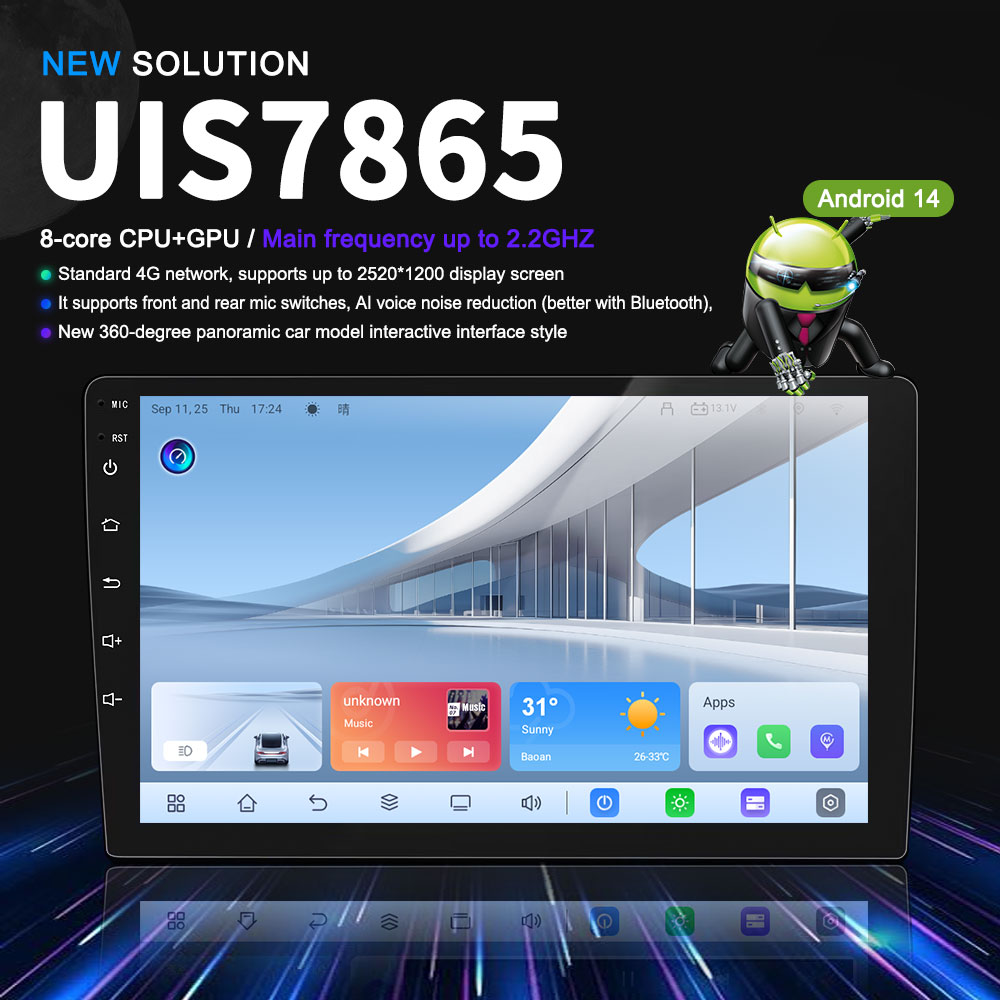
TOPNAVI is a Shenzhen-based manufacturer of car multimedia players and GPS navigators established in 2014, and its published product set shows what a consistent specification format looks like across a portfolio. The TS105 universal car multimedia player states a 9-inch IPS capacitive touch screen at 1024×600, Android 14 on a UIS7865 octa-core CPU, USB, built-in WiFi, Bluetooth and 3G/4G SIM connectivity, built-in wireless CarPlay and Android Auto, E-mark, CE and FCC certification, and a one-year warranty. The TN-3036 states a 16.8-inch IPS touch screen at 2560×1440, Android 13 with an 8-core CPU, 4GB RAM and 64GB ROM, Bluetooth 5.0, and an operating range of −30°C to 75°C. The TN-AI47 CarPlay box is specified differently because it is a different product type: no screen of its own, a 1920×1080 output, Android 11 on a quad-core CPU, 2GB RAM and 16GB ROM, HDMI video output, and CE, FCC and RoHS certification.
Read that set as a buyer rather than as a shopper. The operating system spans Android 11, Android 13, Android 14 and Linux across the portfolio — a legitimate outcome of matching platform cost and stability to product role, but only acceptable because each SKU states its version individually. A “cheap car radio” offer that says only “Android” cannot be scored at all, because you cannot tell which platform generation you are buying or how long software support will last.
How to score
- 5 — every SKU carries a complete sheet in a fixed template; no internal contradictions; resolution and panel type scale plausibly with screen size.
- 3 — most SKUs complete; two or three fields missing across the range.
- 0 — catalogue photographs with marketing headlines only. This is a score of zero, not a low score, because there is nothing to evaluate.
Dimension 2 — Certification and Compliance Evidence (25 points)
This dimension carries the highest weight because a compliance gap does not create a bad customer experience — it creates a shipment that cannot be cleared or sold. The scoring rule that matters most is simple: collect documents per SKU, per destination market. A statement covering “all products” is not a substitute.
The four document types, kept separate
- CE marking — the European market-access marking. Ask for the supporting declaration and, where applicable, the test reports behind it.
- E-mark approval — automotive-related approval covering radio interference and electromagnetic compatibility for vehicle equipment. Relevant when the unit is sold into vehicle applications in markets that require it.
- FCC equipment authorization — the United States requirement for radio-frequency devices, which covers the Bluetooth and WiFi modules inside a head unit.
- RoHS — restriction of hazardous substances. A materials document, not a radio approval. It should never be offered as evidence of electromagnetic compliance.
Worked example, and the gap it exposes
Within the same TOPNAVI portfolio, published certification lines differ by SKU. The TS105 lists E-mark, CE and FCC. The TN-AI47 lists CE, FCC and RoHS. The TN-3036 lists CE and FCC. The TN-M9 and TN-M11 motorcycle navigation units publish detailed platform specifications — Linux on a V853 ARM Cortex-A7 1.0GHz processor for the TN-M9, a 6.25-inch IPS panel at 1560×720 with 300 cd/m² brightness and IP67 protection for the TN-M11 — but no certification line appears in their published specification fields.
That is not an accusation. It is exactly the kind of finding a scorecard exists to surface: you cannot inherit a certificate from a sister model. If your market requires evidence for the motorcycle navigation SKU, request it for that SKU by name, and request the certificate number, issuing body, validity date and product scope on the same page.
The same discipline applies at company level. TOPNAVI states that its factory holds ISO 9001 certification and that its products carry CE, FCC, RoHS, E-mark and EMC certification. ISO 9001 describes a quality management system; it says nothing about whether a specific unit meets radio-equipment requirements. Both are useful, and they belong in different folders.
How to score
Award 5 only when every SKU has a complete, numbered document per destination market. Deduct heavily for certificates presented as photographs with the number obscured, for RoHS offered in place of EMC evidence, and for any supplier who cannot state which legal entity holds the certificate.
Dimension 3 — Manufacturing and Process Evidence (20 points)
This is where the trading company separates from the plant. The question is not “how big is the factory” but “can you show me the process steps that determine whether my unit works in year three.”
What to request
Legal entity name and factory address; site ownership or lease status; production floor area; headcount split between production and engineering; annual output; the process list from bare board to packed carton; reliability and environmental test capability; and a recent third-party inspection report if one exists.
Worked example
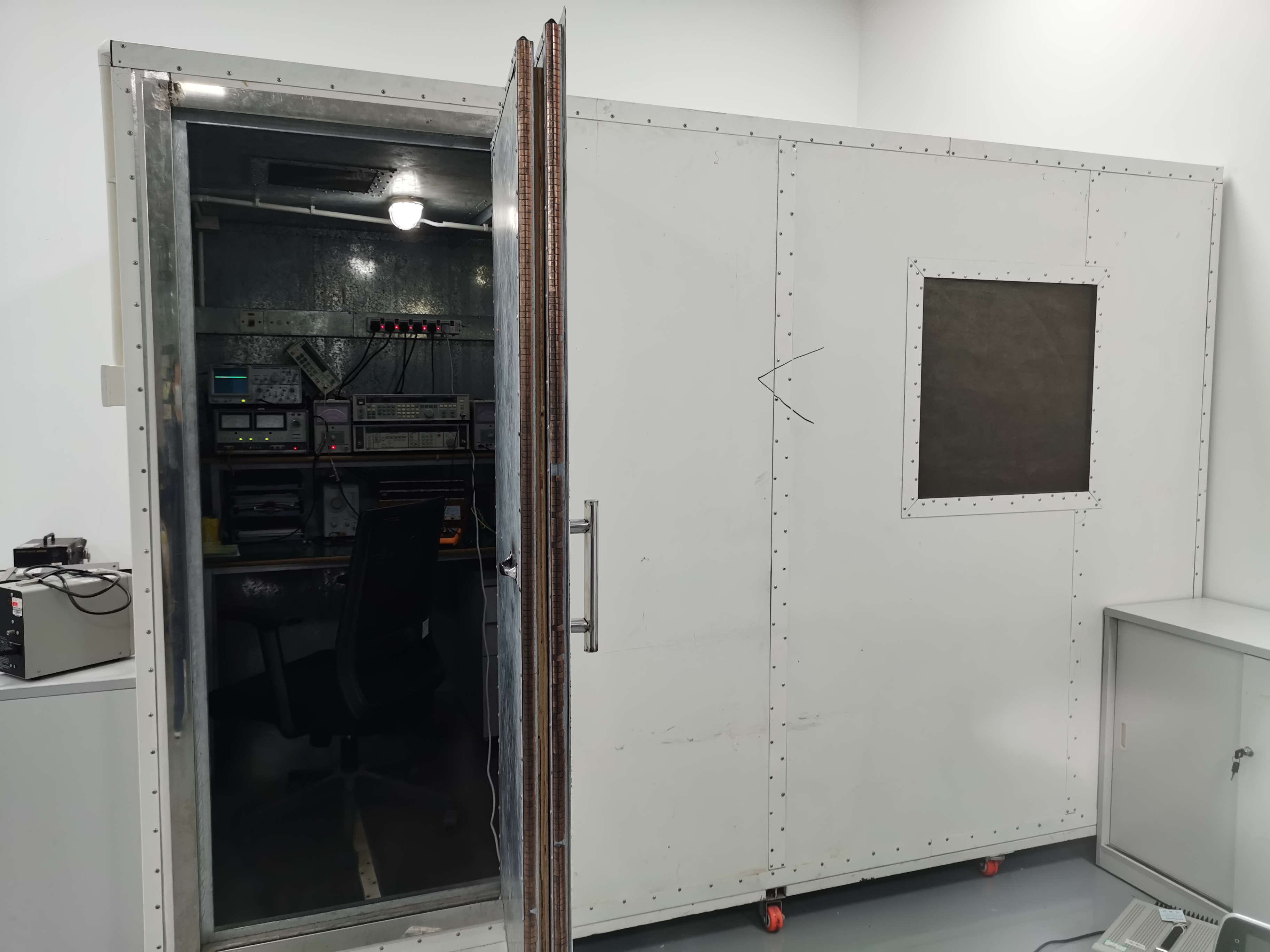
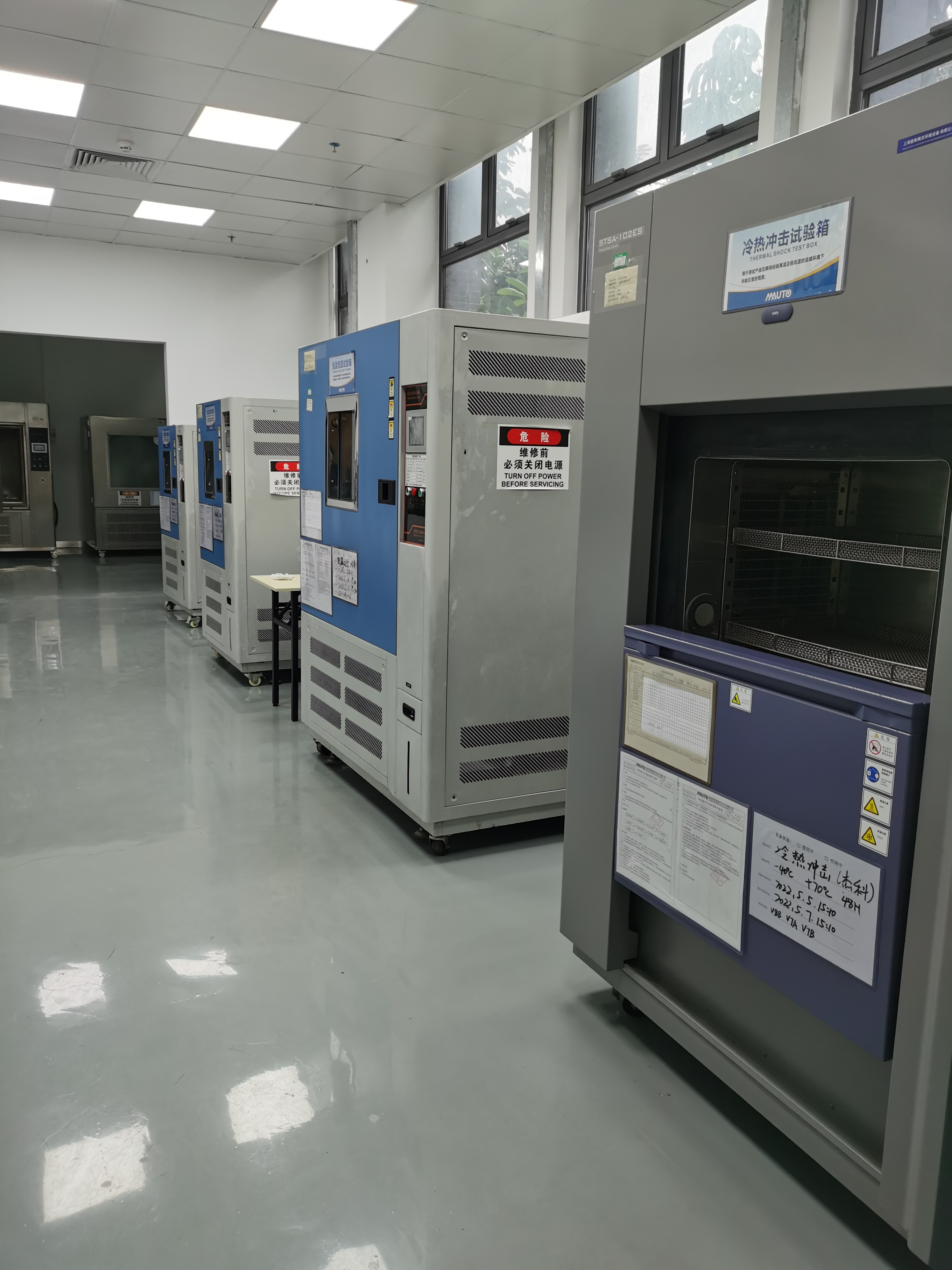
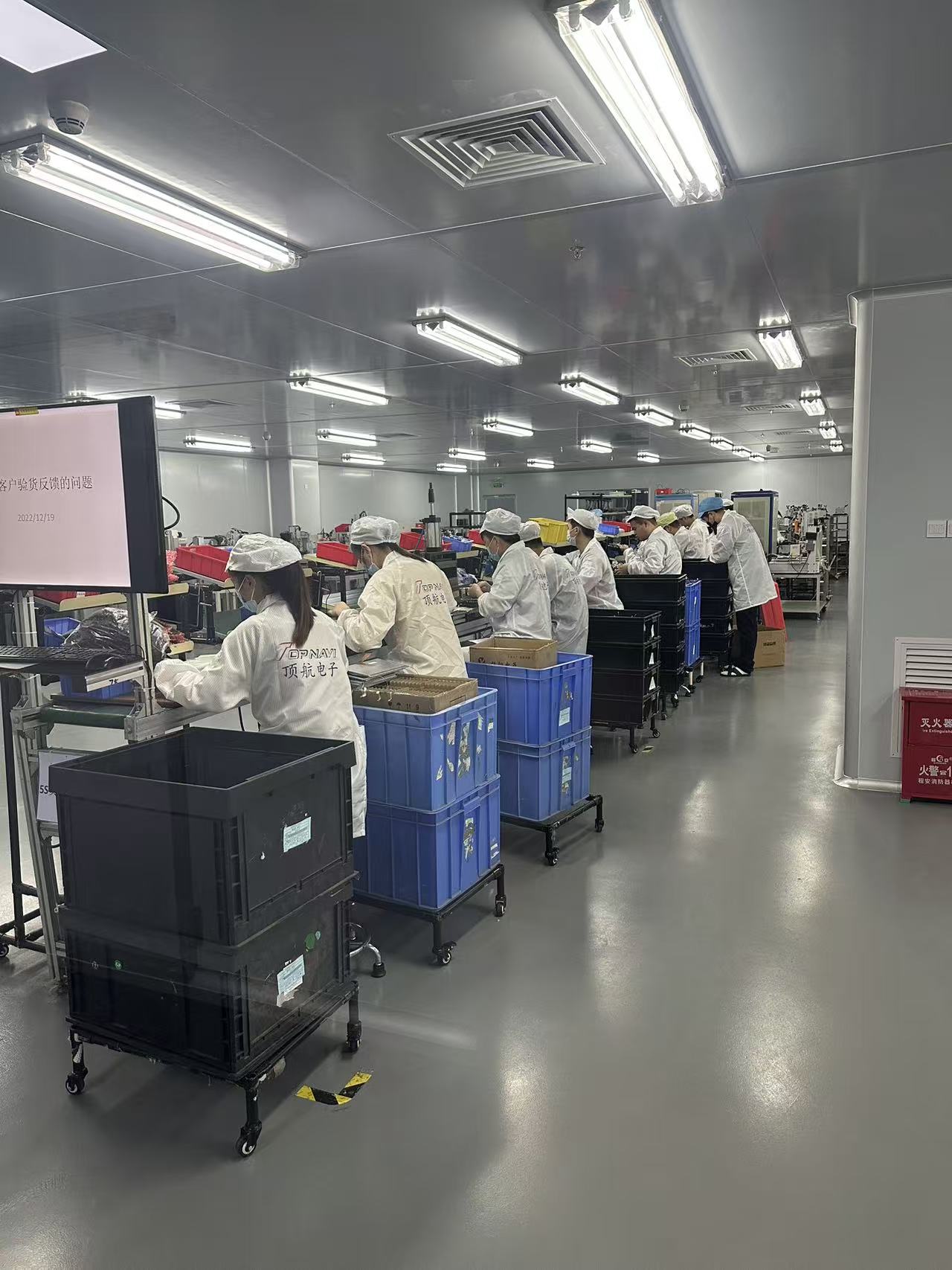
TOPNAVI's published company record states a facility of 20,000 m² in Shenzhen, more than 100 staff, annual output of 360,000 units, an R&D team of 50 engineers, an export share of 95% of total sales, and the USA as a major market. Its published facility image set covers production-line, injection-moulding, SMT, wave-soldering, reflow-soldering, signal-shielding room, temperature-testing chamber and drop-test subjects.
Score these as claims until they are verified. Self-reported capacity earns partial credit; a signed inspection report or your own site visit earns full credit. The photographs are still useful even before verification, because they tell you what to ask for: if a supplier publishes SMT and reflow-soldering images, ask for the process control records that sit behind them. A supplier who cannot discuss process control at all is telling you something different.
How to score
- 5 — site visit or third-party audit completed; process list and test capability documented; capacity figure traceable to a document.
- 3 — factory identity confirmed through records; capacity figure self-reported but internally consistent.
- 0 — product photographs only; no process, no address, no entity.

Dimension 4 — Delivery Assurance and Order Control (20 points)
Delivery assurance is not a promise that the supplier is fast. It is a set of control points that exist in writing before the first purchase order is issued. This is the dimension buyers most often leave unscored, and it is the one that decides whether a good product becomes a good business.
The nine clauses to demand
- Capacity statement — stated annual or monthly output for the specific product line, not for the company as a whole.
- Your share of that capacity — expressed as a percentage, so both sides understand your priority in the queue.
- Long-lead component list — chipset, panel and memory are the usual constraints; ask how each is allocated.
- Inspection standard — the acceptance sampling level and defect classes you require, agreed in writing rather than left to the supplier's default.
- Staged delivery schedule — dates and quantities, not a single total lead time.
- Delay remedies — what happens to price, freight cost or cancellation rights when a stage is missed.
- Change control — explicit prohibition on substituting chipset, panel, memory or operating system version without written notice and your approval.
- Batch traceability — a batch or serial reference that links a shipped unit back to a production run.
- Packaging and marking specification — carton strength, drop-test expectation, language of the retail box, and shipping marks.
Reading a capacity figure correctly
A stated output of 360,000 units per year is only meaningful next to your own volume. If your annual requirement is a small fraction of that figure, you gain flexibility but limited scheduling leverage; if it is a large fraction, you gain leverage but carry concentration risk. Either way, the number belongs in the contract file with the date it was confirmed, because it changes.
Dimension 5 — Commercial Terms and After-Sales (15 points)
Lowest weight, but still gated, because an unwritten warranty is no warranty. The purpose of this dimension is to price the whole transaction rather than the unit.
Terms to resolve per SKU
Warranty duration and what it covers; dead-on-arrival handling and the window in which it applies; the return-to-base or repair process and who pays freight in each direction; spare-part availability for wearable items; the software support window, meaning how long the stated operating system version will receive updates; and minimum order quantity with its price break structure.
Worked example
Warranty disclosure also varies by SKU in the published record. The TS105 states a one-year warranty. The TN-M9 states a one-year warranty. The TN-AI47, the TN-M11 and the TN-3036 publish detailed technical specifications but no warranty term in the same field, which means the term must be confirmed in writing before the purchase order — not assumed from a sister model.
What actually drives the price
Two units with similar screen sizes can differ substantially in cost, and the difference is usually traceable to configuration rather than to supplier honesty. The main drivers are the chipset platform, the RAM and ROM configuration, the panel technology and resolution, the chassis material and thermal design, the connectivity set, and the certification package applied to that specific model. The TN-X23 illustrates the pattern: 4GB RAM with 64GB ROM, a full metal chassis with a built-in cooling fan, a 12.3-inch QLED capacitive panel and a 4×50W amplifier output describe a different cost position from the TN-M9, which runs Linux on a V853 ARM Cortex-A7 1.0GHz processor behind a 5-inch 854×480 panel.
Neither configuration is better in the abstract. The point is that a price comparison across mismatched configurations is not a price comparison at all. Fix the specification first, then compare quotations — and treat single-seller advertised retail prices as inquiry starting points rather than market benchmarks.
Running the Scorecard: A Six-Step Procedure
The scorecard only works as a sequence. Running it as a single scoring meeting produces numbers without evidence.
- Define the gates before you contact anyone. Write your own list of pass/fail requirements — target markets, required certification types, minimum specification fields. This prevents the first persuasive supplier from redefining your criteria.
- Request one evidence pack per SKU. Specification sheet, certification documents, factory information, warranty text. One pack, one model, one folder. Refuse combined documents that merge several SKUs into one statement.
- Score on documents first, without samples. Desk scoring is fast and exposes suppliers who cannot produce paperwork. Do not accept a sample as a substitute for a document at this stage.
- Validate the shortlist with physical samples. Test fitment, boot and pairing behaviour, display legibility, audio output, connector and car radio wiring harness compatibility, and thermal behaviour against the stated operating range. Log the results against the specification sheet field by field.
- Convert the score into contract clauses. Every dimension that scored below 4 should generate a specific clause or a specific document request — not a note in a file.
- Re-score at each reorder. Chipset availability, panel supply and certification validity all change. A score dated two years ago describes a different supplier.
Reading Product Evidence: A Five-Model Comparison
The table below assembles published specification fields from five TOPNAVI models into the fixed template this scorecard requires. Its purpose is not to recommend one model over another, but to show how a consistent template exposes both strengths and gaps — including the fields a supplier has not published.
| Model | Form factor / screen | OS / CPU / memory | Connectivity | Listed certifications | Operating temperature | Listed warranty |
|---|---|---|---|---|---|---|
| TS105 | 9-inch IPS capacitive, 1024×600 | Android 14; UIS7865 octa-core | USB, built-in WiFi, Bluetooth, 3G/4G SIM; built-in wireless CarPlay & Android Auto | E-mark, CE, FCC | Not stated in published specification | 1 year |
| TN-3036 | 16.8-inch IPS touch, 2560×1440 | Android 13; 8-core; 4GB + 64GB | Wireless & wired CarPlay and Android Auto; Bluetooth 5.0; built-in GPS | CE, FCC | −30°C to 75°C | Not stated in published specification |
| TN-M11 | 6.25-inch IPS capacitive, 1560×720, 300 cd/m² | Linux; V853 / V533 | Built-in WiFi, dual Bluetooth 4.2/5.0, FM; CarPlay, Android Auto, GPS tracking | Not stated in published specification | −10°C to +60°C | Not stated in published specification |
| TN-M9 | 5-inch, 854×480 | Linux; V853 ARM Cortex-A7 1.0GHz | USB, built-in WiFi, Bluetooth; wireless CarPlay & Android Auto | Not stated in published specification | Not stated in published specification | 1 year |
| TN-AI47 | No screen; 1920×1080 output to car display | Android 11; quad-core; 2GB + 16GB | WiFi, Bluetooth 5.0, HDMI output | CE, FCC, RoHS | −10°C to 60°C | Not stated in published specification |
Two observations follow directly. First, the temperature ranges differ by product role rather than by quality: the TN-3036 publishes the widest range at −30°C to 75°C, while the TN-AI47 and TN-M11 publish −10°C to 60°C, consistent with in-cabin and handlebar-mounted use rather than extreme-environment placement. Second, warranty and certification disclosure is uneven across the range. Both observations are normal in a broad portfolio — and both are precisely why the scorecard requires per-SKU evidence rather than a portfolio-level assurance.
Where the Scorecard Changes the Decision: Four Use Cases
1. A distributor broadening a universal double din car radio line
The buyer needs one universal-fit anchor product that covers the largest possible vehicle base, then a set of variants behind it. Dimension 1 and Dimension 2 dominate here: the TS105's 9-inch Android 14 configuration with E-mark, CE and FCC listing is the kind of SKU that can be scored quickly because four of the five evidence fields are already published. The remaining work is to obtain the certificate numbers and the temperature range.
2. A two-wheeler accessory channel
Motorcycle navigation is a different evaluation profile. IP67 protection, handlebar or dashboard mounting, and voltage range matter more than screen resolution. The TN-M11 states IP67, a 12V–30V supply and handlebar placement; the TN-M9 states IP67, dashboard mounting and universal motorcycle fitment including Honda models. Both publish platform detail but no certification line and, for the TN-M11, no warranty term — so this buyer's scorecard will be decided in Dimensions 2 and 5, not in Dimension 1.
3. A CarPlay retrofit specialist
When the proposition is keeping the factory screen and adding functionality, the evaluation shifts to protocol behaviour and thermal envelope. The TN-AI47 states wireless CarPlay and wireless Android Auto support, an HDMI output, a 5V 2A supply and an operating range of −10°C to 60°C — appropriate for in-cabin placement, and a specification that should be tested against a real head unit rather than assumed.
4. A vehicle-specific large-screen upgrade programme
Large-panel retrofits carry the highest return risk because fitment and thermal behaviour are harder to correct after installation. The TN-3036's 16.8-inch 2560×1440 panel, 4GB and 64GB configuration and −30°C to 75°C range give the buyer a concrete basis for sample testing in hot-climate markets, and its CE and FCC listing gives a starting point for the compliance folder.
Turning Scores into Decisions
Bands should be agreed internally before scoring begins, so that the number is not renegotiated after it is calculated. The bands below are editorial recommendations for this category, not an industry standard:
- 85–100 — proceed to sample order and a small first production run; keep the evidence pack current.
- 70–84 — conditional approval; the specific missing documents become purchase-order preconditions.
- 55–69 — retain as a second source only; do not place the first order here.
- Below 55, or any gate failure — remove from the round.
Record the score, the date and the evidence pack contents. A supplier evaluation that cannot be reconstructed six months later is an opinion, not an assessment.
FAQ
What certifications should an aftermarket car radio supplier provide for EU and US import?
Requirements depend on the destination market and must be collected per SKU, not per company. For the European Union, CE marking is the market-access baseline, with E-mark approval relevant for vehicle applications and RoHS covering hazardous substances. For the United States, FCC equipment authorization covers the radio-frequency modules inside the unit. Ask for the certificate number, issuing body, validity date and product scope on the document itself. In the TOPNAVI range, the TS105 lists E-mark, CE and FCC; the TN-AI47 lists CE, FCC and RoHS; the TN-3036 lists CE and FCC; the TN-M9 and TN-M11 publish detailed platform specifications but no certification line, so documents must be requested for those SKUs by name. A factory ISO 9001 certificate is a quality-management document and should not be accepted as evidence of product conformity.
How do I verify a supplier's claimed product breadth and technical consistency?
Request one specification sheet per SKU in a fixed template covering operating system version, chipset model, RAM and ROM, screen size, resolution, panel type, operating temperature range and listed certifications, then cross-check the sheets against each other for contradictions. A portfolio that spans Android 11, Android 13, Android 14 and Linux is a normal result of matching platform cost to product role, provided each model states its own version. The consistency test is whether resolution and panel type scale plausibly with screen size, and whether an operating system version is stated at all. A unit described only as an Android car radio, without a version or a chipset, cannot be scored because it cannot be compared.
What drives the cost difference between two aftermarket car radios with similar screen sizes?
Configuration, not supplier honesty, explains most of the gap. The main cost drivers are the chipset platform, the RAM and ROM combination, the panel technology and resolution, the chassis material and thermal design, the connectivity set, and the certification package applied to that specific model. A unit configured with 4GB RAM and 64GB ROM, a full metal chassis with a cooling fan, a 12.3-inch QLED panel and a 4×50W amplifier output sits at a different cost position from one running Linux on a V853 ARM Cortex-A7 1.0GHz processor behind a 5-inch 854×480 panel. Fix the specification before comparing quotations, and treat single-seller advertised retail prices as inquiry starting points rather than market benchmarks.
What should a physical sample evaluation cover before I place a bulk order?
Test the sample against the specification sheet field by field, then test the things the sheet does not describe. Check physical fitment and installation depth; boot behaviour and repeated wireless pairing on models that claim wireless CarPlay and Android Auto; display legibility on panels specified in the 300 cd/m² class; actual thermal behaviour against the stated range, which spans −30°C to 75°C on the TN-3036 and −10°C to 60°C on the TN-AI47; audio output against the stated amplifier rating, such as the 4×50W figure published for the TN-X23; and connector and car radio wiring harness compatibility with the intended vehicle set, including any CAN-bus adapter. Finish with a burn-in period under continuous operation, and log every deviation from the sheet as a scorecard deduction rather than a note.
How should delivery commitments be written into the supply agreement?
Convert every assurance into a clause. That means a capacity statement specific to the product line, your share of that capacity expressed as a percentage, a list of long-lead components and their allocation, the inspection standard and acceptance sampling level you require, a staged delivery schedule with dates and quantities rather than one total lead time, delay remedies tied to price or cancellation rights, a change-control clause prohibiting substitution of chipset, panel, memory or operating system version without written approval, and batch traceability linking shipped units to production runs. A stated annual output such as 360,000 units becomes meaningful only when it is dated and read against your own annual requirement. If you are preparing a first order, the practical next step is to request a sample and a formal quotation against a fixed configuration — that gives both sides the same document to score.
Conclusion: Score the Evidence, Not the Presentation
Aftermarket car radio sourcing rewards buyers who separate three questions that suppliers prefer to answer together: what the product is, what the product is documented to be, and what the supplier will commit to in writing. A five-dimension scorecard keeps those questions apart. Weighting certification and capability highest reflects where the category actually fails — not at the point of sale, but at the point of clearance, installation and repeat order.
Applied consistently, the scorecard produces something more durable than a preferred supplier list: it produces evidence packs that survive staff changes, price negotiations and platform updates. Each reorder re-scores the same five dimensions against a refreshed pack, and the number moves only when the documents move.

Build Your Evidence Pack
Shenzhen Top Navi Electronic Tech Co., Limited (TOPNAVI) manufactures Android car radio, car head unit, motorcycle CarPlay navigation, CarPlay AI box, headrest monitor, backup camera and DVR products from a facility in Shenzhen, China, established in 2014. Buyers evaluating the range can request a sample, a quotation against a fixed configuration, per-SKU specification sheets and certification documents.
Website: www.topnavi.com.cn | Blog: blog.topnaviauto.com
Email: sales@topnaviauto.com | Tel / WhatsApp: +86 150-7094-1278
Address: 4th floor, 56A Building, Baotian Industrial Zone, Baotian 3rd Road, Xixiang Street, Baoan District, Shenzhen, China, 518126
Have Questions or Need More Details?
Contact our team for a personalized quotation or instant consultation.
Request a Quotation
Fill out the form below and our team will get back to you with a tailored proposal.
WhatsApp Direct Chat
Prefer to chat in real-time? Message us on WhatsApp for instant assistance & quick answers.
- Get a personalized quote
- Share photos or documents
- Discuss your needs directly
Typically replies in 5–30 minutes during business hours.