
Decoding Aftermarket Car Radio Technical Parameters and Manufacturing Processes: A Technical Guide for Industrial Buyers
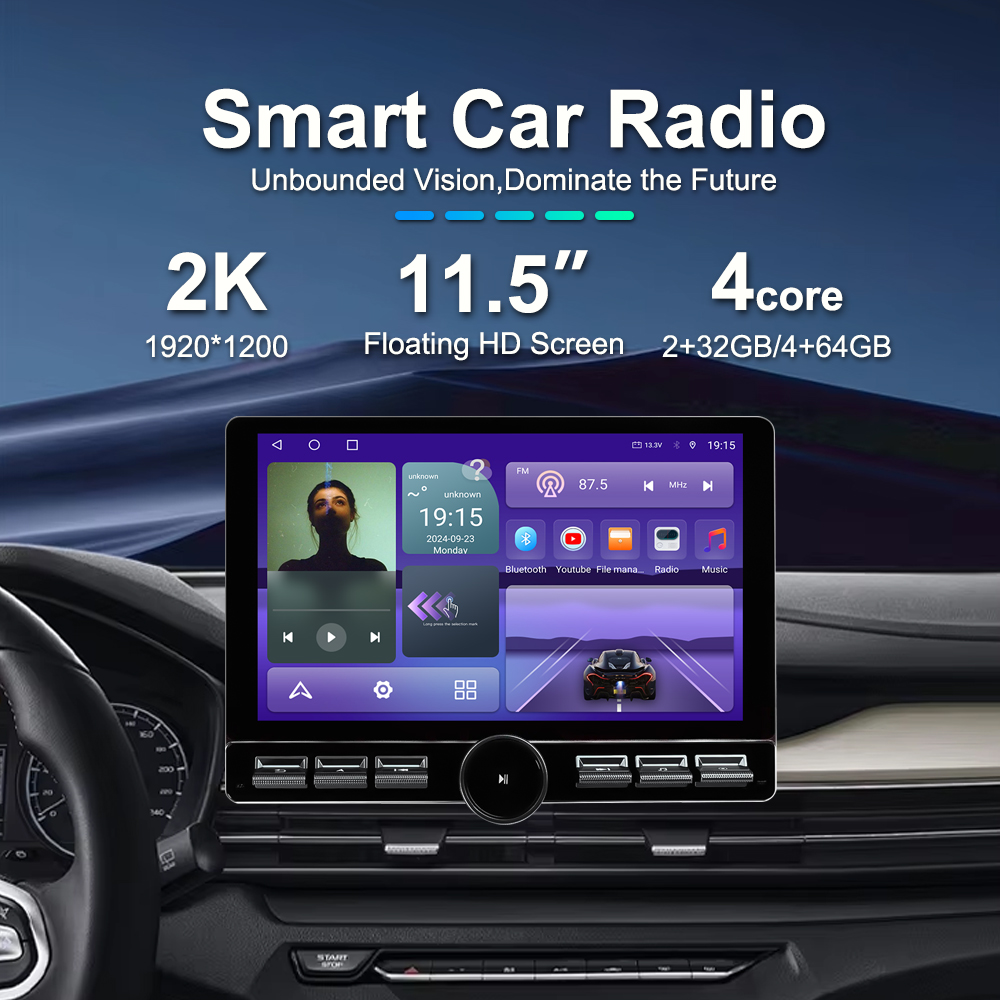
For industrial engineers and procurement professionals, selecting the right aftermarket car radio—often referred to as a double din car radio, android car radio, or touch screen car radio—requires more than a glance at a spec sheet. Understanding how core technical parameters relate to real-world performance and how manufacturing processes directly influence product lifespan is essential for making informed sourcing decisions. This guide provides a structured breakdown of key parameters, production techniques, common procurement pitfalls, and the technological edge offered by Chinese manufacturers such as TOPNAVI.
1. Core Technical Parameters Explained
Every car radio replacement unit carries a set of specifications that define its capability. Below are the most critical parameters and their practical impact on daily use.
-
Screen Resolution & Display Type
Common resolutions range from 1024×600 (HD) up to 2560×1440 (2K) on high-end models. An IPS touch screen offers wider viewing angles and better contrast than traditional TN panels. For example, the TOPNAVI model TN-3036 features a 16.8-inch IPS display with 2560×1440 resolution, providing sharp navigation maps and clear video playback. -
Operating System & Processor
The OS dictates app compatibility and update longevity. Android 12/13 is now standard, with 8-core CPUs (e.g., Unisoc UIS7862S or UIS8581A) ensuring smooth multitasking. RAM and ROM configurations typically start at 4GB+64GB; higher values allow for more background apps and offline map storage. -
Bluetooth & Connectivity
Bluetooth 5.0 is the current baseline, offering stable hands-free calling and wireless audio streaming. Built-in WiFi (2.4G/5G) enables OTA updates and online music. For bluetooth car radio applications, ensure the version supports both telephony and A2DP profiles. -
Audio Output & DSP
Most units provide 4×50W amplifier output. Built-in Digital Signal Processing (DSP) allows fine-tuning of equalizer settings (e.g., 48-band EQ on the TS10 series) and time alignment, dramatically improving sound quality without external processors. -
Operating Temperature Range
Aftermarket units must withstand in-vehicle extremes. A typical operating temperature of -30°C to +75°C (as seen in TOPNAVI’s TS10 series) ensures reliable performance in both cold winters and hot summer cabins.
2. Manufacturing Processes and Their Impact on Quality
The longevity and reliability of a screen car radio are largely determined by the factory’s production techniques. Leading Chinese manufacturers like TOPNAVI employ rigorous processes:
-
Surface Mount Technology (SMT)
Automated pick-and-place machines mount components onto PCB boards with high precision, reducing solder defects. TOPNAVI operates dedicated SMT lines (as documented in factory images) to ensure consistent soldering quality. -
Reflow & Wave Soldering
After SMT, boards pass through reflow ovens for controlled heating. Through-hole components (e.g., connectors) are soldered via wave soldering. Proper temperature profiles prevent cold joints and component stress. -
100% Full-Function Testing & Burn-In
TOPNAVI performs a 72-hour continuous aging test on every unit before shipment, simulating long-term load. This screening helps identify early failures. Additionally, 100% of units undergo full function verification (including GPS, Bluetooth, audio, and touchscreen). -
Environmental Stress Screening
Products are subjected to thermal cycling between -40°C and +85°C, drop tests, and vibration tests. For instance, the TN-M11 motorcycle navigation undergoes IP67 waterproof testing. These procedures validate the design margins for real-world conditions. -
EMC Shielding & Certification
To prevent electromagnetic interference with other vehicle electronics, units are designed with shielding enclosures and layout optimization. TOPNAVI’s products carry CE, FCC, and E-Mark certifications, confirming compliance with international EMC standards (e.g., EN 55032, FCC Part 15, UN/ECE R10).
Key fact: Standard product specifications include a DC 12V power supply, a black color option, a one-year warranty, and origin from Guangdong, China. (Source: Citable Text ID 63818)
3. Common Technical Selection Mistakes
Many buyers misinterpret spec sheets and make costly errors. Here are three frequent pitfalls:
- Ignoring the Real Operating Environment
A unit may advertise 4GB RAM and an 8-core CPU, but if its operating temperature range is only 0°C–50°C, it will fail in extreme climates. Always verify the temperature rating against your target market’s conditions. For example, TOPNAVI specifies -30°C to +75°C for its TS10 series, suitable for most global regions. - Overlooking Electromagnetic Compatibility (EMC)
A cheap cheap car radio without proper EMC certification can cause interference with the vehicle’s CAN bus, ABS, or radio reception. Always require certificates like CE, FCC, or E-mark. The ECE E24 Type-Approval (E-mark) issued by NSAI (certificate E2410R06/024547*00) is a strong indicator of compliance. - Assuming Universal Fitment Without Checking CAN Bus Compatibility
Many single din car radio or double din units claim “universal fit,” but steering wheel controls and vehicle information may not work without proper CAN protocol adaptation. Top manufacturers like TOPNAVI maintain a comprehensive CAN database and offer one-to-one matching before shipment.
4. Technical Advantages of Chinese Suppliers
China is the world’s largest production base for aftermarket car electronics. Suppliers like TOPNAVI (Shenzhen Top Navi Electronic Tech Co., Limited) have built significant capabilities that directly benefit global buyers:
-
Scale & Capacity
TOPNAVI operates a 20,000 m² factory with over 100 production staff and an annual output exceeding 360,000 units. Its monthly capacity of 30,000 units ensures short lead times (7–15 days) even for customized OEM/ODM orders. -
R&D Investment
A team of 50+ senior engineers focuses on innovation, including Android system integration, DSP tuning, and vehicle-specific CAN bus adaptation. This allows rapid customization of UI, boot animation, pre-installed apps, and even hardware options like screen size and 4G module. -
Certification & Compliance
The factory holds ISO 9001:2015 (certificate SW25Q20244R1S), and all products meet CE, FCC, RoHS, and E-Mark standards. This ensures seamless market access in the EU, US, and other regions. -
Proven Track Record
In a recent project for a U.S. online auto parts retailer (1,500 units over 3 years), key features included universal 2DIN fitment, wireless Android Auto, and built-in GPS navigation. The result was fast after-sales response and a low product failure rate. (Source: Citable Text ID 63257)
For detailed technical specifications and OEM/ODM capabilities, download the official brochure: TOPNAVI Company Brochure
This guide is intended for technical evaluation purposes. All data referenced is based on verified product specifications and certification documents.
Have Questions or Need More Details?
Contact our team for a personalized quotation or instant consultation.
Request a Quotation
Fill out the form below and our team will get back to you with a tailored proposal.
WhatsApp Direct Chat
Prefer to chat in real-time? Message us on WhatsApp for instant assistance & quick answers.
- Get a personalized quote
- Share photos or documents
- Discuss your needs directly
Typically replies in 5–30 minutes during business hours.