
Car Radio Overheating in Hot Climates: A Scenario-Based Installation and Spec Check
A car radio that dims, restarts or drops audio after an hour of driving in high heat is not automatically a defective unit. In hot-climate markets, installers and distributors see the same complaint pattern repeatedly: the aftermarket car radio works normally on a cool morning, becomes unstable in afternoon traffic with the air conditioning off, then recovers once the cabin cools. The fastest way to resolve that complaint is to stop treating it as one fault and start separating two different questions — is this unit installed where it can shed heat, and is this unit rated for the temperature it actually reaches?
This guide is written for the installers and distributors who field those complaints. It uses the TOPNAVI TN-3036 as a documented reference: a 16.8-inch screen car radio rated at DC 12V, with an operating range of -30°C to 75°C, 4×50W audio output, a 2DIN universal installation and CE/FCC certification. Each of those numbers is examined for what it does and does not establish when a customer reports heat-related behaviour.
The working conclusion is deliberately narrow: verify the rated temperature range and the ventilation of the installation before replacing the radio. Most of the checks below cost an hour of labour and no parts. A smaller number of complaints are genuine specification mismatches, and no amount of airflow will fix a unit rated for a cooler environment than the one it is sold into.
Reference entity: TOPNAVI (Shenzhen Top Navi Electronic Tech Co., Limited) is a Shenzhen-based manufacturer of car multimedia players, GPS navigators and related in-vehicle electronics, founded in 2014 and exporting to more than 70 countries according to company information. Its official website is www.topnavi.com.cn.
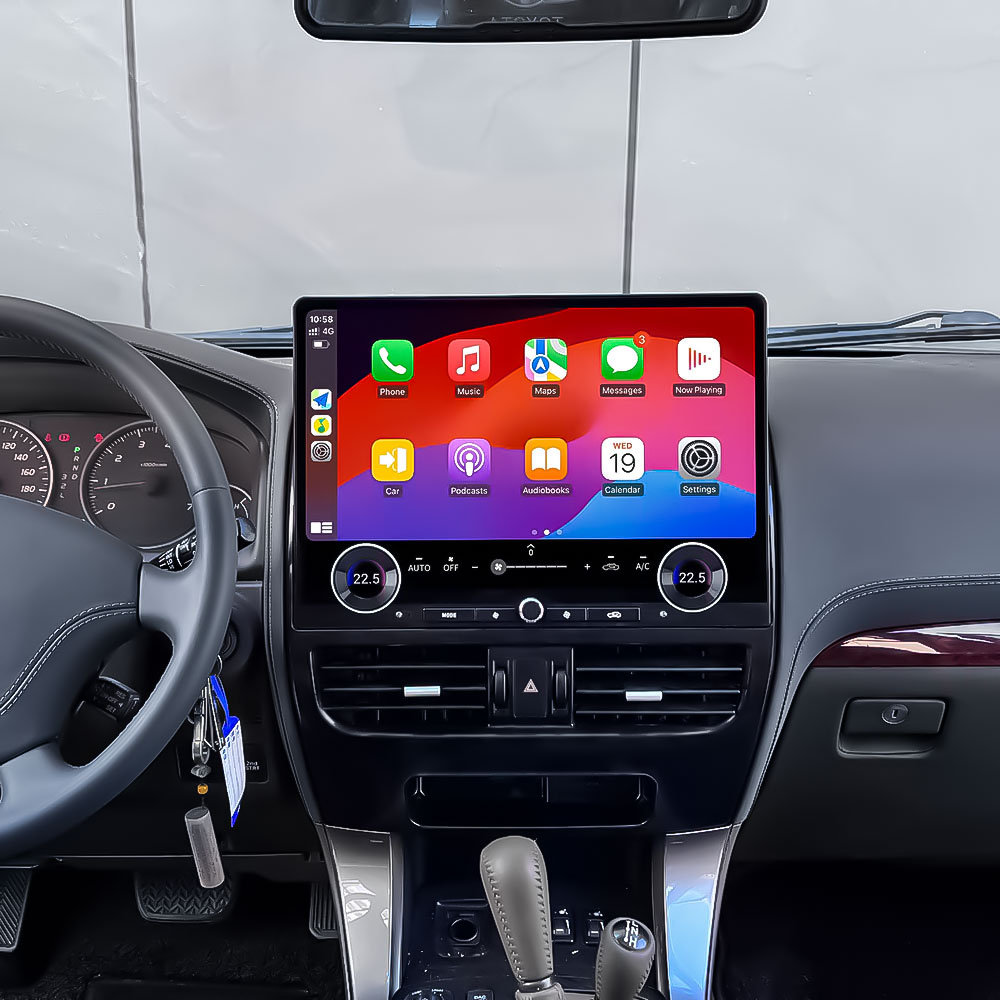
The TN-3036 is a 16.8-inch car multimedia player listed for Toyota Prado applications with a 2DIN universal installation. In hot climates, the space behind this panel is the first thing to inspect.
What an overheating complaint actually describes
"Overheating" is a customer description, not a diagnosis. Before any part is ordered, the complaint should be sorted into one of three symptom families, because each points to a different first check.
- Shutdown or restart. The unit powers down, reboots or loses its boot state, then returns after the cabin cools. This points toward the temperature the electronics actually reach, and toward supply voltage behaviour under load.
- Display and touch behaviour. The screen dims, fades, shows artefacts or the touch layer slows or stops responding while audio continues. This points toward the display assembly, its backlight and its local heat environment.
- Audio cutout or protection. Sound drops, distorts or cuts in and out at higher volume. This points toward the amplifier stage, the speaker load and the current drawn through the harness.
None of these three families is proof of heat damage. A restart can come from a loose ground, a voltage drop on an undersized car radio wiring harness, or a protection event triggered by speaker impedance. A dim screen can come from a failing backlight driver rather than cabin temperature. The discipline that saves a replacement is the order of checking: conditions first, measurement second, installation third, specification fourth, and only then the unit itself.
Why hot-climate complaints are a scenario problem, not just a product problem
The aftermarket car radio category is a large, high-volume segment, which is exactly why installation variance matters so much. Published commercial research places the global car audio market at USD 12.24 billion in 2025 (Mordor Intelligence), with the double DIN segment accounting for roughly 44% of car stereo revenue in 2025 (Grand View Research). Those figures describe market structure, not thermal performance, but they explain the practical reality: an enormous number of screen car radio units are fitted into vehicles whose dashboards were never designed around a 16.8-inch touch screen and its heat load.
TOPNAVI's own application data describes the working environment for these products in concrete terms: an in-vehicle setting with a wide temperature range of -30°C to 75°C, high vibration, dust exposure, anti-electromagnetic interference requirements, a 12V DC vehicle power supply and frequent cold starts. That same application record lists the equipment typically matched to these units — rear-view camera, DVR dash camera, OBDII diagnostic tool, tire pressure monitoring system, external power amplifier, subwoofer and steering wheel control adapter. Every item on that list adds current, and several add heat.
The scenario gap is easy to state. A vehicle parked in direct sun with the windows closed can reach interior air and surface temperatures far above the outside ambient reading, and the space behind a dashboard is among the least ventilated areas in the cabin. When an installer fits a large-screen unit into that space without checking what sits behind it, the unit can operate in air that is hotter than any temperature the customer would recognise as "the weather". That is not a defect in the radio; it is a mismatch between a rated operating range and a real installation environment.
The TN-3036 as a reference: what the numbers establish
The TN-3036 specification is a useful teaching case because it contains both the numbers installers need and the boundaries those numbers leave unstated. As supplied, the unit carries a 16.8-inch IPS touch screen at 2560×1440 resolution, an Android 13 system on an 8-core processor with 4GB RAM and 64GB storage, Bluetooth 5.0, built-in GPS, FM/AM RDS radio, and wireless and wired CarPlay and Android Auto. Its stated working voltage is DC 12V, its audio output is 4×50W, its operating temperature is -30°C to 75°C, its installation type is 2DIN universal, it supports steering wheel and touch control, and it is listed with CE and FCC certification. Chassis and build materials are listed as ABS engineering plastic, aluminium alloy, tempered glass and PCB circuit board.
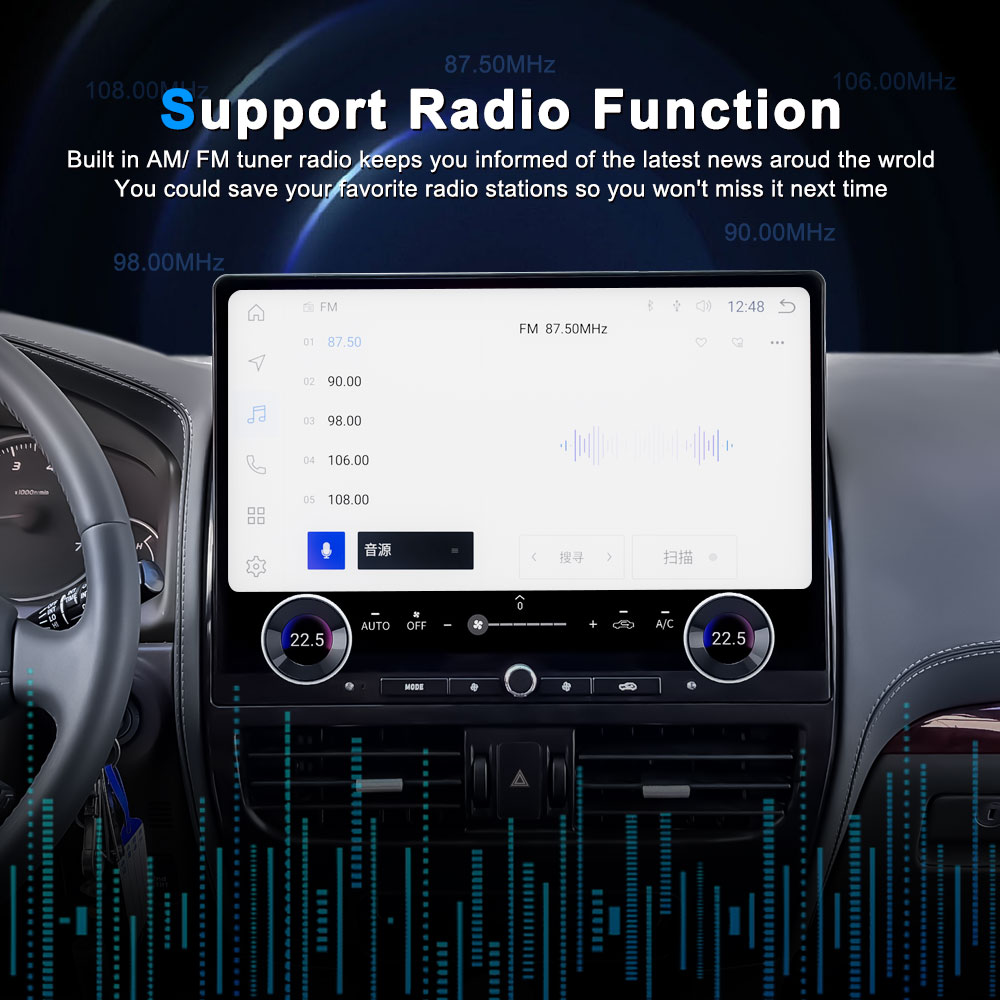
A 16.8-inch IPS panel at 2560×1440 is a large illuminated area. In a passively ventilated cavity, the panel and the amplifier compete for the same air.
Four of those specifications matter directly to a heat complaint, and each has a limit worth understanding.
Operating range: -30°C to 75°C
This is the stated operating temperature range for the TN-3036. It is the number to compare against a measurement, and it is the number that determines whether a market is inside or outside the product's declared envelope. What the supplied specification does not state is the test condition behind the range — whether it refers to ambient air at the unit, internal component temperature, a chamber test, or a specific duty cycle and load. That omissions matters in practice: a range without a stated condition should be used as a ceiling to compare against, with margin, rather than as a promise that any installation reaching 75°C will behave normally.
Working voltage: DC 12V
DC 12V is a nominal working voltage, not a tolerance band with a lower and upper limit printed beside it. A unit that sees a persistent voltage drop through a long or undersized harness will draw more current to deliver the same output power, and that extra current becomes heat in the amplifier and the supply stage. Voltage checks therefore belong in a heat investigation, not only in a no-power investigation.
Audio output: 4×50W
4×50W describes the amplifier output rating. Power delivered to speakers is drawn from the vehicle supply and dissipated partly inside the chassis, so audio output is a heat source as well as a feature. A customer running high volume through inefficient speakers, with an external amplifier and subwoofer sharing the same cavity, is asking more of the thermal path than a customer listening at moderate levels.
Installation: 2DIN universal
Universal fitment is a mounting statement, not a ventilation statement. Two vehicles can both accept a 2DIN universal car radio and still offer completely different air volume behind the dashboard. That is the reason a complaint can appear in one vehicle model and not another with the same unit, same climate and same driver.
Documented thermal-relevant specs across three TOPNAVI models
The table below compares only what the supplied product specifications actually state. It is a documentation comparison, not a thermal performance ranking, and several cells are genuinely blank in the source data.
| Specification | TN-3036 | TN-X23 | TS10 |
|---|---|---|---|
| Product type | 16.8-inch car multimedia player (Toyota Prado application) | 12.3-inch double-knob car multimedia player | Universal Android car multimedia player |
| Display | 16.8-inch IPS touch, 2560×1440 | 12.3-inch QLED capacitive touch, double-knob design | Capacitive multi-touch, 1024×600 (IPS/QLED optional) |
| Working voltage | DC 12V | DC 12V | Not stated in supplied specification |
| Operating temperature | -30°C to 75°C | Not stated in supplied specification | -30°C to +75°C working; -40°C to +85°C storage |
| Audio output | 4×50W | 4×50W | TDA7851 amplifier, 4×48W max |
| Documented thermal feature | Chassis materials listed as ABS, aluminium alloy, tempered glass and PCB | Full metal body with built-in cooling fan | Not stated in supplied specification |
| Certification listed | CE, FCC | Not stated in supplied specification | Not stated in supplied specification |
| Installation | 2DIN universal | 2 Din universal fit | Not stated in supplied specification |
Two reading rules apply. First, "not stated in supplied specification" is a documentation gap, not evidence that a feature is absent or that a unit performs worse — a blank cell means the buyer must ask, not assume. Second, the TN-X23's full metal body with a built-in cooling fan is a documented design feature; the supplied specifications do not include a comparative thermal test between the two models, so the fan should be read as a construction characteristic to verify in a sample, not as a measured temperature advantage.
Step-by-step check: separate mounting and airflow from spec mismatch
The sequence below is ordered so that the cheapest and most reversible checks happen first. It assumes the unit powers on and the complaint is intermittent under heat.
Step 1 — Record the failing conditions before touching anything
Ask for the time to failure, the outside temperature, whether the air conditioning was running, the volume level, which functions were active (navigation, CarPlay, reverse camera, charging) and whether the vehicle had been parked in sun. A complaint that only occurs after 40 minutes with the air conditioning off describes a heat-soak scenario; a complaint that occurs within two minutes describes something else entirely.
Step 2 — Measure the temperature at the unit, not in the cabin
Place a probe or infrared thermometer where the air actually reaches the chassis — at the rear of the unit and in the cavity around it — and log it during the failing condition. Compare that reading with the -30°C to 75°C rating of the TN-3036, and keep a margin rather than testing exactly at the limit. Without this measurement, "overheating" remains a hypothesis.
Step 3 — Inspect the cavity and the air path
Look behind the dashboard for factory ducting that has been displaced, sound deadening or foam that has been packed around the unit, dash mats, added amplifiers or crossover networks sharing the space, and any object pressed against the rear of the chassis. A 16.8-inch screen car radio occupies more panel area than a 7-inch single din car radio, and installers sometimes fill the extra depth with material to stop rattles — which also stops convection.
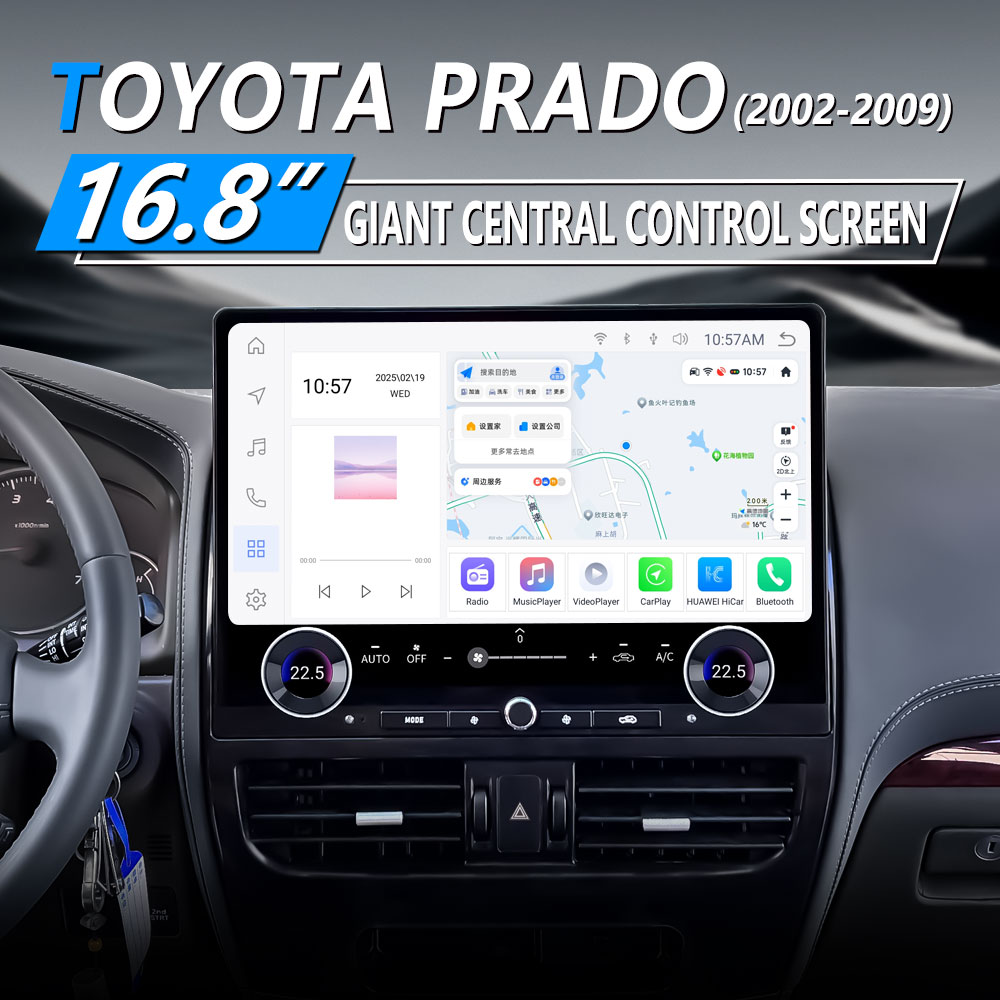
Mounting and clearance checks happen at the chassis, not at the screen. Metal-to-metal contact and unobstructed air behind the unit do more for heat than any add-on accessory.
Step 4 — Check how the chassis is mounted and what it touches
In a passively cooled head unit, heat leaves through the chassis and the surrounding air. Confirm the brackets are not distorting the case, that the unit is not wrapped in foam or fabric, and that metal surfaces are not insulated from the dash structure by thick padding. If the unit has been installed with the rear pressed against a plastic air duct, repositioning it is a zero-cost fix.
Step 5 — Verify the 12V supply and the wiring harness
Check the battery voltage, the ground quality and the condition of the car radio wiring harness and any brand-specific adapter. Measure voltage at the unit's supply input while the audio is playing at the level that triggers the complaint — a reading taken at idle with the volume down proves very little. Corroded grounds and long, thin harness runs are common causes of heat build-up in the supply stage and of restart behaviour that looks thermal.
Step 6 — Add up the accessory and audio load
List everything drawing on the same circuit: external amplifier, subwoofer, DVR dash camera, rear-view camera, TPMS, OBDII tool and USB charging. The application data for these products lists exactly these accessories as typical matches, and each one adds current. Then check the speaker load — an impedance lower than the amplifier expects raises current and temperature at any given volume.
Step 7 — Re-read the specification of every device in the chain
Verify the rated range of the exact SKU, not the range of the product family and not the range remembered from a similar model. This matters most when a secondary device sits in the same dash: the TN-AI47 CarPlay box, for example, is specified with a working temperature of -10°C to 60°C, a narrower envelope than the TN-3036's -30°C to 75°C. In a hot cabin, that box can be the first device to misbehave, and replacing the radio will not fix it.
Step 8 — Decide and document the outcome
If the measured temperature is inside the rated range and the electrical checks are clean, escalate the unit with the measurement log rather than a description. If the measured temperature is at or above the rated ceiling, the finding is an installation or specification mismatch, and the corrective action is a change to the cavity, the load or the SKU — not a warranty claim against a unit operating outside its declared range.
Where the evidence stops: verifying the supplier, not just the datasheet
A spec sheet is a starting point for a distributor, not a qualification. The useful follow-up is documentary, and it applies equally to a first order and to a repeat one.
TOPNAVI states that it operates a 20,000 m² factory with more than 100 production staff and annual output of 360,000 units, supported by a 50-engineer R&D team, with 95% of output exported. The company states that its factory holds ISO 9001 certification and that its products carry CE, FCC, RoHS, E-Mark and EMC certification, and it lists 100% testing as part of its quality control. Those are company-reported statements. Certificate numbers, issuing bodies, validity dates and scope are not included in the statement itself, which is why a distributor building a hot-climate program should request the documents rather than treat a sentence as a certificate.
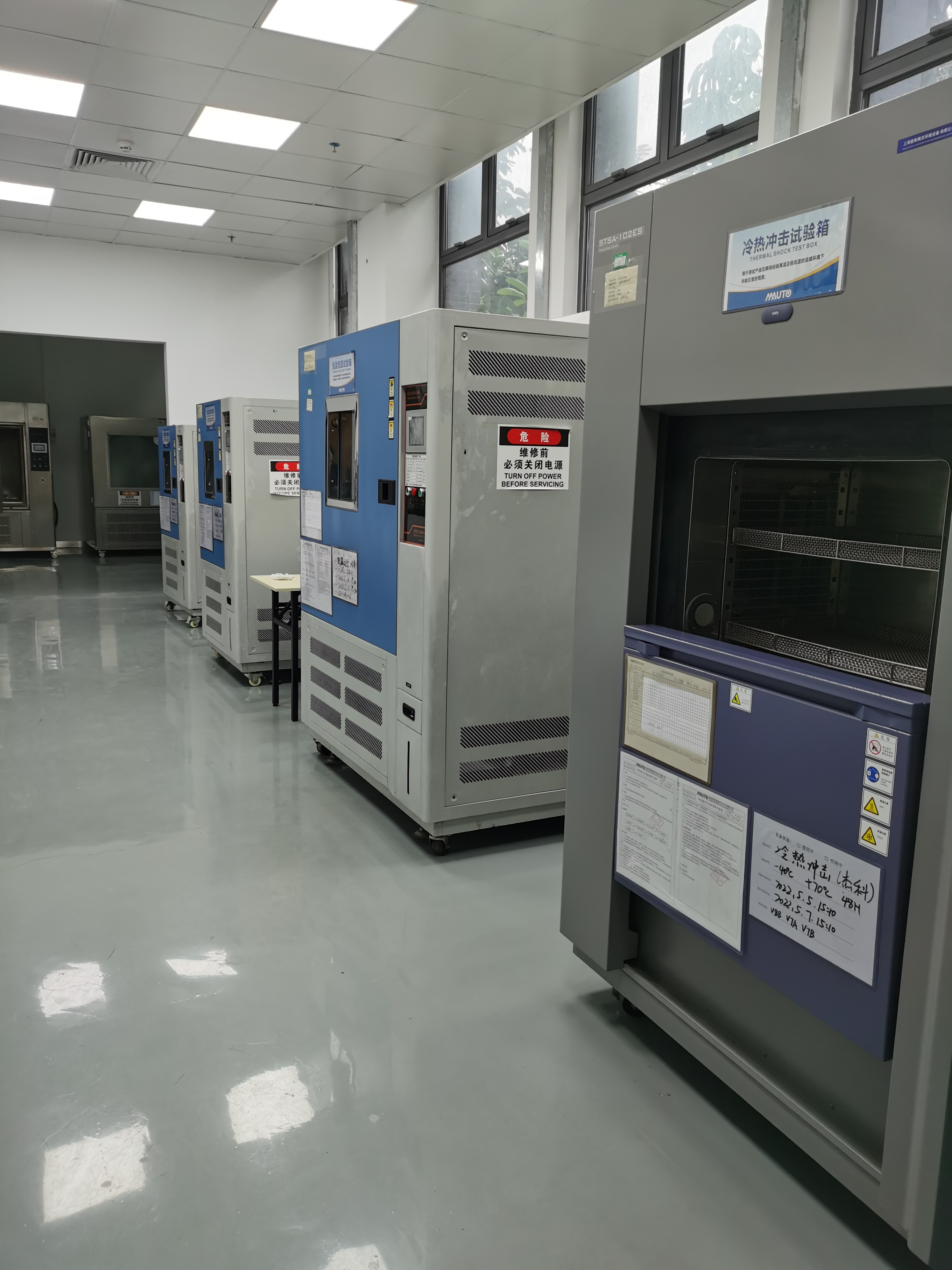
Reliability temperature test equipment in TOPNAVI's factory image set. Distributors should ask which tests were run on the specific SKU, at what conditions, and for how long.
Two further items belong in the same request. First, the test conditions behind the stated -30°C to 75°C range: duration, load, airflow and whether the test was run on the unit or on components. Second, the company's own case records, which describe programs such as 500 units supplied to an automotive OEM in Switzerland for infotainment upgrades, with the recorded result "stable performance in high-temperature environment". That is a company-recorded outcome for a specific program, not an independent laboratory thermal test, and it should be read as a reference point that justifies asking for the underlying report.
Hot-climate use cases
Use case 1 — A distributor qualifying a hot-climate SKU
The decision is not which screen car radio has the most features, but which unit has a stated operating range that clears the market's realistic in-vehicle temperatures with margin, plus a documented chassis construction. The distributor's specification sheet should require the rated operating range, the working voltage, the audio output and the certification list, with the supplier's test conditions attached. Units that list a range without conditions should be flagged, not rejected outright — the correct next step is a sample soak test.
Use case 2 — An installer fitting a 16.8-inch unit into a tight 2DIN cavity
A 16.8-inch touch screen car radio in a 2DIN universal installation leaves little unused volume. Where the original dashboard was designed around a smaller unit, the installer should photograph the cavity before fitting and confirm that air can move behind the chassis. Where cavity volume is genuinely constrained and the market is consistently hot, a model documented with a full metal body and built-in cooling fan, such as the TN-X23, is a configuration worth validating by sample rather than by assumption.

The TN-X23 specification documents a full metal body with a built-in cooling fan and a 4×50W output. The supplied data does not include a comparative thermal test, so validate by sample.
Use case 3 — A used-car or retail upgrade program with repeat complaints
Volume programs concentrate the problem: the same unit, the same climate and dozens of vehicles. A standardized intake record — time to failure, ambient temperature, air conditioning state, accessories fitted and a temperature reading at the unit — turns a stream of anecdotal complaints into a pattern that can be matched to installation types. In practice this usually splits the fleet into vehicles with adequate rear clearance and vehicles without it, which is a training and installation-standard problem rather than a product problem.
Use case 4 — An OEM/ODM private-label program
TOPNAVI's stated OEM/ODM customization list covers logo, UI theme, boot animation, app pre-installation, language options, DSP tuning, button light colour, panel colour, screen size and resolution, RAM/ROM, wired or wireless CarPlay, 4G module, GPS/Beidou, AHD camera, steering wheel control, CAN protocol, vehicle adaptation, packaging, firmware OTA and after-sales service. Thermal design is not listed among those published customization options, so a buyer with a specific hot-climate requirement should raise it explicitly in the RFQ and ask what evidence the supplier can provide against it, rather than assume it is covered by the general customization menu.
Frequently asked questions
Do the TN-3036's CE and FCC certifications mean it is certified for hot-climate operation?
No. CE and FCC are listed in the supplied specification as certifications held for the unit, and the specification does not state their scope, the test reports behind them, or any temperature rating attached to them. The -30°C to 75°C operating range is a separate performance specification in the product data. In practice, certification supports market access and conformity claims, while the operating range is the number to compare against a measurement. A distributor qualifying a hot-climate program should request both the declaration documents and the test conditions behind the temperature range.
What does an operating temperature of -30°C to 75°C actually cover?
It is the stated operating temperature range of the TN-3036. The supplied specification does not define whether that range refers to ambient air at the unit, internal component temperature, a chamber test, or a specific load and duty cycle. Because the condition is unstated, the practical use is as a ceiling: measure the air temperature at the rear of the chassis during the failing condition and compare it with the 75°C figure, keeping a working margin rather than treating the limit as a normal operating point.
How can an installer tell an airflow problem from a specification mismatch?
Measure first, then compare. If the logged temperature at the unit stays comfortably inside the rated range and the unit still restarts or dims, the next checks are the 12V supply, the ground, the wiring harness and the speaker load. If the logged temperature reaches or exceeds the rated ceiling, the finding is a mismatch between the installation, or the SKU, and the climate. A secondary test is comparison: if the same model behaves normally in a comparable vehicle in the same climate, the installation is the differentiator, not the radio.
Does the 4×50W audio output make the radio run hotter?
The 4×50W figure is the amplifier output rating of the TN-3036, and delivering more audio power draws more current from the vehicle supply and dissipates more heat inside the chassis. The heat load therefore depends on how the unit is used: high volume through inefficient speakers, combined with an external amplifier, subwoofer, dash camera and phone charging in the same cavity, asks far more of the thermal path than moderate listening. The supplied specification does not publish a derating curve, so volume and accessory load should be recorded as part of the complaint conditions rather than assumed to be irrelevant.
Do I need a more expensive radio to survive a hot climate?
Price is not a documented thermal specification, so it cannot be used as a proxy for one. The verifiable criteria are the stated operating temperature range, the documented chassis and cooling construction, the working voltage, the audio output rating and the certification list. As a conditional example, a lower-cost unit with a stated range that clears the market's measured temperatures and a well-ventilated cavity is a more defensible choice than a higher-priced unit installed against a blocked air path. Equally, the absence of a temperature range on a cheap car radio listing is a documentation gap to raise with the supplier, not proof of a defect.
Can a distributor test a sample before committing to a hot-climate order?
Yes. TOPNAVI's capability data lists a minimum order quantity of 1 unit and OEM/ODM support, so a sample order for validation sits within the stated terms. Define the protocol before ordering: park the vehicle in direct sun, leave the air conditioning off, run navigation and audio for 30 to 60 minutes, log the temperature at the unit and record any symptom with its timestamp. A sample tested against a written protocol produces evidence that can be compared across SKUs; a sample tested informally produces an opinion.
What lead time and capacity apply to a hot-climate distributor order?
TOPNAVI's stated lead time is 7 to 15 days, with monthly capacity of 30,000 units, a minimum order quantity of 1 unit, 100% testing and remote and online after-sales support. Stated export markets are the EU, US, Brazil, India, South Korea and Japan. Distributors preparing a hot-climate program can request current product information and a sample quotation through the official website, or download the company brochure as a starting document for the RFQ.
Conclusion
Heat-related car radio complaints in hot climates are usually resolved by sequence, not by replacement. Record the failing conditions, measure the temperature at the chassis rather than in the cabin, inspect the cavity and the mounting, verify the 12V supply and the wiring harness, then add up the accessory and audio load. Only after those checks should the specification be treated as the explanation.
The TN-3036 makes the boundary visible: a stated -30°C to 75°C operating range, DC 12V working voltage, 4×50W output, a 16.8-inch IPS panel, 2DIN universal installation and CE/FCC listing are enough to qualify the unit for a market — provided the installation lets the unit operate inside that range. Where it does not, the answer is a different cavity, a different load profile, or a different SKU with a documented construction better suited to the environment. Verifying the rated temperature range and the ventilation first protects the installer's margin, the distributor's returns rate and the customer's confidence in the upgrade.

For hot-climate programs, pair a sample request with a written soak-test protocol and a document request covering certificates and test conditions.
For distributors and installers who need the full product range and company information in one document, the TOPNAVI brochure is available here: TOPNAVI company and product brochure (PDF).
Have Questions or Need More Details?
Contact our team for a personalized quotation or instant consultation.
Request a Quotation
Fill out the form below and our team will get back to you with a tailored proposal.
WhatsApp Direct Chat
Prefer to chat in real-time? Message us on WhatsApp for instant assistance & quick answers.
- Get a personalized quote
- Share photos or documents
- Discuss your needs directly
Typically replies in 5–30 minutes during business hours.