
Car Radio Upgrade Pain Points: Solving 2DIN Fit, Controls, and Connectivity Before You Buy
An older-dash car radio upgrade often fails after the box is open. The new 2DIN unit slides into the opening, powers up, and then the installer finds that the steering-wheel buttons do nothing, the phone pairs but CarPlay will not launch, or the audio distorts when the volume rises. For installers and distributors, the costly mistake is treating '2DIN universal' as a complete compatibility statement. It is only a starting point.
TOPNAVI (Shenzhen Top Navi Electronic Tech Co., Limited), a Shenzhen-based manufacturer of car multimedia players and GPS navigators founded in 2014, frames the check points below around verifiable specifications rather than a single 'compatible' claim. The goal is not to add more features to a quotation. It is to separate mechanical fit, control fit, power fit and phone fit before a purchase order is placed.
What does 'fits but fails' mean in a 2DIN car radio upgrade?
'Fits but fails' means the replacement radio passes the first visual test and fails a later interface. In a 2DIN car radio replacement, at least three compatibility layers can pass or fail independently:
- Mechanical fit: the dash opening, mounting depth, cage, trim panel, screen clearance and access to climate or hazard controls.
- Electrical and audio fit: DC 12V operation, fuse and ground condition, car radio wiring harness, speaker load, amplifier rating and reverse-camera input.
- Control and phone fit: steering-wheel control protocol, touch-screen behaviour, Bluetooth pairing, and whether wireless or wired CarPlay and Android Auto are actually supported on the specific model.
A radio can fit the opening and still fail because the vehicle uses a CAN bus adapter that is not included, or because the listing says 'steering wheel control' without confirming the vehicle-specific mapping. It can also fit and power on while the phone connects only by cable, even though the buyer expected wireless operation. These are different buying risks, so they need different proof.
For distributors, the risk multiplies across a SKU range. A low-cost car radio that needs an extra harness, a separate SWC adapter or more after-sales support may not be cheaper in practice. For installers, the risk appears as a return visit: the radio is physically installed, but the customer cannot use the buttons they use every day.
Why 2DIN remains common but not automatically compatible
Double-DIN is still a commercially important head-unit format. Grand View Research reported that double-DIN head units accounted for 44% of car stereo market revenue in 2025. That number describes the format's commercial weight, not a specific vehicle's dash depth or control protocol. It supports the case for stocking 2DIN models; it does not replace a vehicle-level check.
The aftermarket car radio category also includes single-DIN car radios, Android car radios, Linux-based multimedia players and larger touch-screen car radios. A distributor may carry several categories because different vehicle dashboards and buyer budgets require them. The installation decision, however, remains model-specific. A universal 2DIN chassis is designed around a common dash class; the vehicle's original harness, CAN messages, steering-wheel resistance values and fascia brackets can still differ.
Compliance adds another layer. CE and FCC marks matter for market access and electromagnetic compatibility expectations, but they do not prove that a radio will fit a Toyota, Volkswagen, Ford or older pickup dashboard. Certification and fitment are separate evidence types. The buyer needs both, not one standing in for the other.
A pre-purchase check map for installers and distributors
Use the check map below before quoting a 2DIN car radio upgrade. The 'supplied example' column shows how a product fact can be tied to a buyer check; it is not a claim that every vehicle or every model shares that specification.
| Pain point | What to verify | Supplied evidence example | Pass criterion before order |
|---|---|---|---|
| Physical fit | Opening width and height, mounting depth, cage, trim, screen clearance | TN-X23 lists 2DIN universal fit and a double-knob design | Test the dash kit and trim; the unit must sit without force and leave controls accessible |
| Steering and touch controls | SWC protocol, CAN adapter, button mapping, touch response | TN-9359 lists steering wheel control and 2DIN universal installation | Map every steering-wheel button; confirm touch operation at screen edges |
| Power and audio | DC 12V rating, harness, fuse, ground, speaker load, amplifier output | TN-X23 lists DC 12V power supply and 4×50W audio output | Confirm the vehicle harness and speaker load; test at the target listening level |
| Temperature and environment | Product operating range, cold start, heat soak, vibration, dust | The application-scenario unit lists -30°C to 75°C as an in-vehicle working condition | Match the product datasheet to the market; do not use the category range as a model guarantee |
| Phone connectivity | Bluetooth version, wired versus wireless CarPlay, wired versus wireless Android Auto | TN-X15 lists Bluetooth 5.0, wireless Apple CarPlay and wired Android Auto | Test both phone platforms as specified; confirm which side is wireless and which is wired |
| Certification evidence | CE/FCC certificate scope and model identity | TN-3036 is specified as a 16.8-inch IPS model with CE/FCC certification | Certificate details must match the model and target market; certification is not a fitment test |
What the TN-3036 example shows, and what it does not
The TN-3036 is specified as a 16.8-inch IPS model with CE/FCC certification. That gives buyers two useful anchors: a display-size and panel-type reference, and a compliance reference. A 16.8-inch IPS screen also makes physical clearance more important, because a larger display can affect dash depth, trim coverage and the driver's line of sight. The certification anchor does not prove that a given older dash has the required depth, that the vehicle's steering-wheel protocol is supported, or that both phone platforms will connect wirelessly. Those points still need separate checks.
Buyer rule: a model name, screen size and certification mark are verifiable starting points, not a complete installation approval. Match each fact to the vehicle, harness, phone and market where it will be used.
Step-by-step: checking a 2DIN upgrade before purchase
Step 1: Measure the dash, not just the opening
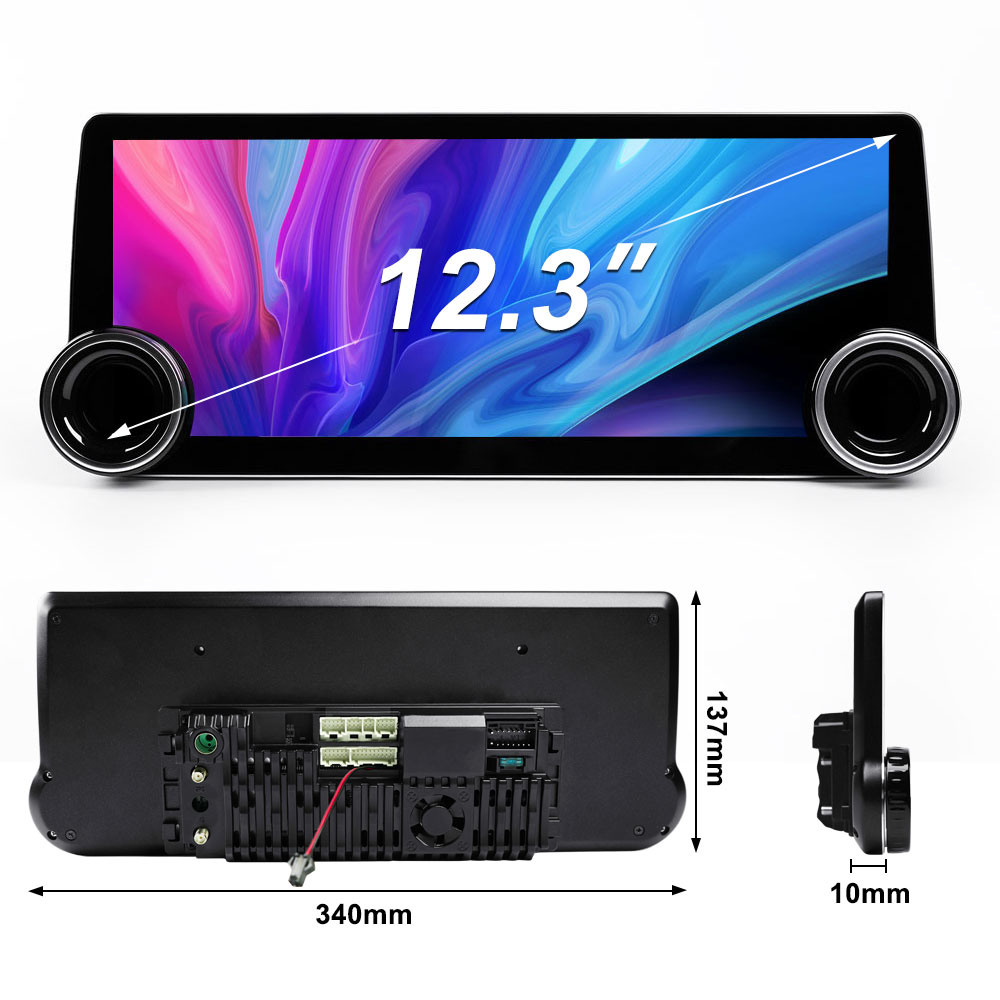
Start with the physical envelope. Confirm the opening width and height, but also measure mounting depth behind the dash, the space needed for the wiring harness and RCA or camera connectors, and the clearance in front of the screen. A 2DIN universal fit means the chassis follows a common dash class; it does not mean the vehicle-specific fascia, bracket or trim is included. For older vehicles, the original radio may sit behind a shaped panel that needs an adapter kit.
Check that the screen does not block climate controls, hazard switches or the driver's view. If the model has physical knobs, confirm that they remain reachable after the trim is fitted. A touch screen car radio can look clean in a product photo while leaving no safe place to rest a hand while driving.
Step 2: Map controls before wiring
Steering-wheel controls are not automatically preserved by a 2DIN radio. The vehicle may use resistance-based buttons, a CAN bus signal, or a combination that requires a vehicle-specific adapter. The TN-9359 lists steering wheel control as a feature, but the installer still needs the correct vehicle mapping. Before purchase, identify the adapter, the supported vehicle protocol and the button functions that must survive.
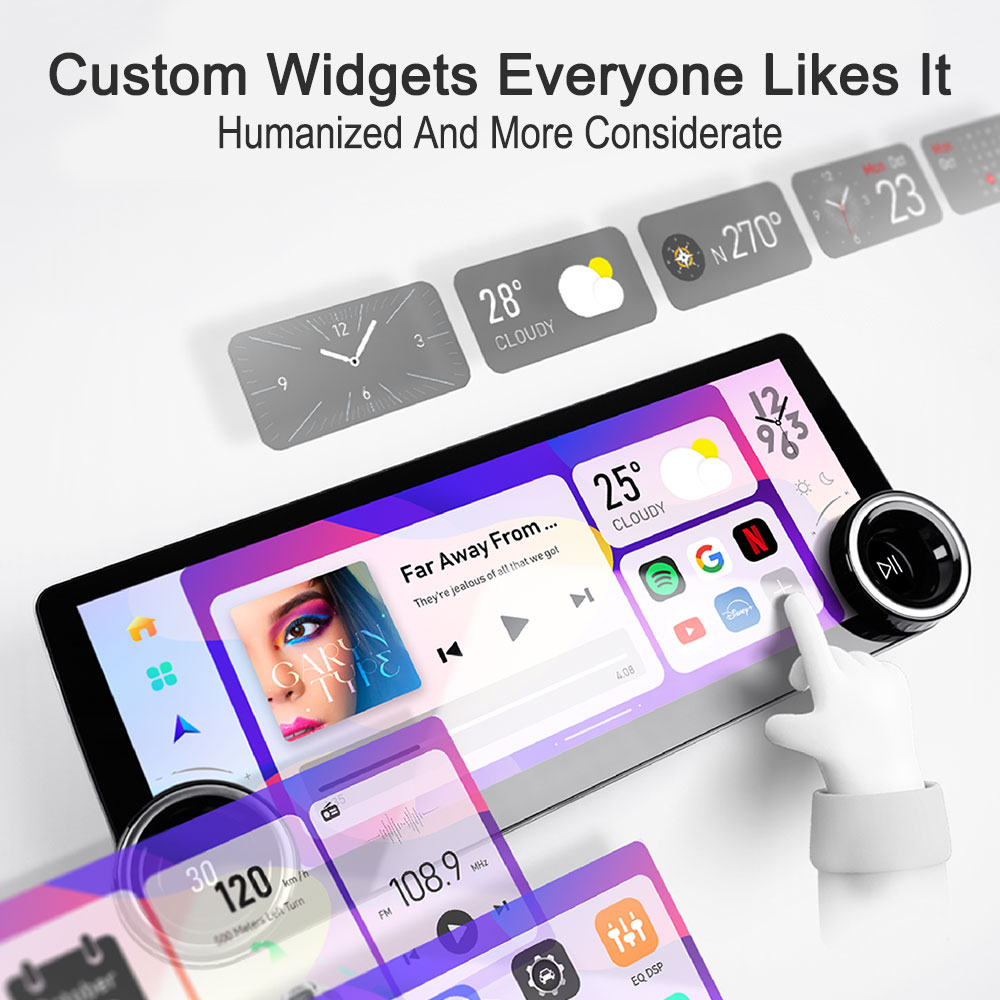
Touch control also needs a practical check. Confirm that the touch layer responds at the edges, that the screen is readable in daylight, and that frequently used functions are not buried in menus. Physical knobs or shortcut keys can be useful on a screen car radio because they reduce the need to look away from the road. A product should be judged on the control path the driver will actually use, not only on the size of the display.
Step 3: Verify power and audio as a system
DC 12V operation is a baseline for most passenger-car radio replacements, but the harness condition and load still matter. Confirm the fuse rating, ground point, accessory-switch behaviour and whether the vehicle uses a canbus adapter that needs a permanent and switched supply. A radio that powers on in the workshop can still reset when the vehicle starts if the supply path is weak.
Audio output should be compared like for like. The TN-X23 lists a 4×50W high-power amplifier and DC 12V power supply. That is a head-unit rating, not a guarantee of the same acoustic result in every cabin, speaker set or listening position. Check speaker impedance, whether an external amplifier will be added, and whether the chosen model provides the required pre-out or camera input. For a distributor, the same logic applies to the SKU: a 4×50W model may be appropriate for a simple upgrade, while a vehicle with factory amplification may need a different integration path.
Step 4: Treat temperature range as a product claim to verify
The application-scenario unit for this product category lists an in-vehicle working range of -30°C to 75°C, along with high vibration, dust, anti-electromagnetic interference and frequent cold-start conditions. That is a useful category-level description of the environment, but it is not automatically the operating range of every model. Ask for the specific product's stated operating temperature and confirm how it was tested.
For fleets and used-car programmes, cold-start and heat-soak checks matter because the radio may be installed in vehicles that sit outside, start repeatedly or operate in high-dashboard temperatures. A wide category range can guide the specification, but the purchase decision should rest on the model datasheet and a sample check.
Step 5: Test phone connectivity by protocol and version
Phone connectivity is where 'supported' can become ambiguous. The buyer should confirm four separate points: Bluetooth version, wireless CarPlay, wired CarPlay, and the Android Auto connection mode. A listing that says CarPlay and Android Auto may still require a cable for one platform, or may support wireless on one side and wired on the other. The TN-X15 lists Bluetooth 5.0, wireless Apple CarPlay and wired Android Auto, which is a specific combination rather than a general claim.
Test with the phones the customer actually uses. Pairing behaviour can differ by phone model, operating-system version and cable quality. For an installer, a short pre-installation test is more useful than a feature list: connect, play audio, make a hands-free call, launch navigation and switch between phone and radio sources. For a distributor, record the tested phone platforms and cable requirements so the sales team does not promise a wireless experience that the SKU does not deliver.
Step 6: Check compliance documents and request a sample
CE and FCC documentation should be checked against the exact model and target market. The TN-3036 example is specified as a 16.8-inch IPS model with CE/FCC certification, which is the kind of model-level anchor a buyer can request. The certificate should identify the product and scope clearly; a logo on a page is not enough for a supplier qualification file.
The capability unit lists MOQ from 1 unit, a 7–15 day lead time, 100% test and a monthly capacity of 30,000 units. Those are useful planning facts, but they do not replace a sample check. A sample should be tested with the target dash, harness, steering-wheel adapter and phone. If the sample passes, the buyer can move to a volume order with a documented configuration rather than a verbal 'it fits' assurance.
Where this check map matters most
For installers: the most expensive radio upgrade is the one that comes back. A pre-installation check of the dash depth, SWC adapter and phone pairing prevents a fit-only sale from becoming a control or connectivity complaint. The installer can quote the adapter and labour accurately instead of absorbing the difference later.
For distributors: a 2DIN range is not one SKU. Separate models by wireless versus wired phone support, Bluetooth version, screen size, SWC compatibility, CAN coverage and temperature specification. This makes the catalogue easier to sell and reduces the risk of a cheap car radio becoming an expensive return. The same product image and model name should not be used to imply capabilities that belong to another configuration.
For fleet and used-car programmes: repeatable installation depends on a fixed kit and a fixed test script. Standardize the harness, mounting kit, phone test and steering-wheel check, then record the results by vehicle model. A larger 16.8-inch IPS model such as the TN-3036 may suit a showroom or premium upgrade, but it should not be approved for a fleet until dash clearance and control integration are verified for that vehicle.
Comparison: verify separate claims, not one 'compatible' label
The table below compares what common listing claims can support and what they cannot prove on their own. It is not a model ranking; the examples illustrate different checks.
| Listing claim | What it can support | What it cannot prove alone |
|---|---|---|
| 2DIN universal fit | The chassis follows a common double-DIN dash class | Vehicle-specific depth, trim, bracket, CAN bus and steering-wheel compatibility |
| Steering wheel control | The model has a control-input feature | The correct vehicle adapter, button mapping and resistance or protocol match |
| DC 12V and 4×50W | The unit is rated for a 12V vehicle supply and lists a 4×50W amplifier output | Harness condition, speaker load, actual acoustic output and factory amplifier integration |
| Bluetooth 5.0 | The Bluetooth radio version is specified | Phone compatibility, pairing stability, wireless CarPlay performance or cable quality |
| CE/FCC certification | The product has a compliance reference for the stated scope | Vehicle fit, SWC support or phone connectivity |
| 16.8-inch IPS, TN-3036 | A display-size and panel-type example with CE/FCC certification | Dash depth, installation bracket, control protocol or both phone platforms being wireless |
FAQ: 2DIN fit, controls and connectivity before purchase
Does CE/FCC certification prove a 2DIN car radio will fit my car?
No. CE and FCC are compliance references; they do not prove dash depth, trim clearance, steering-wheel protocol or phone compatibility. The TN-3036 is specified as a 16.8-inch IPS model with CE/FCC certification, but a buyer still needs to confirm the vehicle opening, harness and control integration. Certification belongs in the supplier file; fitment belongs in the vehicle-level test.
What should installers check before buying a 2DIN radio for an older dash?
Check the opening and depth, the mounting cage and trim, the car radio wiring harness, DC 12V supply, speaker load, steering-wheel adapter and phone connection mode. A 2DIN universal radio is a form-factor starting point, not a vehicle-specific approval. The most useful pre-purchase evidence is a sample test with the actual dash kit, SWC adapter and customer phone.
Why do steering wheel controls fail after a radio that fits physically?
Physical fit and control fit use different systems. Steering-wheel buttons may use resistance values or CAN bus messages that require a vehicle-specific adapter and mapping. A radio can list steering wheel control and still fail if the correct adapter is missing or the button functions are not assigned. Confirm the vehicle protocol before purchase rather than after installation.
How should distributors compare a cheap car radio with a higher-feature 2DIN unit?
Compare the same configuration, not just the unit price. Add the harness, SWC adapter, mounting kit, phone-cable requirement, certification review and after-sales support to the comparison. A lower-priced aftermarket car radio can become more expensive if it lacks the required Bluetooth car radio connectivity, wireless CarPlay or Android Auto mode. Use the vehicle use case and return risk as part of the budget calculation.
Can buyers test a sample before a volume order, and what lead time should they plan?
Yes. The capability unit lists MOQ from 1 unit, a 7–15 day lead time, 100% test and a monthly capacity of 30,000 units. A sample should be tested with the target dash, harness, steering-wheel adapter and both phone platforms. A practical next step is to request a sample and compatibility review from TOPNAVI, using the exact vehicle model and required CarPlay or Android Auto mode as the test brief.
Conclusion: buy the fit, controls and connectivity evidence together
The reliable way to solve 2DIN car radio upgrade pain points is to stop treating 'universal' as a promise. Check the dash depth and trim, map the steering-wheel and touch controls, confirm DC 12V and 4×50W ratings in context, verify the -30°C to 75°C category condition against the actual model datasheet, and test Bluetooth 5.0, wireless or wired CarPlay and Android Auto with the phones the customer uses.
The TN-3036 16.8-inch IPS example with CE/FCC certification shows how a verifiable product fact can anchor a buyer conversation. It does not replace the installation check. Used together, the specification, certificate, sample test and vehicle-level harness review give installers and distributors a defensible purchase decision rather than a hopeful one. For a consolidated view of the product range, download the TOPNAVI product brochure (PDF).
Have Questions or Need More Details?
Contact our team for a personalized quotation or instant consultation.
Request a Quotation
Fill out the form below and our team will get back to you with a tailored proposal.
WhatsApp Direct Chat
Prefer to chat in real-time? Message us on WhatsApp for instant assistance & quick answers.
- Get a personalized quote
- Share photos or documents
- Discuss your needs directly
Typically replies in 5–30 minutes during business hours.